
























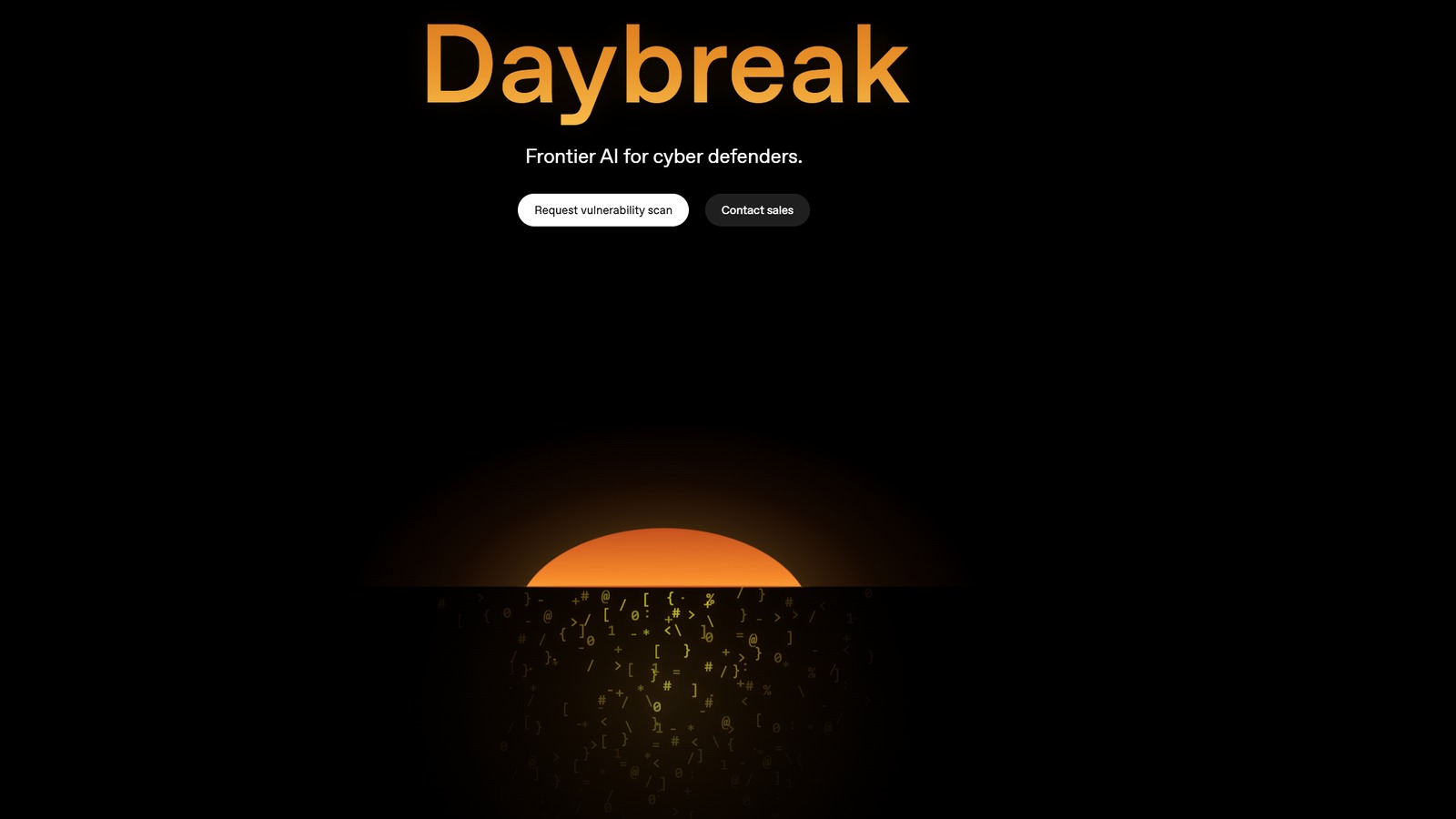
OpenAI Daybreak is the company’s new cybersecurity initiative, and the name is doing a lot of the explaining. OpenAI says the goal is to help defenders see software risk earlier and respond before problems become bigger incidents.
The timing makes sense. Security teams are being asked to review more code, more dependencies and more AI-written software. A faster review loop is not a luxury anymore. It is how teams keep up.
Built Around Earlier Defense
On the official Daybreak page, OpenAI frames the project around secure code review, threat modeling, patch validation, dependency risk analysis, detection and remediation guidance. The company also says Codex can act as an agentic harness for those workflows.
The pitch is not just “AI finds bugs.” OpenAI is describing a loop where models help inspect code, reason across a codebase, test fixes and return evidence. That evidence matters because security teams need more than a scary alert. They need a fix they can trust.
That also fits the broader direction of Codex. OpenAI has been positioning it as a coding layer for developers, including through its Codex browser extension work. Daybreak moves that same idea into security work.
The Trust Problem Is the Whole Point
OpenAI lists several access levels, including GPT-5.5 with Trusted Access for Cyber and GPT-5.5-Cyber for specialized authorized work. It also names partners such as Cloudflare, Cisco, CrowdStrike, Palo Alto Networks, Oracle, Zscaler, Akamai and Fortinet.
The hard part is trust. The same capabilities that help defenders can be misused, so OpenAI is leaning on verification, safeguards and accountability. That is the right place to focus.
If that balance holds, Daybreak could make security review feel less like a late-stage panic. It could become a normal part of building software, where risk is found, tested and fixed while the work is still fresh.