





























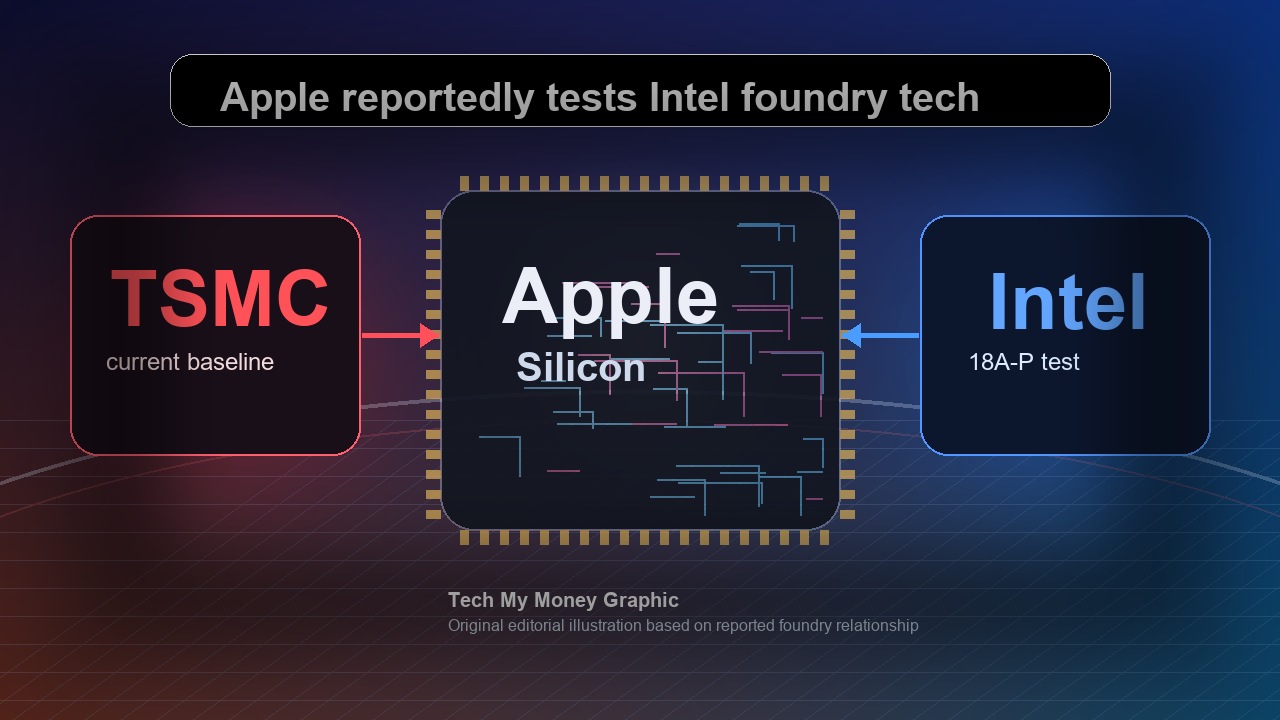
Apple Intel 18A-P testing is reportedly underway for future Apple Silicon. That does not mean Apple is ready to leave TSMC. It does mean Intel Foundry may have a shot at a customer win that would be hard to ignore.
Analyst Ming-Chi Kuo says Apple is testing Intel?s 18A-P process for lower-volume chips. That could point to future entry-level Apple Silicon, not the flagship processors inside Apple?s most important Macs and iPads.
A credibility test for Intel
For Intel, even a small Apple order would matter. Apple is one of the most watched chip customers in the world. If Apple trusts Intel with any production work, rivals and investors will notice.
This is also why the rumor has to be framed carefully. A test is not a shipping deal. A lower-volume chip is not the same thing as the next M-series flagship. Apple would still need strong yields, stable power use and reliable long-term output.
TSMC is still the center of gravity
TSMC is still expected to handle Apple?s highest-volume and highest-performance chips. That part matters. Apple has spent years building its silicon reputation around chips that are fast, efficient and predictable.
Still, Apple likes leverage. More foundry options can mean better pricing, backup capacity and less supply-chain risk. That is the business reason this Apple Intel 18A-P report is worth watching.
If the testing moves forward, Apple could keep TSMC at the center while using Intel for specific parts of the roadmap. That would be a smaller role than Intel once had in the Mac. It would still be a major symbolic comeback.
The bigger picture is simple. Apple does not need to move everything for this to matter. A small chip order could still validate Intel?s process and give Apple another card to play.
Apple Silicon helped redefine the Mac. Intel now wants to prove it can help manufacture part of that future, even if it starts with a limited chip instead of the crown jewels.