






















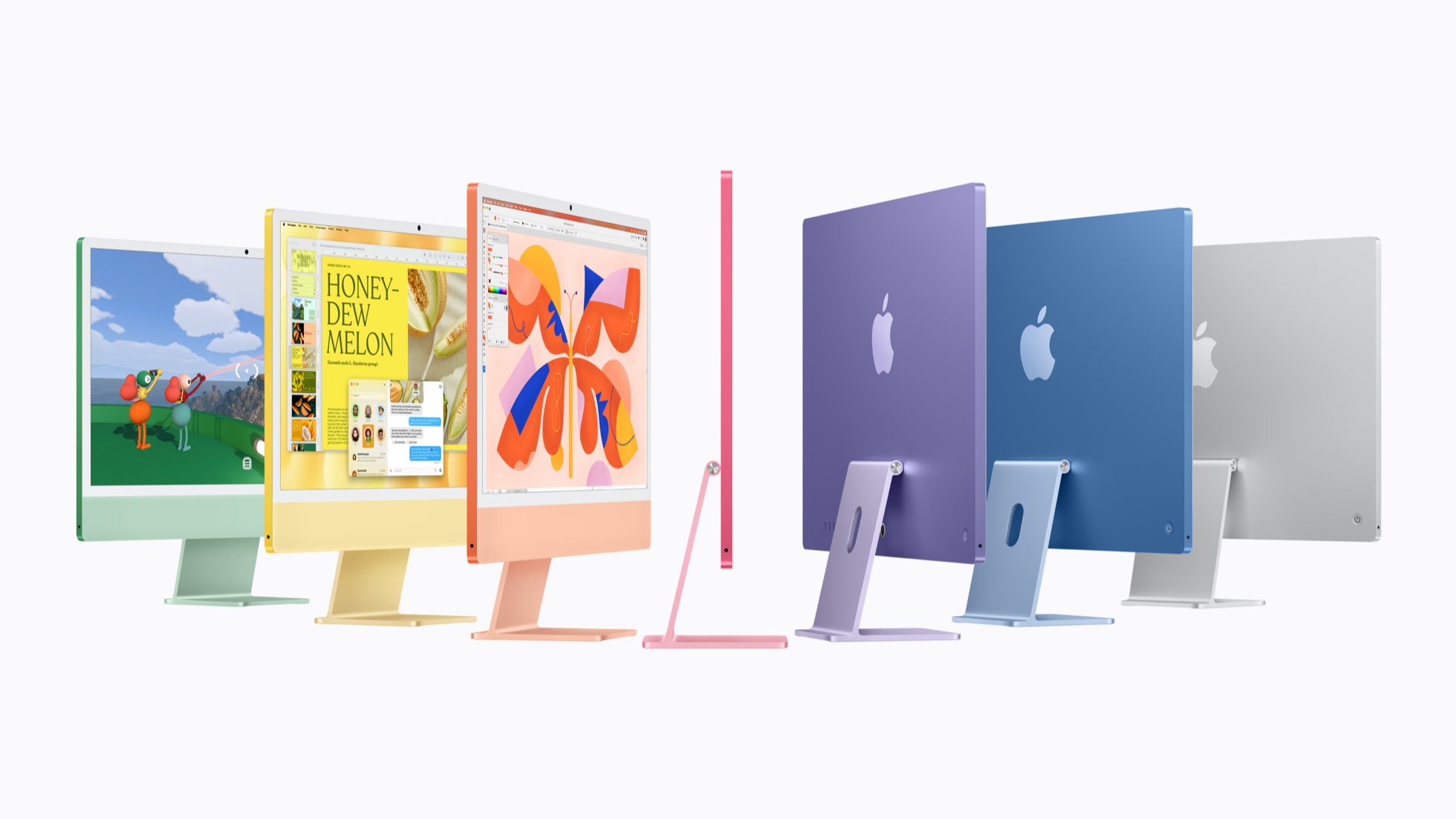
The iMac M6 starts at $1,499 in the United States, with preorders opening October 28 and deliveries beginning November 6. Apple announced the desktop with a specific AI claim: up to five times faster prompt processing in LM Studio than the M4 iMac.
That distinction matters. Prompt processing is one part of working with a local language model, so the figure should not become a promise that every AI app, or every generated answer, runs five times faster. These are Apple’s results; Tech My Money has not tested the new machine.
What powers the iMac M6 AI claim
Apple pairs Neural Accelerators in the GPU cores with a Dual 16-core Neural Engine. Its technical specifications list up to 170GB/s of memory bandwidth. The company also claims up to twice the graphics performance of M4 in photo-editing workloads such as Affinity, alongside up to 1.5 times the performance in productivity apps such as Excel.
However, the comparison depends on the workload. Apple’s release identifies an M4 comparison system with a 10-core CPU, 10-core GPU, 32GB of memory and a 2TB SSD. The launch figures give buyers a reason to watch for application-level testing, rather than treating one multiplier as a verdict on the entire computer.
The two configurations differ beyond core counts
The $1,499 US model has a 10-core CPU and 10-core GPU, while the $1,699 version moves to 12 cores for each. Education pricing starts at $1,449 and $1,599, respectively. Both configurations start with 16GB of unified memory and a 256GB SSD.
- 10-core model: configurable to 24GB of memory and 1TB of storage, with two Thunderbolt 4-capable USB-C ports and support for one external 6K display at 60Hz.
- 12-core model: configurable to 32GB of memory and 2TB of storage, with four Thunderbolt 4 ports and support for two external 6K displays at 60Hz.
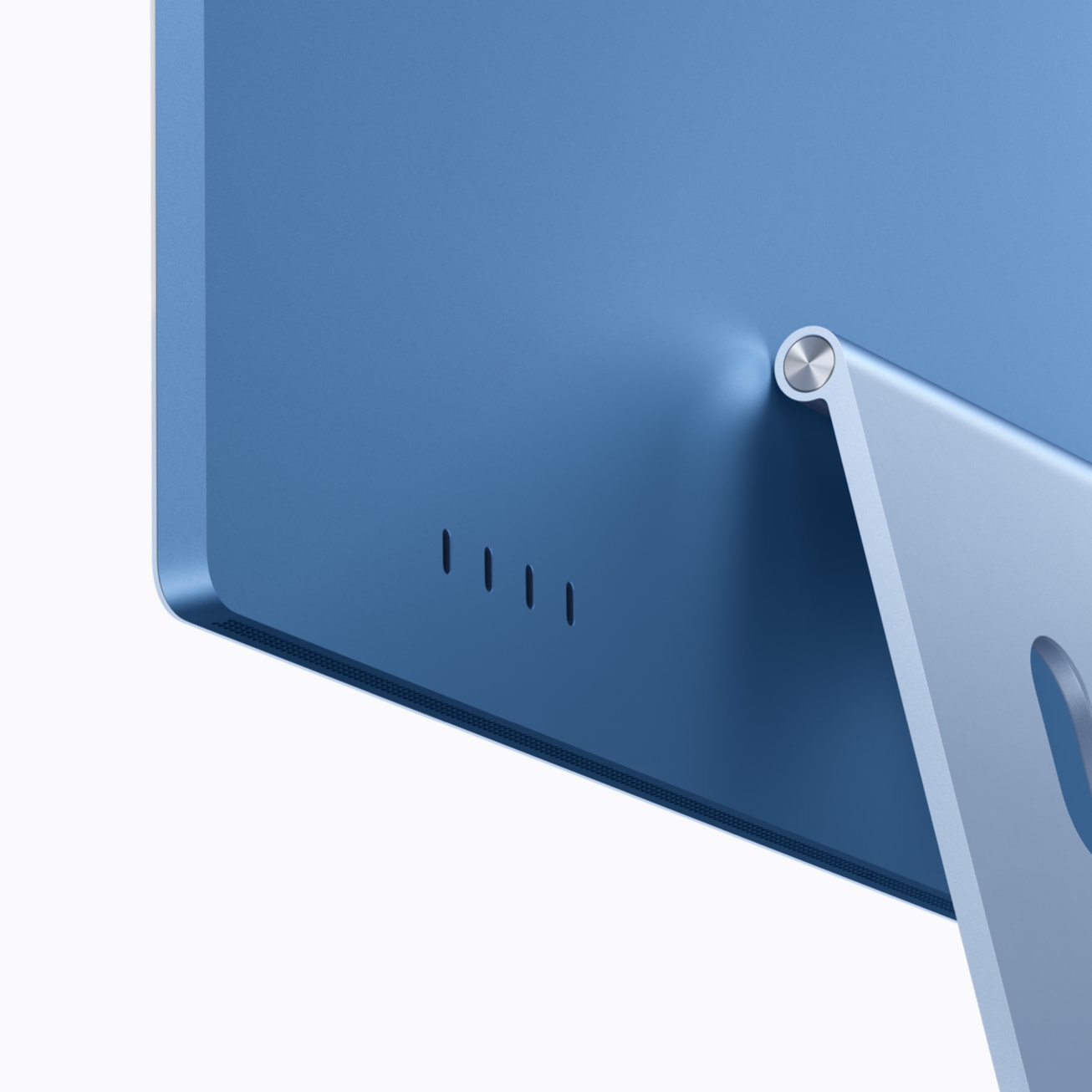
Additionally, the higher configuration includes a Touch ID keyboard and offers nano-texture glass as an option. The entry model includes a standard Magic Keyboard; Touch ID requires a keyboard upgrade. Those differences deserve attention alongside the chip, especially for a desk with several wired accessories.
Siri AI comes with software and usage conditions
On its iMac product page, Apple shows Siri AI in Spotlight, writing assistance, and Safari tools that group tabs or watch pages for changes. It also highlights Shortcuts automations built from a description and third-party AI apps including Claude and LM Studio Bionic.

Still, the announcement’s fine print places Siri AI in beta in macOS 27.2. Apple’s Apple Intelligence usage terms also warn that features can have usage limits and vary by language or region. A faster chip does not remove those service conditions or guarantee access to every advertised feature.
A familiar all-in-one, with practical upgrades
The desktop offers seven colors, a 24-inch 4.5K Retina display and a 12MP Center Stage camera with Desk View. Meanwhile, Wi-Fi 7 and Bluetooth 6 update wireless connectivity. Apple’s product presentation still centers on the all-in-one format: a display, computer, camera and speakers sharing one enclosure.
For older-Mac owners, our earlier coverage of macOS 27 and the Intel Mac cutoff supplies useful upgrade context. For this launch, the questions are more specific: whether the apps you use benefit from M6, and whether the chosen configuration has enough memory, storage and ports for your desk.