




























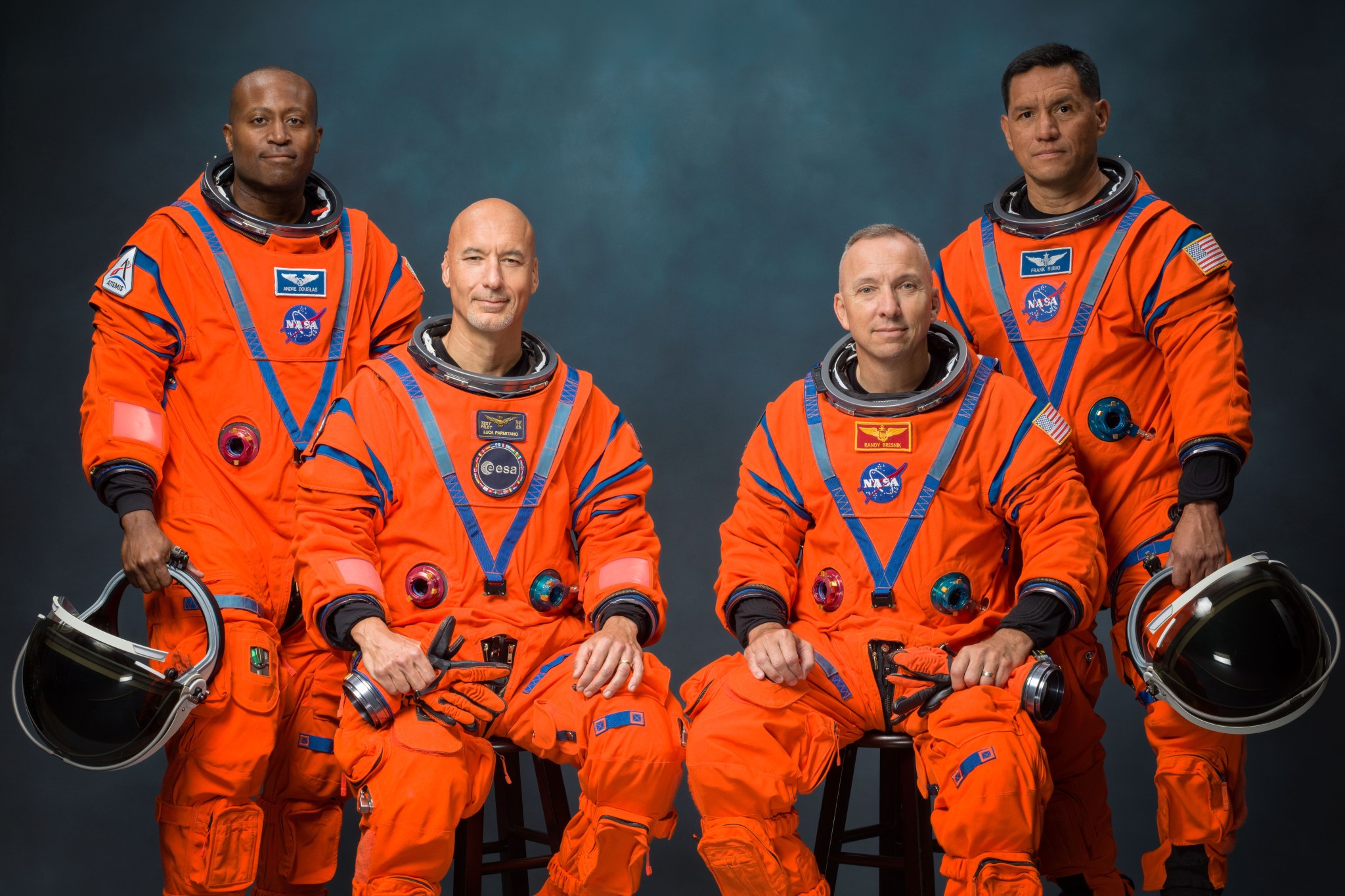
NASA Artemis III will bring three heavy-lift rockets into one tightly coordinated campaign, but the astronauts will stay close to home. NASA’s latest mission plan calls for a 2027 flight in low Earth orbit to rehearse docking with test versions of two lunar landers.
The roughly 14-day mission is designed to check how the Orion spacecraft and its crew work with hardware from Blue Origin and SpaceX. NASA plans to use the experience to reduce risk before Artemis IV, the first planned Artemis lunar landing, targeted for 2028.
Three launches, one orbital rehearsal
First, Blue Origin plans to launch a test version of its Blue Moon Mark 2 lander aboard New Glenn. NASA says the vehicle can remain in orbit for up to 30 days, giving the campaign some scheduling flexibility.
Next, once that spacecraft is healthy and ready, NASA plans to launch four astronauts aboard Orion on its Space Launch System (SLS) rocket. Orion will maneuver to meet Blue Moon after its own systems checks. The launches are planned only days apart, making readiness and coordination central to the test.
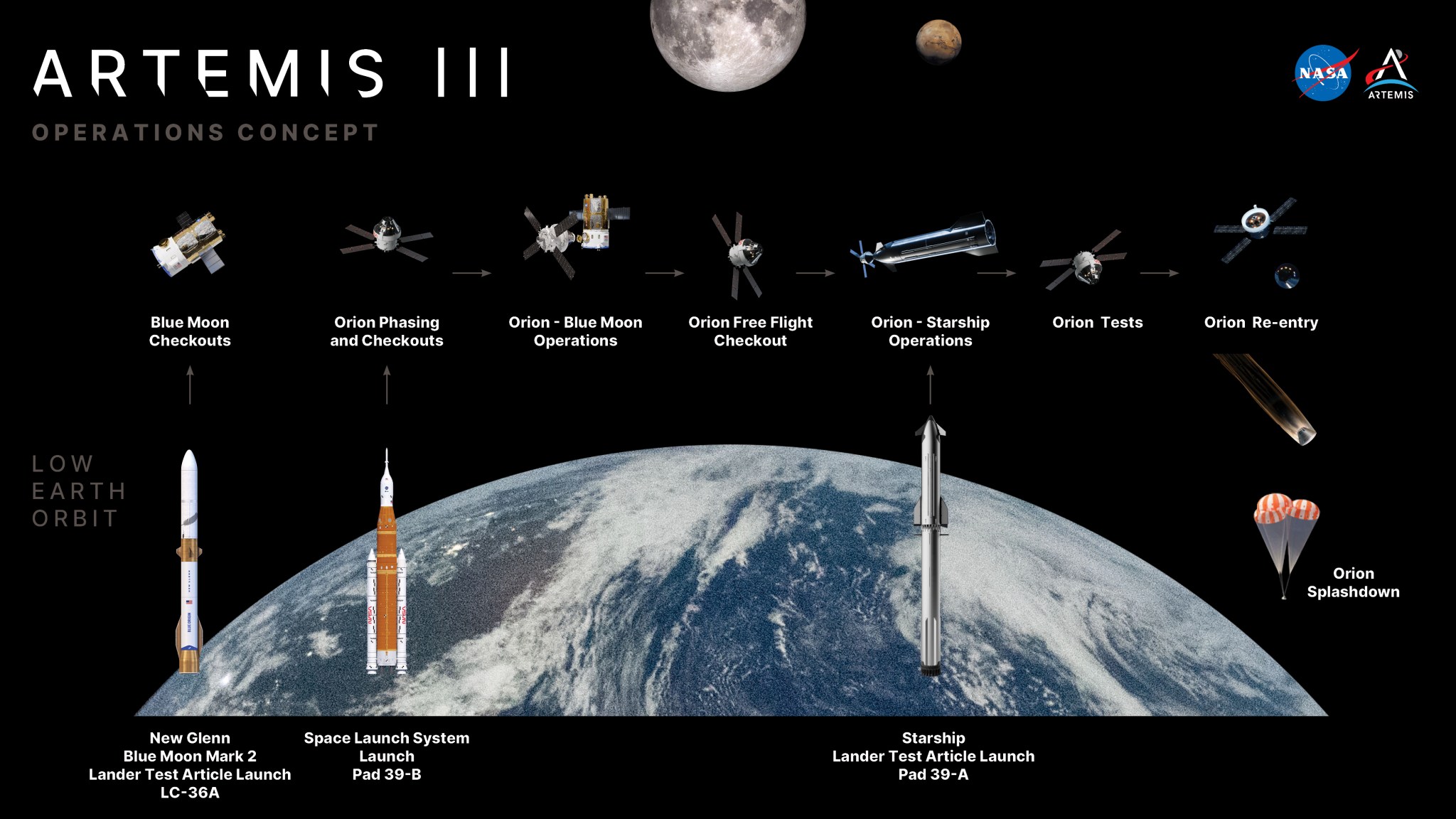
Finally, after Orion completes its Blue Moon work, SpaceX plans to launch a Starship Version 3 test article from Florida. NASA says that vehicle has a shorter planned orbital lifetime, so it will launch later in the mission. Orion will reposition for a second rendezvous and docking.
Two landers, different tests
NASA expects the crew to spend about two days evaluating the Blue Moon test article while docked. The astronauts will enter it and examine the cabin, controls and life-support systems. Flight teams will also check communications, guidance and whether the vehicle maintains the required atmosphere and pressure.
The Starship demonstration has a narrower scope. NASA’s October 23 outline says the docking test is expected to last up to two hours, and the crew will not enter Starship. Instead, teams will assess the coupled vehicles’ control, communications, software and docking dynamics.
The docking arrangements differ too: Orion will connect beside Blue Moon’s crew cabin and at a forward port on Starship. As a result, the mission gives engineers a chance to study two distinct interfaces and practice coordinating among NASA and commercial flight teams.
Who is flying, and what comes next?
The crew consists of NASA astronauts Randy Bresnik, Frank Rubio and Andre Douglas, along with European Space Agency astronaut Luca Parmitano. NASA has named Bresnik as commander and Parmitano as pilot. After the lander tests, Orion may spend up to five additional days in orbit on other objectives before reentry and a planned Pacific splashdown.
Those objectives include tests of crew survival suits, docking sensors and the spacecraft’s environment, plus science and technology demonstrations. The exact sequence remains a plan; launch readiness and the progress of operations will determine how the campaign unfolds.
Artemis III is a rehearsal for lunar exploration, not the landing itself. NASA’s stated goal is to use what it learns for Artemis IV, which the agency is targeting for a lunar South Pole landing in 2028. Tech My Money previously covered SpaceX’s preparations for Starship Flight 14, another step in the vehicle’s development.