


























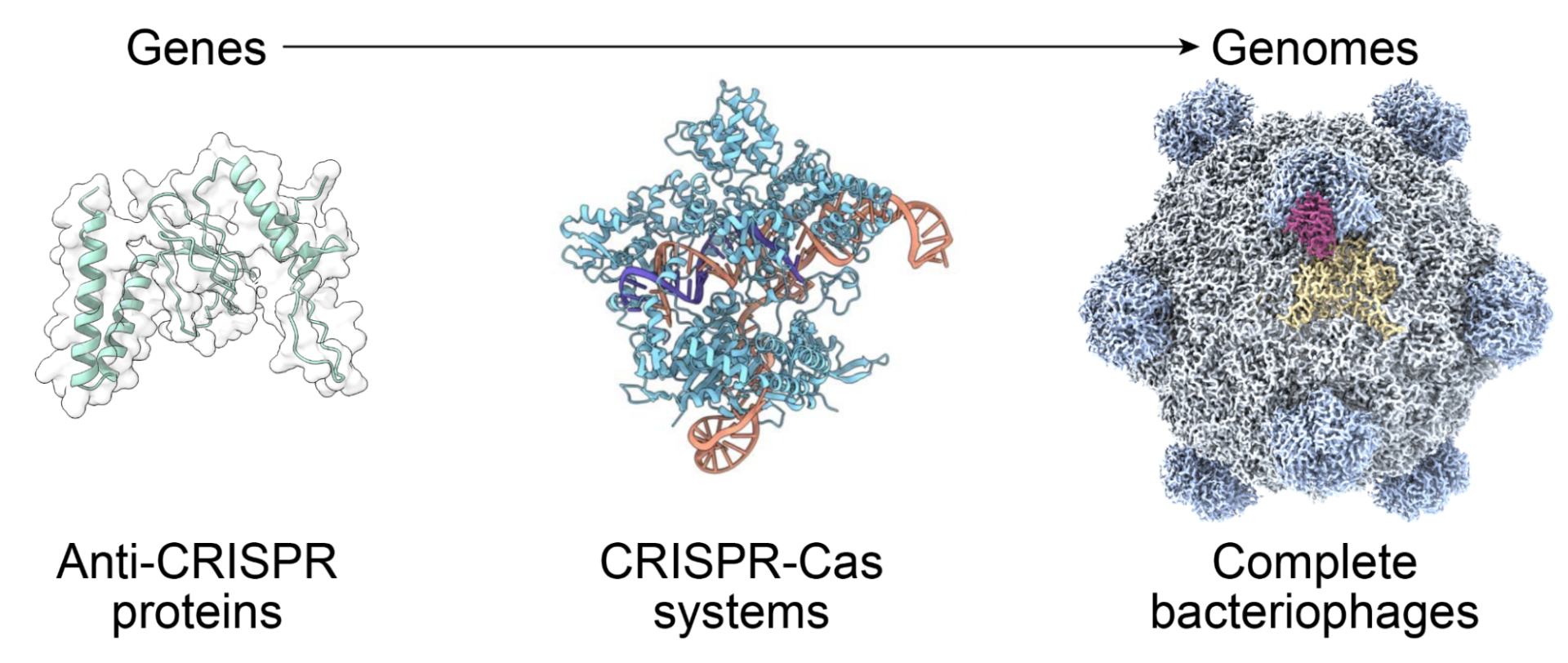
AI-designed bacteriophages have cleared an early laboratory test. However, this work is not about making viruses that infect people. In a primary research preprint, researchers from Arc Institute and Stanford describe genome language models that designed bacteriophages. These viruses infect bacteria. The researchers tested them against non-pathogenic E. coli.
Specifically, the team used the well-studied bacteriophage PhiX174 as a template. It did not attempt a blank-slate design. The research team reports that 16 of 285 tested designs became viable phages. That result offers a meaningful proof of concept. It does not demonstrate a clinical treatment or a human-pathogen capability.
What the researchers actually tested
First, the models generated candidate genome designs based on the small PhiX174 system. The researchers then tested selected designs in a controlled laboratory setting. According to the authors, functional phages infected the intended bacterial host. They also showed substantial genetic differences from their nearest natural relatives.
However, the target matters: bacteriophages infect bacteria. Arc Institute says its work used non-pathogenic laboratory E. coli strains. It also says the relevant training data excluded human viral sequences. Therefore, a headline about new viruses needs that context immediately.
Why the result matters-and where it does not
The paper presents a potential route for studying phages that could someday help researchers address bacterial resistance. Still, that possibility remains research-stage work. It is not a product or a treatment people can use today. The same distinction matters when comparing this development with other AI research aimed at forecasting real-world problems. A model result does not automatically become a deployed solution.
Moreover, the authors frame the work as whole-genome design under defined constraints. They do not report creating a virus for humans, animals, or plants. Their safety description says researchers used containment measures and specialized disposal procedures.
Biosecurity questions still deserve scrutiny
Any advance that makes biological design more capable deserves careful oversight. Yet the concern involves possible future misuse of similar methods. It is not a claim that this team created a dangerous human virus. Separating those points helps readers judge both the scientific progress and the policy conversation.
As a result, the most accurate takeaway remains narrow: researchers report functional, AI-designed bacteriophages for a bacterial host. The next questions concern independent replication, evolving safeguards, and whether future applications meet health and biotechnology standards. That need for clear guardrails also appears in our coverage of AI watermarking and provenance.