



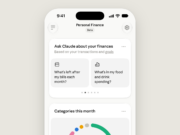




















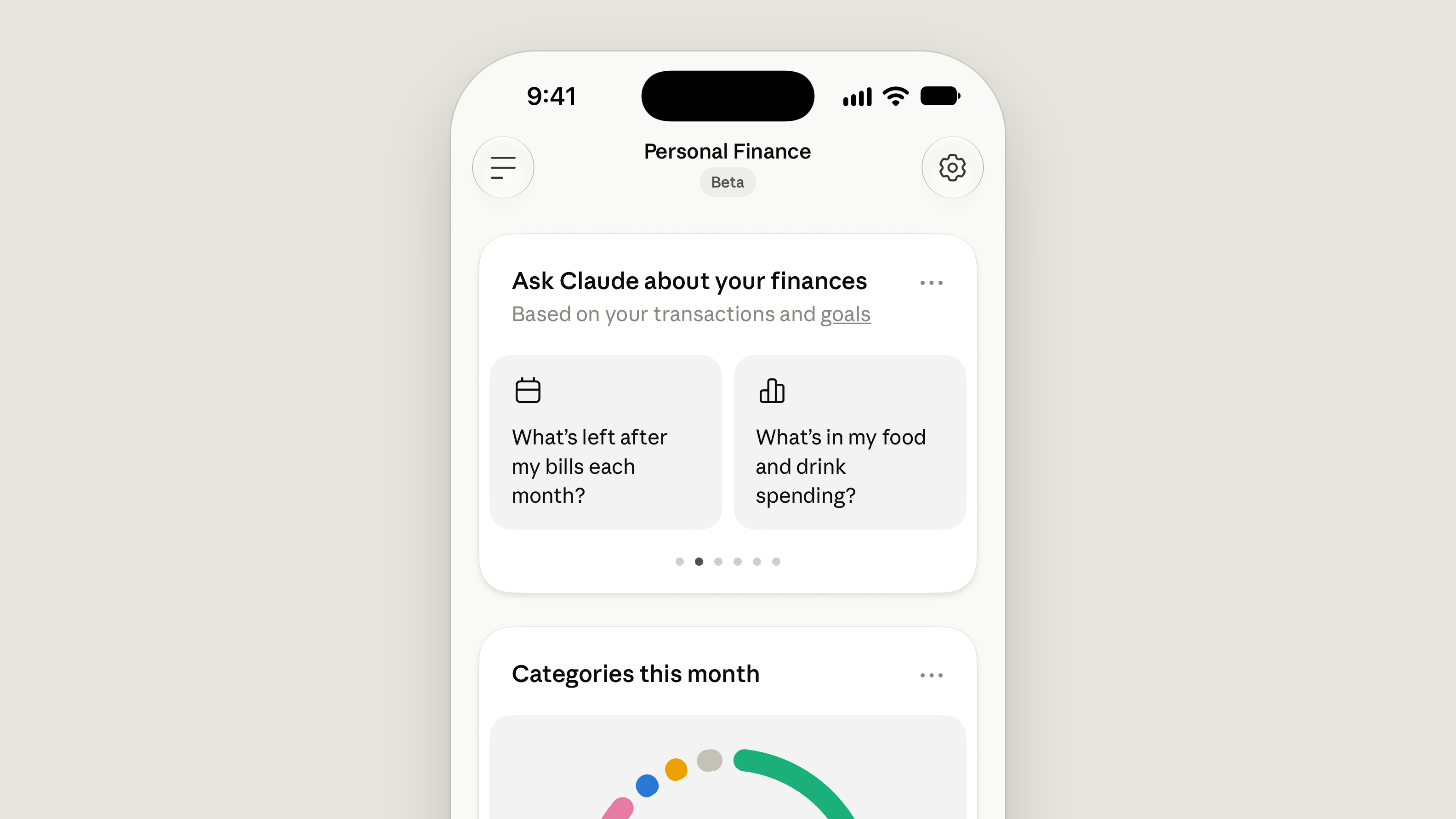
On November 5, 2026, Anthropic published Personal Finance in Claude. The post says the feature starts rolling out in beta this week. That rollout names the Pro, Max, and Ultra plans in the US.
You can connect bank and card accounts and ask about them in your own words. Personal Finance gives read-only access. It cannot move, manage, or invest your money.
Claude answers from your balances and transactions in everyday language. It also explains a term that is new to you. Personal Finance carries no ads and no sponsored recommendations. It does not offer credit cards, loans, or savings accounts of its own.
What the example shows
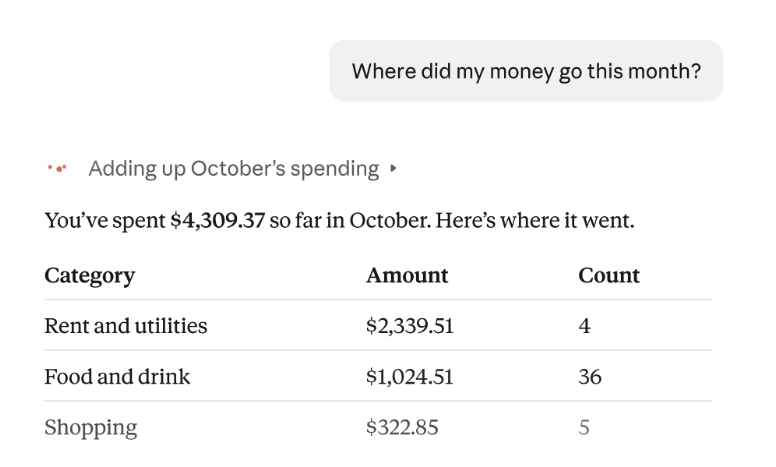
The post sets one example late in the month, with payday still 10 days away. The sample question is “Where did my money go this month?”
In that example, spending across the connected accounts comes to $4,309.37.
More than half of that example spending goes to rent and utilities.
Food and drink in the same example comes to $1,024.51.
Claude checks earlier months in the example and points to a membership renewal. The example then names four payments that leave checking before payday. It puts $1,393.22 left after those payments.
If you ask whether anything looks off, the post says Claude reads across every account you connected. It can flag a charge that hit twice, an unexpected fee, or a bill that rose through the year. You can also ask whether you are spending more than you make. The post includes a question about what an APR is and what yours cost this year. Claude explains the term, then adds up the interest you were charged.
You can ask for a weekly spending chart, a calendar of what is due, or a dashboard of the numbers you choose. Claude builds that view, and you can keep adjusting it.
Security and privacy
Claude’s access stays read-only. Anthropic did not design Personal Finance to give investment advice. Claude can make mistakes, so the post tells you to ask which transactions sit behind a number. It also tells you to check important figures with your bank.
Your accounts connect only after you sign in to your bank yourself through Plaid. You agree to Plaid’s terms there and approve Claude’s read-only access. Claude does not ask for your bank password, and it does not see that password.
For the accounts you choose, and only those, Claude sees the bank name, each account name, the account type, and the last four digits. It also sees balances and credit limits.
Transaction history in that same view runs up to two years.
When you chat inside the Personal Finance hub, Anthropic does not use those conversations to train its models. Outside the hub, your privacy settings apply. You can unlink an account at any time. After that, Claude can no longer see that account’s data. Further detail sits in the Privacy Center.
How the beta starts
When Personal Finance shows up in Claude’s sidebar, open it and connect one account. The post suggests one first question, such as whether you can afford a trip this spring. Setup steps, and how Claude uses and keeps the data, are in the Help Center.
Personal Finance is a first step. For bigger money decisions, Anthropic says people do best when Claude works with the licensed professionals and regulated firms they trust. Anthropic is exploring how to make that possible in Claude. It wants to hear from banks, wealth managers, and financial services companies that want to help shape the work.