

























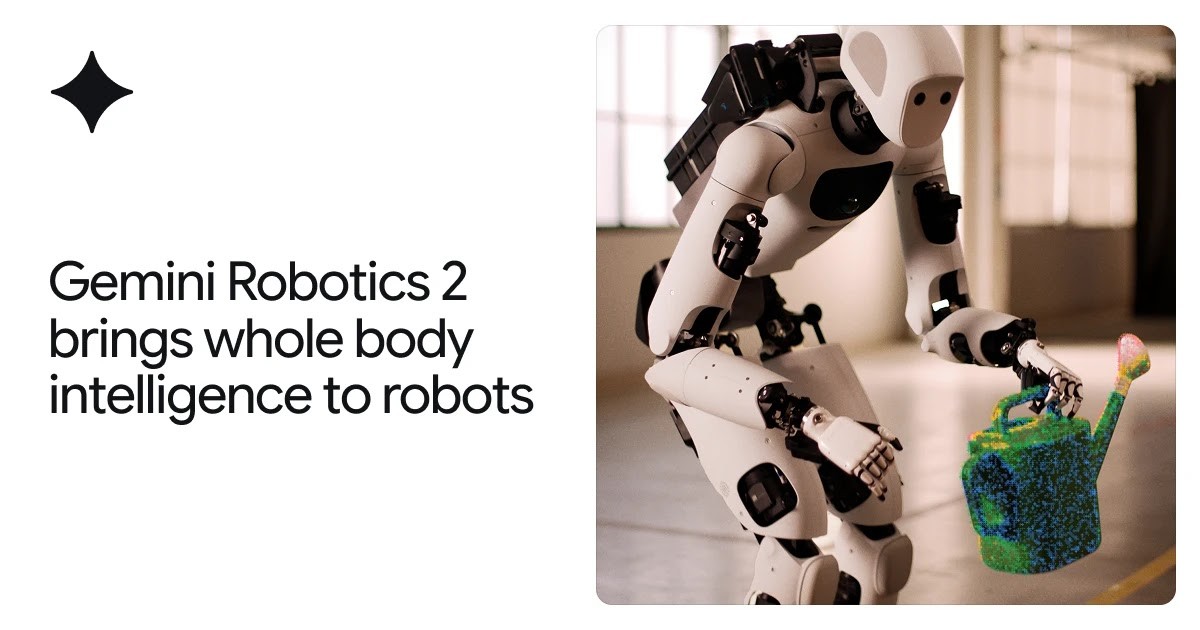
Gemini Robotics 2 is Google DeepMind’s newest robotics stack. The headline upgrade is whole-body control. The company says the system can drive humanoids from feet to fingertips, not just tabletop arms. It also plans multi-step jobs and coordinates more than one robot.
That is a clear step past the first Gemini Robotics releases. Those focused on upper-body and arm-and-hand work. DeepMind now frames Gemini Robotics 2 as the intelligence layer for adaptable robots. They can walk, crouch, stretch, manipulate objects, and recover when a step fails. Multi-finger work is still hard. Movement speed is not finished either.
Access is split by model. Gemini Robotics ER 2 is in public preview on Google AI Studio. A private preview path sits on Gemini Enterprise Agent Platform. The full VLA and On-Device models stay with early-access partners for now.
Three models, one robotics stack
DeepMind ships Gemini Robotics 2 as three pieces that work together:
- Gemini Robotics 2 (VLA) — vision-language-action motor control for full humanoids and bi-arm robots, including five-finger hands and parallel grippers.
- Gemini Robotics ER 2 — embodied reasoning “brain” for human chat, multi-step planning, progress tracking, tool use, and multi-robot teamwork.
- Gemini Robotics On-Device 2 — efficient local VLA for offline robots, with fast adaptation to new embodiments in a few hours.
In practice, ER plans and supervises while the VLA executes motion. DeepMind says ER can self-correct mid-task. It can also hand off actions that last for hundreds of decisions. That design aims at real rooms, not single lab demos.
What the robots can do in demos
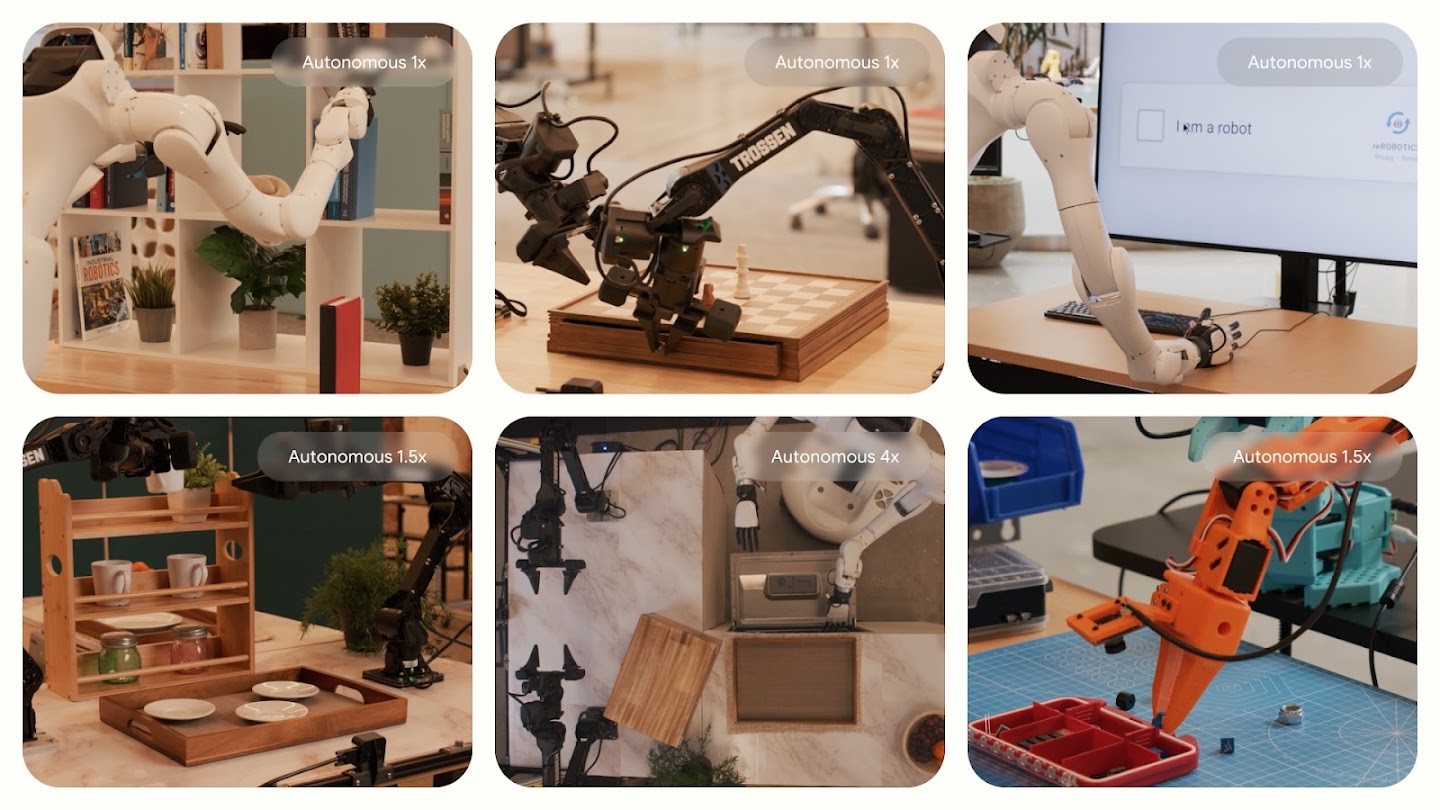
On Apptronik’s Apollo 2, Gemini Robotics 2 can take natural-language goals. One example is putting a watering can on a bottom shelf. The humanoid walks, picks, steps, and places. The same model family also runs multi-finger tasks on SharpaWave hands. It also runs gripper work on a Franka Duo platform.
DeepMind’s own charts are mixed on hard dexterity. Unscrew-bulb success is high. Screw-bulb, dustpan, and ziplock sit lower. Whole-body pick-and-place scores vary by height too. So the stack is advancing, not solving every household chore. The company still calls this a milestone toward “physical AGI.” It is not a finished general robot.
Safety, partners, and what is still missing
Safety gets equal billing. DeepMind introduces ASIMOV-Agentic. That benchmark measures refusals of unsafe tool calls. It also checks task feasibility and requests for human help under uncertainty. ER 2 also scores better on human-proximity stops. Those guardrails matter once heavy humanoids leave scripted floors.
Partners named in the post include Apptronik, Boston Dynamics, and Agile Robots. That partner path fits other DeepMind physical-world bets. One example is earlier research like DeepMind’s A24 filmmaking work. On the consumer Gemini side, the company is also shipping software features such as Gemini Spark for AI Pro subscribers. Robotics 2 is still a lab-and-partner stack. It is not a home robot you can buy.
Bottom line: Gemini Robotics 2 adds whole-body humanoid control. It also adds longer agentic plans, multi-robot teamwork, and a local adaptation path. ER 2 is the piece developers can try now. Full motor models remain gated. The hardest five-finger jobs still need work. Treat the demos as real progress with honest ceilings. This is not a finished Optimus rival on a store shelf.