
























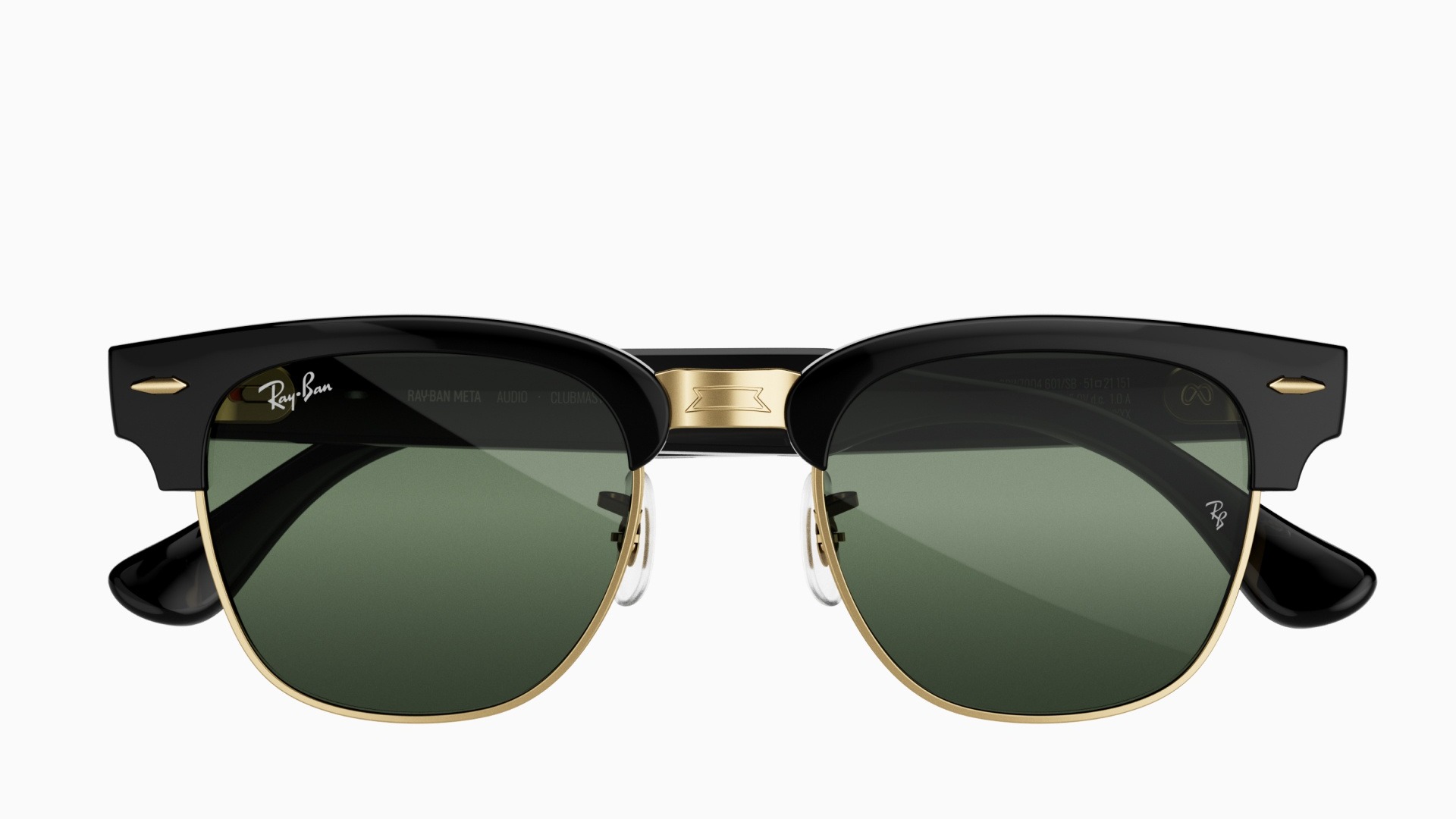
Ray-Ban Meta Audio pre-orders are open, and the glasses ship October 13. Meta revealed the camera-free model at Connect this week, calling it its first-ever audio glasses. Now that the launch dust has settled, buyers face a simple question. Should you save $100 and skip the camera, or pay up for the new Ray-Ban Meta (Gen 3)?
Ray-Ban Meta Audio vs. Gen 3 at a glance
Both models come from Meta’s partnership with EssilorLuxottica, and both run Meta AI. However, the similarities mostly end there. Here is how Meta’s own numbers compare:
| Ray-Ban Meta Audio | Ray-Ban Meta (Gen 3) | |
|---|---|---|
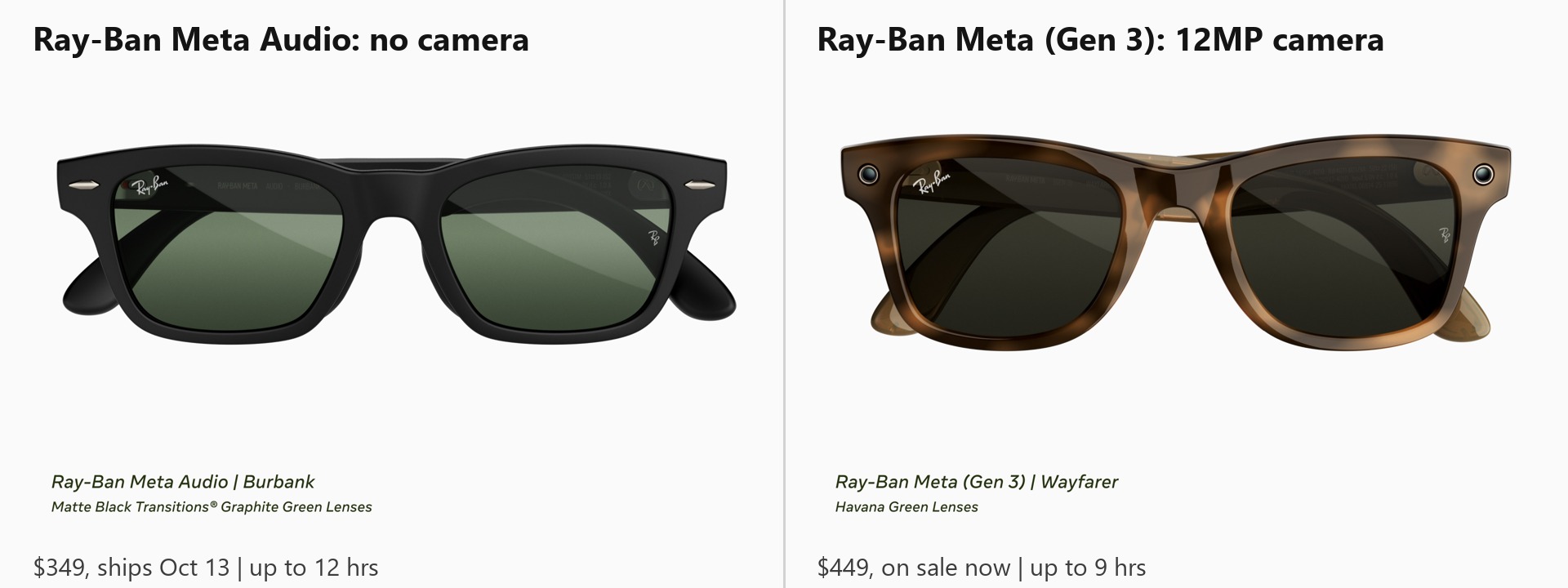
| Price | From $349 | From $449 |
| Availability | Pre-order now, ships Oct. 13 | On sale now |
| Camera | None | 12MP photos, 3K video |
| Battery (glasses) | Up to 12 hours | Up to 9 hours |
| Weight | 43 grams | Not listed |
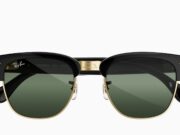
| Styles | Clubmaster, Burbank (23 combos) | Aviator, Zena, Wayfarer (27 combos) |
What you gain by skipping the camera
First, you save money. At $349, Ray-Ban Meta Audio costs $100 less than Gen 3. You also get more battery life. Meta rates the Audio model for up to 12 hours of listening, calls, and AI chats. The charging case adds up to 48 more hours.
Second, the glasses get lighter. At 43 grams, Meta calls them its lightest and slimmest AI glasses yet. They also get adjustable temple tips, swappable nose pads, and overextension hinges for a better fit. For comparison, Engadget notes that Meta’s other current models weigh between 49.2 and 69 grams.
Third, and perhaps most important, nobody around you has to wonder whether you are recording. Camera glasses have drawn growing criticism over covert filming, as CNN reported earlier this year. Meta has also faced scrutiny over face recognition, and in June it quietly pulled face recognition code from its glasses app. Meta does not frame Audio as a privacy product, though. Instead, it says audio has been the most popular feature “since day one.”
What you give up
The trade-off is obvious: no photos or video. Gen 3 shoots 12MP photos and 3K Ultra HD video. Meta also says its AI glasses will add Dolby Atmos video recording later this year. Gen 3 also adds a customizable action button and a six-mic array that Meta says cuts more than 90% of background noise.
Style choice is narrower on Audio, too. You get only Clubmaster and Burbank frames, while Gen 3 covers Aviator, Zena, and Wayfarer. Still, Meta says the Audio frames work with a wide range of prescriptions.
Which Ray-Ban Meta Audio buyer are you?
If you mainly want open-ear music, podcasts, calls, and a hands-free assistant, Ray-Ban Meta Audio looks like the smarter buy. It costs less and lasts longer. By contrast, if you want to capture moments without pulling out your phone, Gen 3 is still the pick. And if price matters most, Meta’s new Meta Adventurer starts at $249 and goes on sale October 23.
Either way, Meta clearly wants a pair on every face. By the end of the year, it expects to offer more than 100 frame options across Ray-Ban, Oakley, and Meta Glasses. That puts pressure on rivals like Snap’s $2,195 Specs, which aim at a far pricier corner of the market.