





























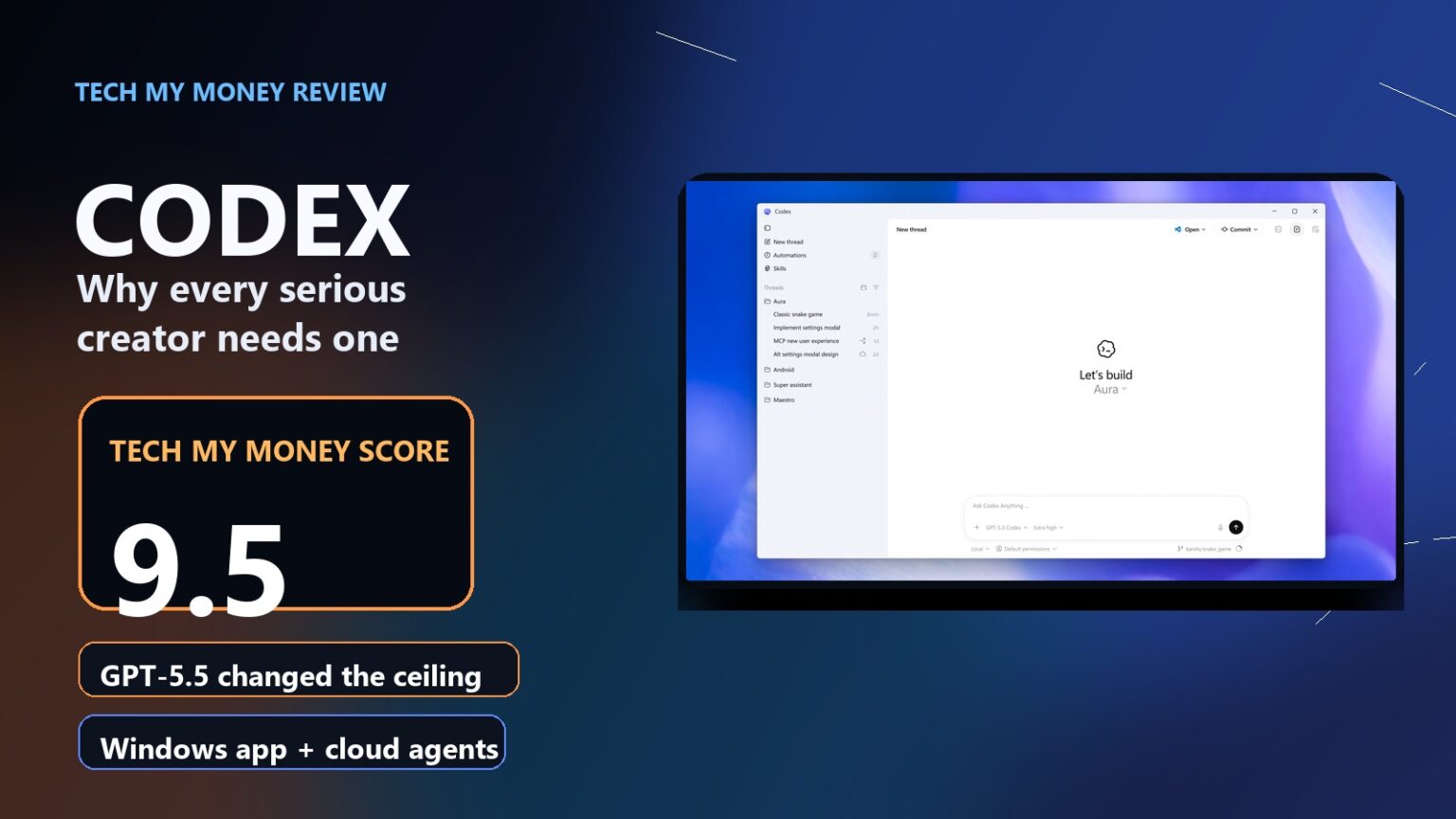
This Codex review is based on Tech My Money’s real use of Codex across WordPress publishing, Bitnami migration work, Google Cloud operations, Cloudflare security, analytics, image workflows and editorial automation. It is not a lab benchmark. It is a field report from a live site.
Codex review: after weeks of using it beside Tech My Money, I can say the quiet part out loud. Every serious creator, publisher, developer or small business operator needs a Codex, or something very close to it.
I do not mean everyone should hand an AI agent the keys to a website and walk away. Please do not do that. This entire Tech My Money run was an experiment, and powerful tools deserve adult supervision. But when Codex has the right access, the right instructions and a human who cares about the final result, it becomes more than a coding assistant. It becomes an operating partner.
OpenAI describes Codex as a coding agent for building, refactoring and shipping software. The official docs also frame Codex cloud around sandboxed work environments and delegated tasks. That is accurate, but it undersells what happens when you point Codex at the messy operating work around a real media site.
The Windows App Makes It Click
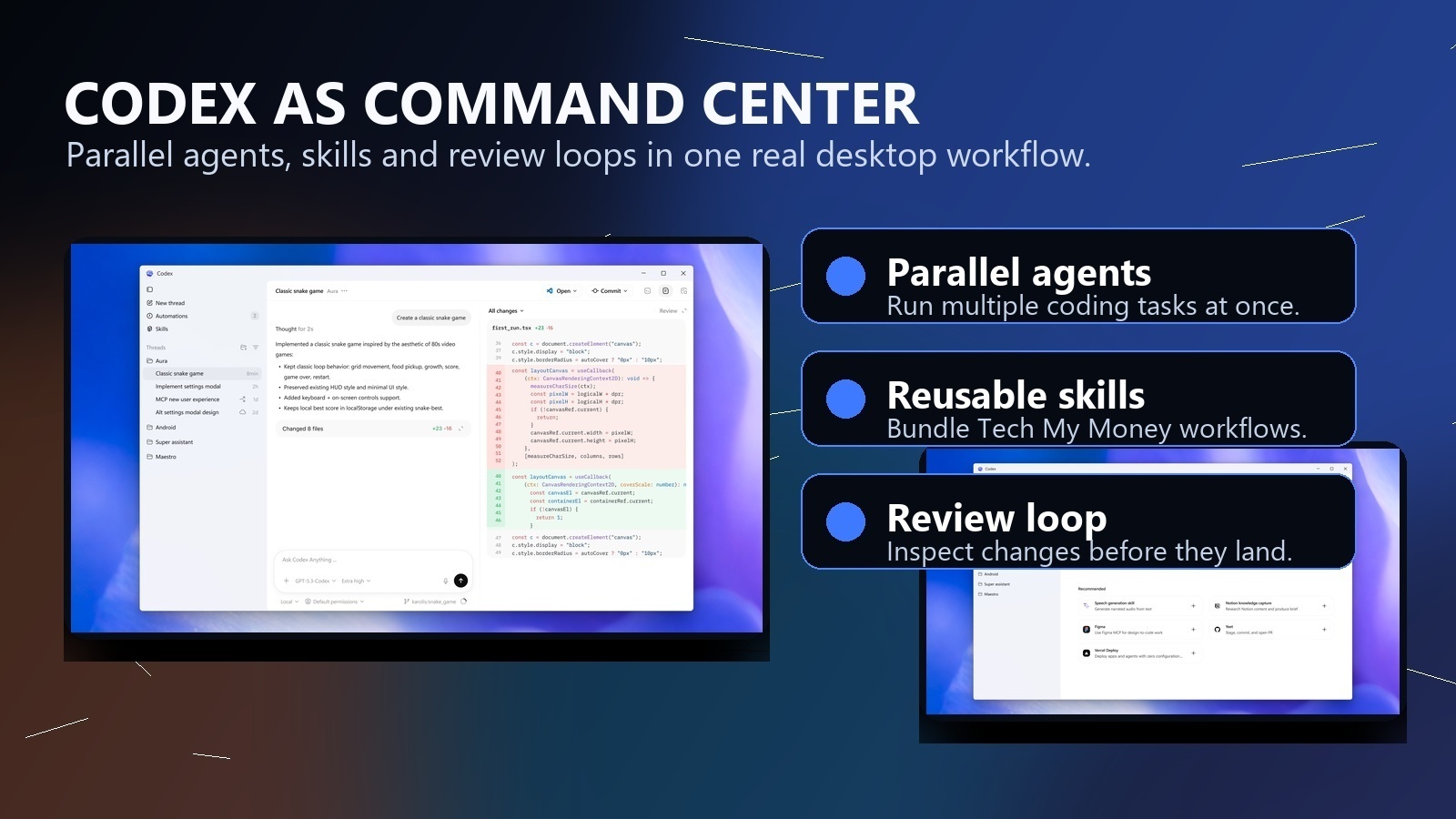
The new Codex desktop experience matters because it feels like a command center, not a chat window. The Microsoft Store listing shows the Windows app built around parallel agents, isolated workspaces, skills, task review and safer sandboxed operation. That is exactly the direction this category needs.
For Tech My Money, the desktop-style workflow is the difference between asking a question and managing real work. Codex can sit with projects, threads, skills, browser work, terminal work and WordPress tasks without turning the whole day into tab chaos. That is the first reason this review lands so high.
GPT-5.5 Is The Game Changer
The real leap is GPT-5.5. The model is the reason Codex feels less like a clever autocomplete box and more like a senior operator who can hold a messy plan together. It can remember the goal, inspect the state of the work, choose a tool, recover from a bad assumption and keep moving without losing the thread.
That matters when the job spans writing, WordPress, Cloudflare, Google Cloud, ads, analytics, image direction and SEO. A weaker assistant can help with one slice. GPT-5.5 is what makes Codex useful across the whole stack. It is not perfect, but the ceiling is different.
The Experiment That Changed My Mind
Tech My Money became the test bed. We used Codex to rebuild old editorial workflows, create drafts, repair WordPress mistakes, shape Newsmag theme settings, clean up Yoast issues and develop repeatable publishing skills. That alone would have been useful.
Then the work moved deeper. Codex helped inspect the WordPress install, use XML-RPC, work with WP-CLI through Google Cloud, troubleshoot Jetpack safe mode, document Matomo errors and prepare reports. It helped with Cloudflare DNS, crawler checks, security rules and the suspicious Singapore traffic pattern that made the analytics smell off.
This is where Codex started feeling different. A normal chatbot can give advice. Codex could read the state of the work, run tools, test assumptions, create files, update drafts and explain what changed. The difference is not intelligence alone. It is action plus memory plus verification.
WordPress Finally Felt Scalable
The biggest daily win was WordPress. We built a repeatable AI news workflow that could trace stories back to original sources, write in Tech My Money’s voice, create reference images, add internal links, populate Yoast and fill Newsmag source fields.
A good post is not only words. It needs a headline, slug, excerpt, focus keyphrase, meta description, readable paragraphs, source fields, image alt text, captions, embeds and a reference image that actually tells the story. Codex helped turn that chaos into a repeatable production line.
It also learned from corrections. When an image looked too synthetic, the workflow changed. When official product photos were better than generated art, the workflow changed. When Yoast flagged sentence length, internal links or weak keyphrase placement, the workflow changed again. That self-improving loop is why I would not want to run the site without it now.
The Cloud Work Is Where It Gets Serious
Codex was not only writing posts. The serious test was Tech My Money’s infrastructure. It helped move the site away from an aging Google Cloud Bitnami WordPress stack running Debian 9 and PHP 7.3, then plan a safer path around a newer Bitnami instance, modern PHP, staging checks and rollback safety.
That work was not one magic button. Codex helped reason through snapshots, backups, a large All-in-One WP Migration upload, server settings, plugin state, theme behavior and the kind of boring details that can wreck a live WordPress site if you rush them. Before risky changes, it helped preserve settings and document what existed so we were not guessing later.
The migration also covered the unglamorous work that matters: validating the backup, restoring the site, checking permissions, repairing Newsmag and tagDiv behavior, preserving Zoho mail records, renewing SSL and keeping the old VM available as a rollback path. That is where Codex stopped feeling like a helper and started feeling like an operations partner.
Cloudflare was another strong example. Codex helped rebuild DNS from the Google Cloud snapshot, preserve email records, think through caching, watch mobile layout risk, investigate bot-like Singapore traffic and avoid blocking legitimate Google News, Googlebot, Bing, DuckDuckGo and social preview crawlers. It did not just say “block everything.” It helped think through the tradeoff between security and discoverability.
That matters because small publishers live in a weird middle ground. You may not have a full DevOps team, but you still have DNS, ads, caching, analytics, plugins, security rules, backups and theme quirks. Codex made those jobs less scary because it could move between editorial and infrastructure without losing the plot.
Why Everyone Needs One
Most people do not need Codex because they want to write code all day. They need Codex because modern work is now a pile of connected systems. Your website talks to analytics. Analytics talks to strategy. Strategy turns into content. Content needs images, SEO, security, ads and distribution.
A good Codex sits across that stack. It can draft, diagnose, document, compare, automate and remember. It can use sub-agents for research. It can create skills for repeatable work. It can help another agent understand your workflow. It can keep a site moving while you are at work, asleep or away from the desk, as long as you design the guardrails first.
The Flaws Are Real
Codex is not perfect. It can choose the wrong image direction. It can make a draft too short. It can miss a Yoast issue. It can over-trust a source visual, or play too safe when the better move is original editorial art. We saw all of that during this experiment.
That is why I would never recommend reckless automation. Secrets need rotation. Cloud access should be limited. Browser control should be intentional. Publishing should stay human-approved. Financial, medical, legal and security decisions need extra caution.
But the mistakes did not make Codex less valuable. They made the workflow better. Every correction turned into a sharper rule. That is the real unlock. Codex does not only complete tasks. It helps build the operating manual around those tasks.
Tech My Money Score
- Real-world productivity: 10
- WordPress workflow: 9.5
- Google Cloud and WP-CLI operations: 9.5
- Cloudflare and security support: 9.5
- Editorial judgment and image workflow: 9.5
- Guardrails and supervision needs: 9
Overall score: 9.5. Codex earns that score because it helped turn Tech My Money from a revived WordPress site into a scalable editorial and operations system. It wrote, checked, fixed, designed, documented and improved. More importantly, it stayed useful across the boring work that actually keeps a site alive.
Verdict
My Codex review is simple: this is the AI agent I would want beside any serious digital operation. Not because it replaces the human. It does not. It makes the human more dangerous in the best way: faster, calmer, better documented and less trapped by repetitive work.
If you run a site, write often, manage cloud tools, publish content, handle ads, maintain plugins or build workflows, you need a Codex. Maybe not with every permission on day one. Maybe not without supervision. But the future belongs to people who can pair human taste with agentic execution, and Codex is the clearest version of that future I have used so far.