





























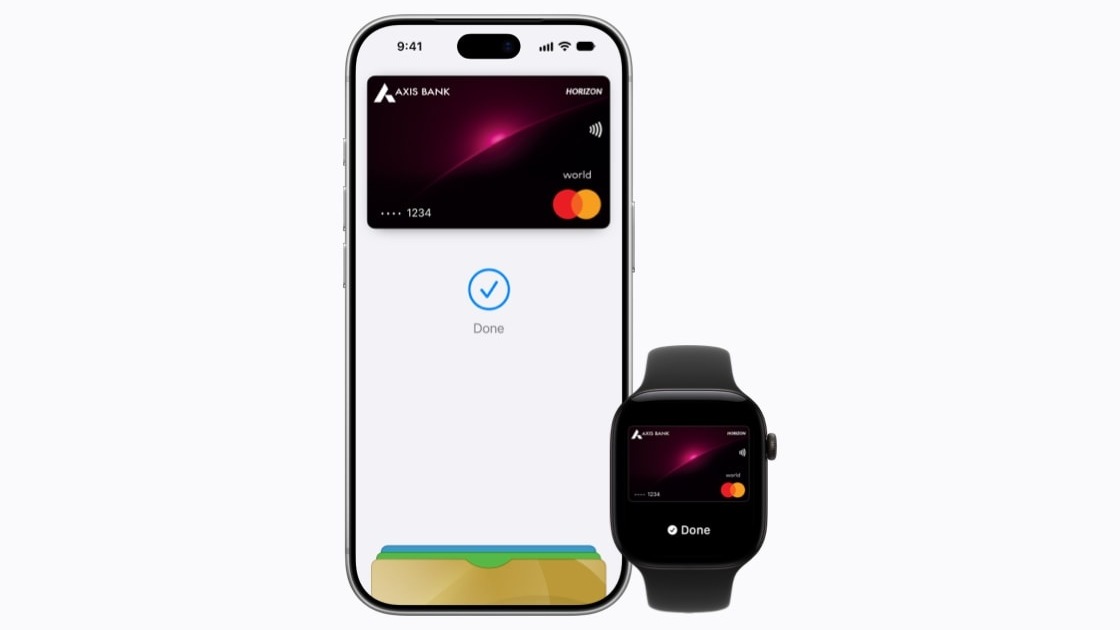
Apple Pay in India is finally live, but only for a narrow group of cardholders. Apple announced the launch on September 30, more than a decade after the service debuted elsewhere. For now, it works with Axis Bank credit cards on the Visa and Mastercard networks, and nothing else.
What Apple Pay in India supports at launch
According to Apple, the service is available on iPhone, iPad, and Apple Watch, with Mac support coming soon. It covers payments in stores, in apps, and on the web. Apple also says checkout needs no PIN or one-time password.
Acceptance looks broad on paper. Apple says millions of merchants will take the service at launch, including Apple Store locations, Blinkit, Croma, Reliance brands, Tata 1mg, and Zomato. The company also worked with payment providers such as Paytm, PayU, Pine Labs, and Razorpay to reach their merchant networks.
“India is home to a dynamic and digitally savvy population that continues to embrace a cashless future,” said Jennifer Bailey, Apple’s vice president of Apple Pay and Apple Wallet.
What is missing
The gaps are significant, however. Apple’s announcement names only Axis Bank, and only its credit cards. In addition, TechCrunch reports that the service does not support RuPay, India’s homegrown card network. HDFC Bank, ICICI Bank, and SBI Card are also absent at launch.
Money appears to be the sticking point. Citing people familiar with the matter, TechCrunch says Apple is seeking a fee of about 0.2% per transaction. That is a large share of the roughly 0.4% to 0.5% margin in India’s payments layer, the outlet notes. Negotiations with the bigger banks are continuing, according to the report. Apple and the banks did not respond to TechCrunch’s requests for comment.
There is a bigger structural issue as well. Most digital payments in India run on UPI, the state-backed system that moves money directly between bank accounts. Apple Pay, by contrast, is built on cards, so it starts in a much smaller slice of the market.
Why Apple is doing it anyway
India is a growing iPhone market. Counterpoint Research told CNBC that Apple’s volume share there is likely to hit 10% in 2026, up from 4% in 2022. It credits strong demand for the iPhone 18 Pro series. Those buyers are the natural audience for a card-based wallet.
Apple also pitches privacy. The company says card numbers are not stored on the device or its servers, and each transaction uses a device-specific token instead. Meanwhile, Apple keeps widening what Wallet can hold elsewhere, as we saw when Wallet IDs moved toward four more US states. In India, though, the real test is whether more banks sign on.