



















The Pollen Robotics Microduck is now on preorder for 399 dollars before taxes and shipping. Pollen, Hugging Face’s Bordeaux robotics team, calls it a 25 cm biped you can train with reinforcement learning. The launch blog says first deliveries were targeted before Christmas 2026. However, the live store now warns it cannot promise Christmas for new orders and estimates four to six months.
Microduck is Pollen’s second consumer robot after Reachy Mini. The company writes, “A simple way to think about the two robots is that Reachy Mini is a platform for AI that interacts, while Microduck is a platform for AI that acts.” Instead of a talking desk pal, this one walks, sits, crouches, roller-skates, picks objects up with its beak, and stands back up after many common falls.
A small biped, not a kit
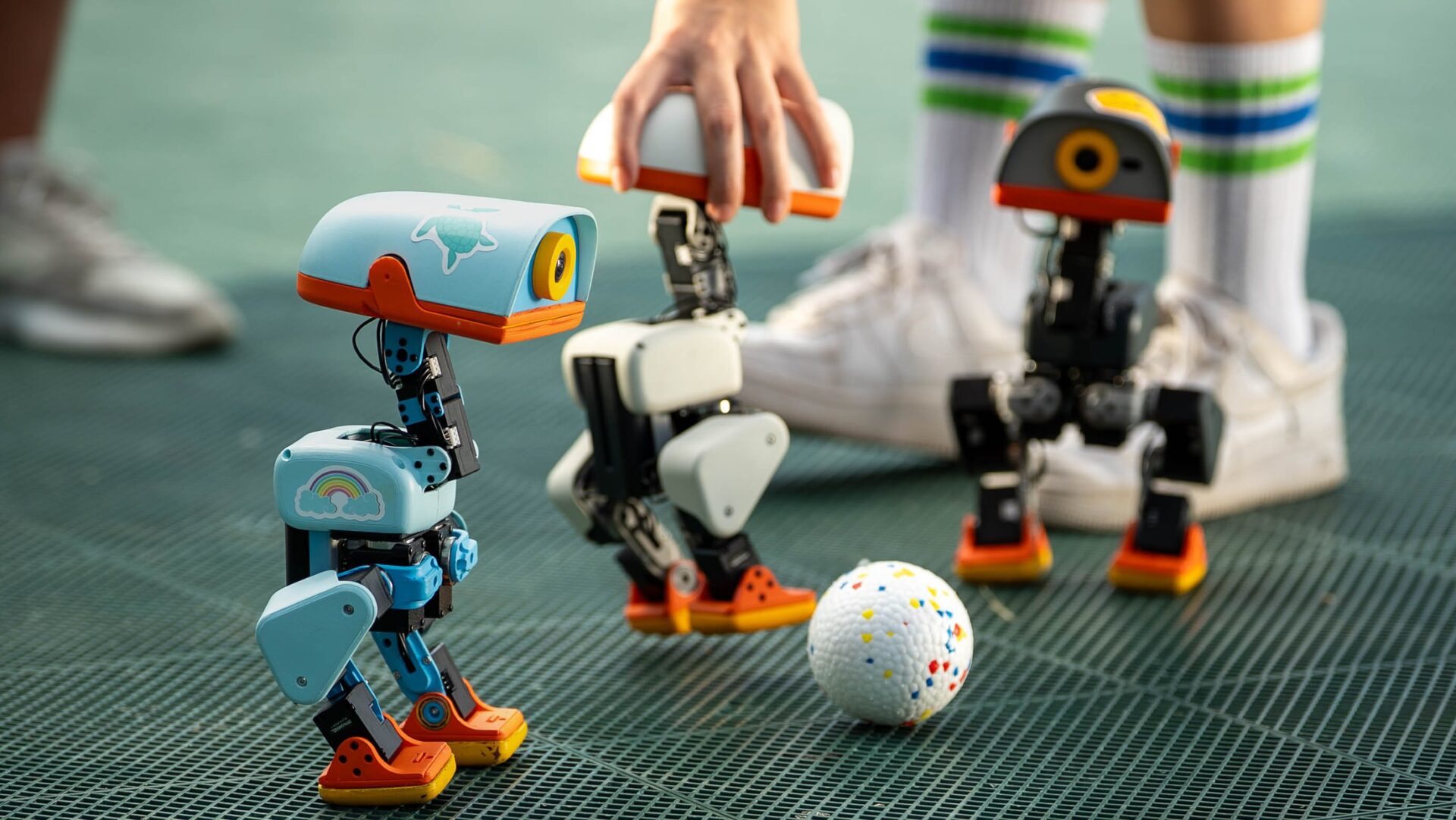
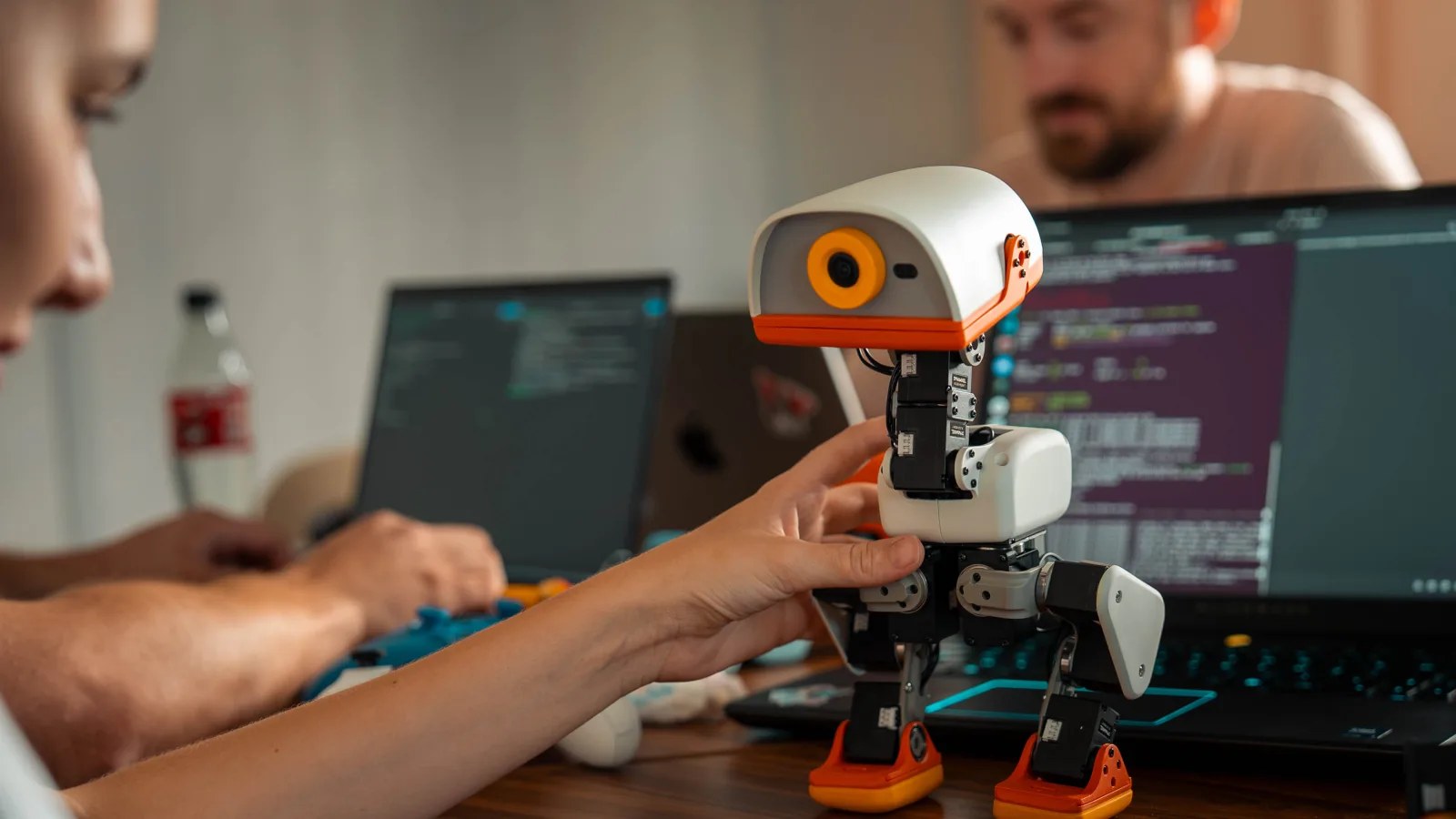
The press kit lists 15 motors across articulated legs, head, and neck. Microduck is 25 cm tall, 14 cm wide, and under 800 grams. Compute is a Rockchip RK3566 with an AI accelerator, 1 GB of RAM, and 32 GB of storage. Sensors include a front camera with a REC-style indicator, two IMUs, and an 8 by 8 time-of-flight LiDAR matrix. Then there is the grasping beak, microphones, a speaker, and two NFC antennas.
Also, Pollen ships a removable NP-F550 camera battery of 2600 milliamp hours, about one hour of runtime depending on use. Connectivity is Wi-Fi and Bluetooth. The box includes a game controller. Camera resolution, LiDAR range, radio versions, SDK languages, and any age rating are still being finalised, so treat those as provisional.
Four printed shells ship at launch: Cream, Graphite, Lavender, and Sky. Same robot underneath. Pollen says a group of them looks like different characters rather than identical machines. Internally, the team found several ducks are about ten times more fun, including races and football.
Play first, then retrain
Seven trained moves ship in the box. You can drive it with the gamepad, follow a laser dot, or let it react to its surroundings without writing code. Meanwhile, the same unit is a development platform. The SDK, simulation, and RL stack are public today on GitHub under Apache 2.0, in pollen-robotics/microduck and pollen-robotics/microduck_rl.
Policies train in simulation, then run on the robot at a 50 hertz onboard loop. Pollen is clear on one point: open source covers the software stack. Mechanical and electronic design files stay closed, so this is not open-source hardware. Therefore do not describe the duck as a fully open machine.
Microduck does not speak words. Instead, it makes creature sounds, and each unit gets a generated audio identity on first boot that stays for life. That is a different bet from Google-style humanoids such as Gemini Robotics 2, and from LG’s larger NVIDIA-backed humanoid still aimed at 2027. Still, this is not Pollen’s first consumer robot. The launch post says more than ten thousand Reachy Mini units already shipped, so Microduck is the second wave.
399 dollars, and a slower shop clock
The introductory price is 399 dollars before taxes and shipping. Pollen’s blog listed North America, Europe, and the UK for first deliveries. The store adds Canada, Norway, Switzerland, Japan, and South Korea, with more countries later. Finally, Pollen’s shop now says the community ordered a lot of ducks. New orders cannot promise Christmas, and the current estimate is four to six months, first ordered first shipped.
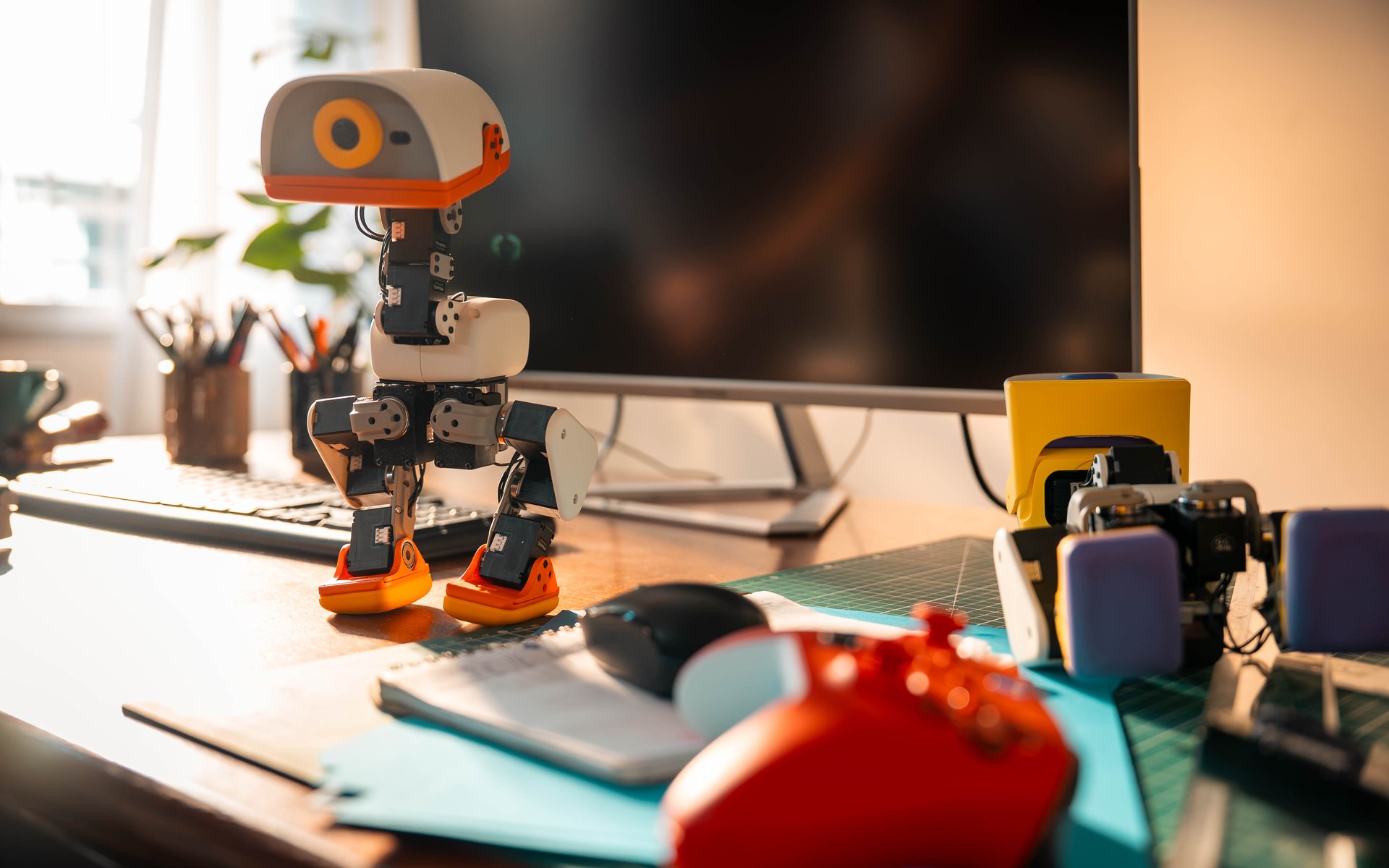
Optional packs sit next to the robot: extra batteries, play gear such as roller skates and a laser pointer, and a heavier spare-parts kit. The press kit does not freeze those add-on prices as the headline 399 dollar figure. As a result, treat the robot price as the official number, and check the store for pack totals before you tap preorder.