
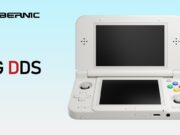





















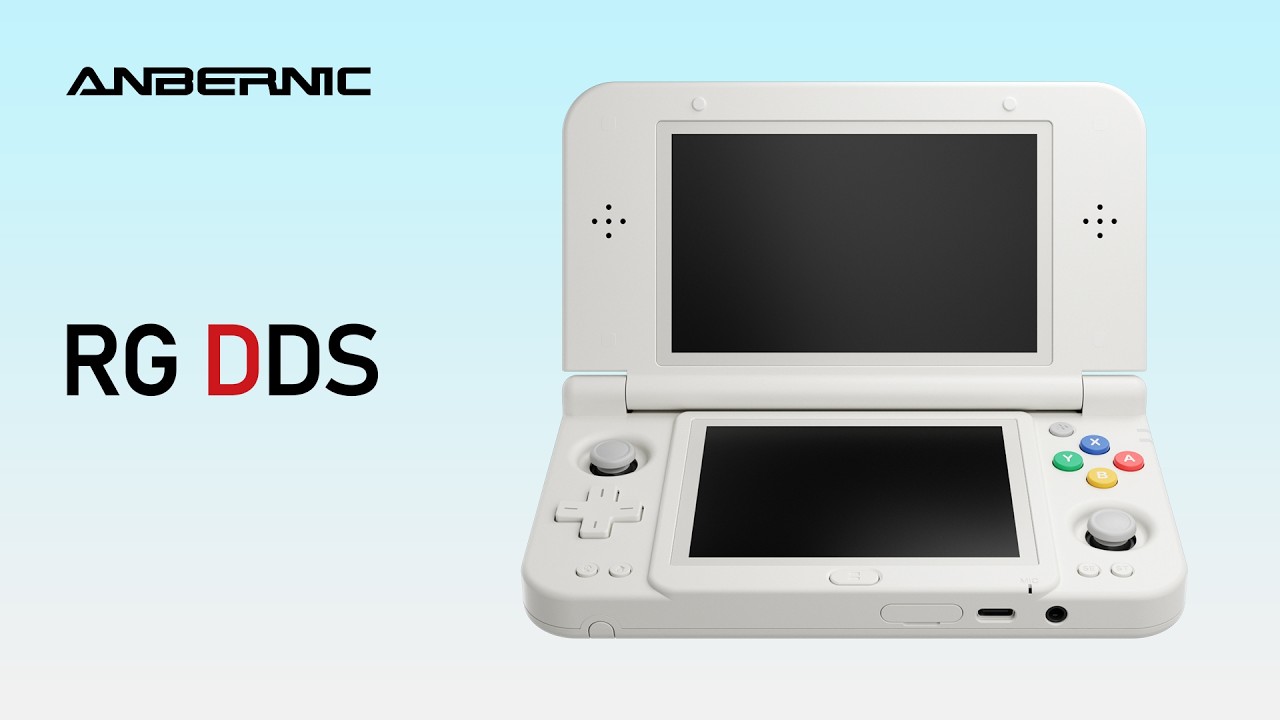
Anbernic unveiled the Anbernic RG DDS on October 9. The clamshell handheld pairs two screens with the same image proportions as Nintendo’s 3DS. However, matching those proportions does not establish which 3DS games will run or how well.
The company calls this its new flagship handheld. It follows the RG DS, which Anbernic introduced in 2025. This time, the design combines new displays with a Snapdragon G2 Gen 2 chip and a built-in stylus.
How the Anbernic RG DDS screens match the 3DS
The upper IPS panel measures about 4.7 inches. It has a 5:3 aspect ratio and 1,200 x 720 pixels. Meanwhile, the lower IPS touchscreen measures about 4 inches, with a 4:3 ratio and 960 x 720 pixels.
Anbernic lists both panels at 300 PPI and 500 nits. It also matches their color, brightness, refresh rate and materials for a consistent look across the two screens.
The useful detail is how those pixel counts scale. The original 3DS uses a 400 x 240 image for each eye on its upper screen. Its lower touchscreen has 320 x 240 pixels. Nintendo confirms those figures in its operations manual.
The RG DDS triples each image’s horizontal and vertical pixel counts while keeping its shape. As a result, each original image pixel could occupy a neat 3×3 block. That gives each display nine times the pixels of the corresponding image, rather than a different aspect ratio.
In principle, that fit allows full-screen scaling without stretching or black bars. In practice, though, game support also depends on compatible emulation software. Anbernic’s announcement names no 3DS emulator and gives no game-by-game compatibility or performance results.
A Snapdragon chip, cooling fan and stylus
Qualcomm’s Snapdragon G2 Gen 2 powers the handheld. Anbernic says it chose the chip for gaming efficiency and compatibility. An internal fan handles cooling, while a 6000mAh battery supplies power.
Around the lower screen, Anbernic places two analog sticks, a D-pad and ABXY buttons. The shell also has a UV-coated finish and dual alloy friction hinges. Front-facing stereo speakers handle sound, while a Z-axis linear motor provides vibration.
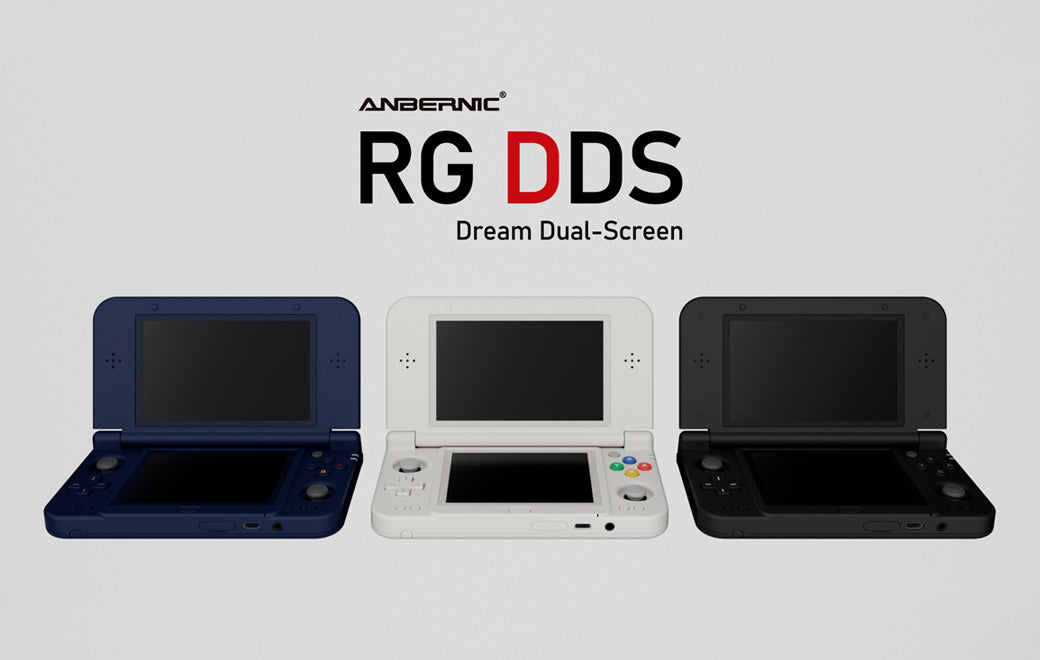
The retractable stylus extends for touch input, then tucks back into the handheld. Meanwhile, an on-screen control center brings performance, cooling, brightness, volume and dual-screen settings together. It also displays device status alongside the controls.
Anbernic sums up its pitch this way:
RG DDS. Dream Dual-Screen. The handheld we’ve been dreaming of—and, we hope, the one you’ve been waiting for.
Price and release timing remain open
The announcement gives no price, release date or memory options. It also provides no store page for the RG DDS. Buyers therefore still lack the details needed to judge its value.
For context, TMM has covered Anbernic’s RG 55G1 and the Retroid Pocket Nova’s 4:3 display approach. Those are useful points of comparison, but neither establishes the RG DDS’s price or performance.
For now, the matching screen geometry gives the handheld a clear appeal for 3DS-style play. Actual game compatibility and performance still need evidence.