






























California plug-in solar will be legal without a utility’s permission from January 1, 2027. Governor Gavin Newsom signed Senate Bill 868 on September 30, and the law exempts small plug-in panels from interconnection rules.
However, the fine print matters. The exemption only covers certified devices up to 1,200 watts, and it expires in 2030.
What the California plug-in solar law allows
SB 868 creates a new category called a “portable solar generation device.” It covers panels that connect to a building through an outlet, with a combined AC output of up to 1,200 watts per dwelling. In addition, the system must be meant to offset the customer’s own electricity use.
For those devices, utilities cannot require approval before installation. They also cannot charge any fee or demand extra equipment.
Utilities may still ask for a notification, though. The law lets them use a simple online form to collect the address, make, model and size of the device. That form cannot work as an approval step.
The certification catch
A kit only qualifies if Underwriters Laboratories, or an equivalent testing lab, certifies it as a plug-in photovoltaic system. It also needs a certified feature that stops it from sending power to the grid during an outage. Therefore, an uncertified panel bought online gets none of the law’s protections.
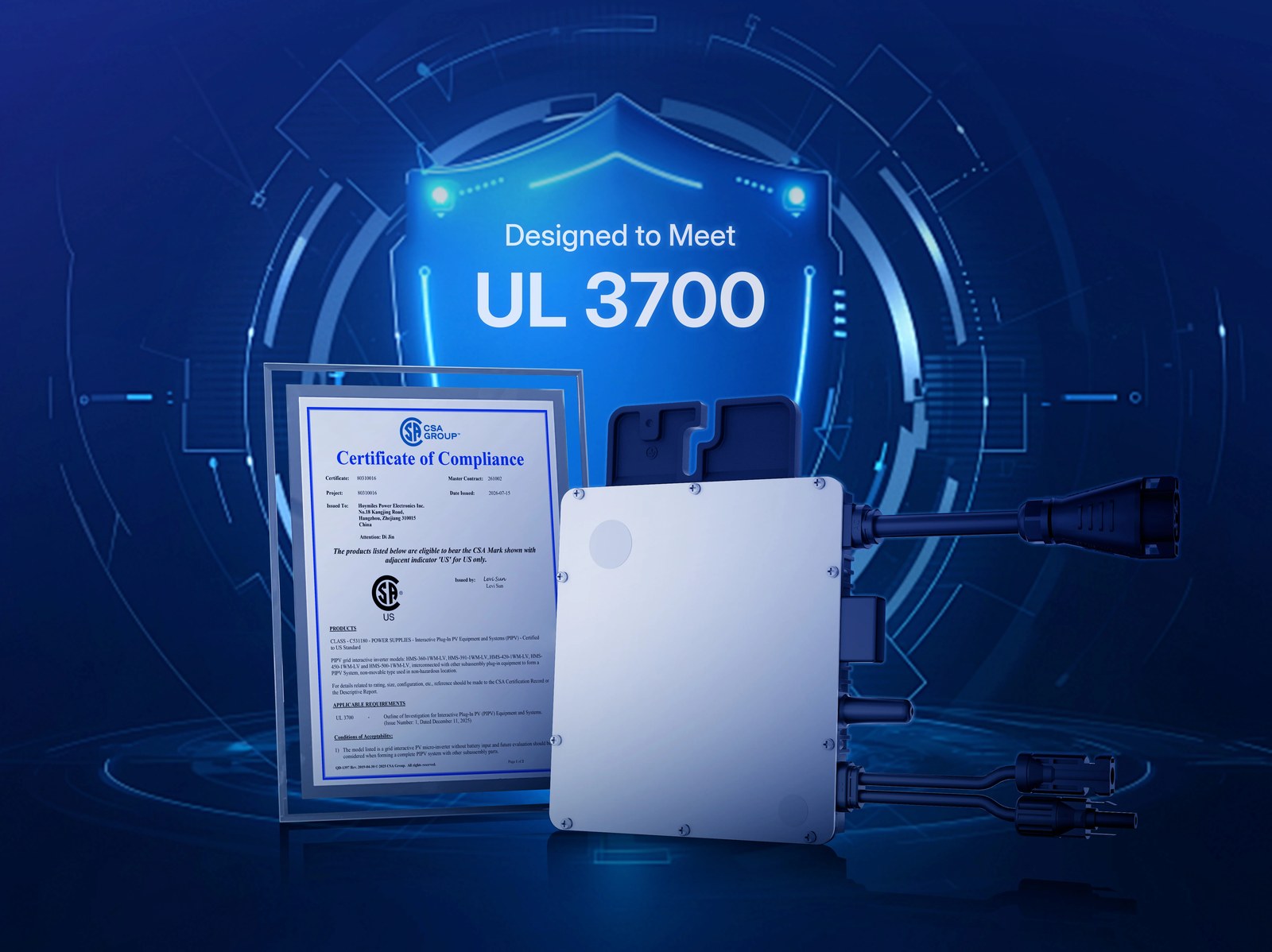
UL Solutions launched that certification program in January, based on its UL 3700 outline. According to UL, the outline requires protection against overloads, against contact with live parts and against current flowing the wrong way.
Certified hardware is starting to appear. For example, Hoymiles says its HiFlow Pro microinverter complies with UL 3700 and can scale to 1,200 watts. APsystems also says CSA Group certified its EZ1 to the standard.
Two dates to know
SB 868 is a non-urgency bill, so it takes effect on January 1, 2027. Until then, the current utility rules still apply.
The exemption is also temporary. The section that blocks utility approvals and fees expires on January 1, 2030, unless lawmakers extend it. Meanwhile, from that same date, nobody may sell plug-in solar devices in California that lack the required certifications.
Why lawmakers backed it
The bill passed the Assembly 73-0, and the Senate agreed to the final version 36-4. Its author, state Senator Scott Wiener, calls it the Plug and Play Solar Act. He made the case when the Senate first passed the bill in May.
The cost of electricity has risen to absurd levels, and plug-in solar is an easy way families can lower costs.
Scott Wiener, California state senator
Wiener’s office estimates that a plug-in system can save a household up to $450 a year, depending on the model and the home. It also puts kit prices between $400 for 200 watts and $2,000 for 800 watts without a battery.
Because roughly 40 percent of California households rent, the office argues the law opens solar to people without a roof of their own. Renters looking for other upgrades can also see Tech My Money’s apartment tech picks.
The law is not California’s only energy money-saver this year. For example, Tech My Money covered the state’s $3,500 MyFirstEV rebate in July.