





























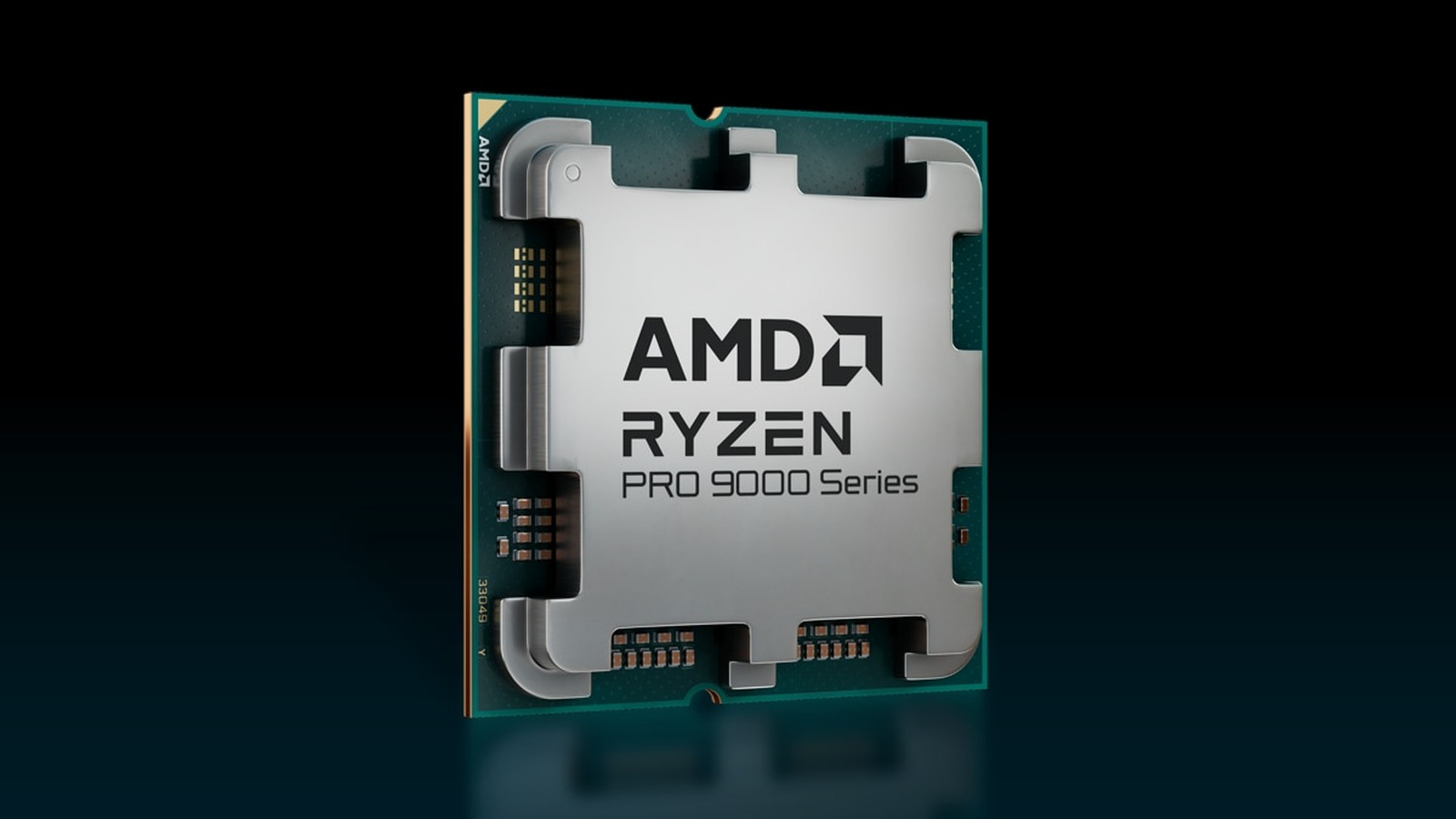
AMD Ryzen PRO 9000 is getting a workstation-focused expansion, and the most interesting part is 3D V-Cache. In an official blog post, AMD says the new Zen 5 lineup includes six commercial desktop processors for professional systems.
The headline chips are the Ryzen 9 PRO 9965X3D and Ryzen 7 PRO 9755X3D. The 9965X3D has 16 cores, 32 threads, boost speeds up to 5.5GHz and 128MB of L3 cache. The 9755X3D has eight cores and 104MB of L3 cache.
Why the cache matters
AMD’s 3D V-Cache stacks extra cache on the processor die. Gamers know the benefit from Ryzen X3D chips, but AMD is now aiming that same idea at media, architecture, engineering and local AI workloads. More cache can help when large tasks need fast access to repeated data.
The new chips also support up to 256GB of ECC DDR5 memory, PCIe 5.0 and AMD PRO technologies for enterprise security and manageability. That makes them very different from a normal enthusiast desktop part. These are meant for OEM workstations, not boxed CPUs sitting on a retail shelf.
AMD says systems using the new processors should arrive in the second half of 2026, with Lenovo’s ThinkStation P4 expected in the third quarter. For creators and studios, this is another sign that workstation hardware is shifting toward local AI and heavier media workflows, the same direction driving demand for powerful laptops and desktops across the industry.
The OEM-only detail is important. These chips are not aimed at hobbyists building a weekend gaming rig. They are for workstation vendors that need security features, manageability and predictable platform support for business customers.
That also means benchmarks will matter more than usual. The promise is strong, especially for cache-sensitive professional workloads, but studios and IT buyers will want proof across real apps before they standardize on new machines. That same demand for local horsepower is showing up in premium systems like the Razer Blade 18.
If the performance lands well, 3D V-Cache may stop being treated as a gaming-only trick. It could become one more tool for professional machines that need to chew through large, messy workloads.