
























Most AI assistants answer you. SpaceXAI pitches Grok Bot as something else entirely: a teammate you hand a job to. SpaceXAI launched it in early beta on 11 August, and the framing is deliberate. These agents sign into your tools, work across your apps, and come back once they finish.
The company puts the gap bluntly. “There is a huge difference between 90% done and 100% done.” Most assistants stop at the first number. Grok Bot promises to close the rest.
What a Bot actually gets
Each Bot works on a persistent cloud machine rather than your laptop. SpaceXAI’s documentation describes it plainly as “a persistent cloud VM with a browser, filesystem, and terminal.” Consequently the work continues after you close the lid or walk away.
From there a Bot signs into the same services you use. It reads inboxes, moves through web apps, and finishes multi-step jobs end to end. You message it like a colleague instead of configuring an automation. Moreover it remembers how you like things done, and SpaceXAI says it sharpens with use.
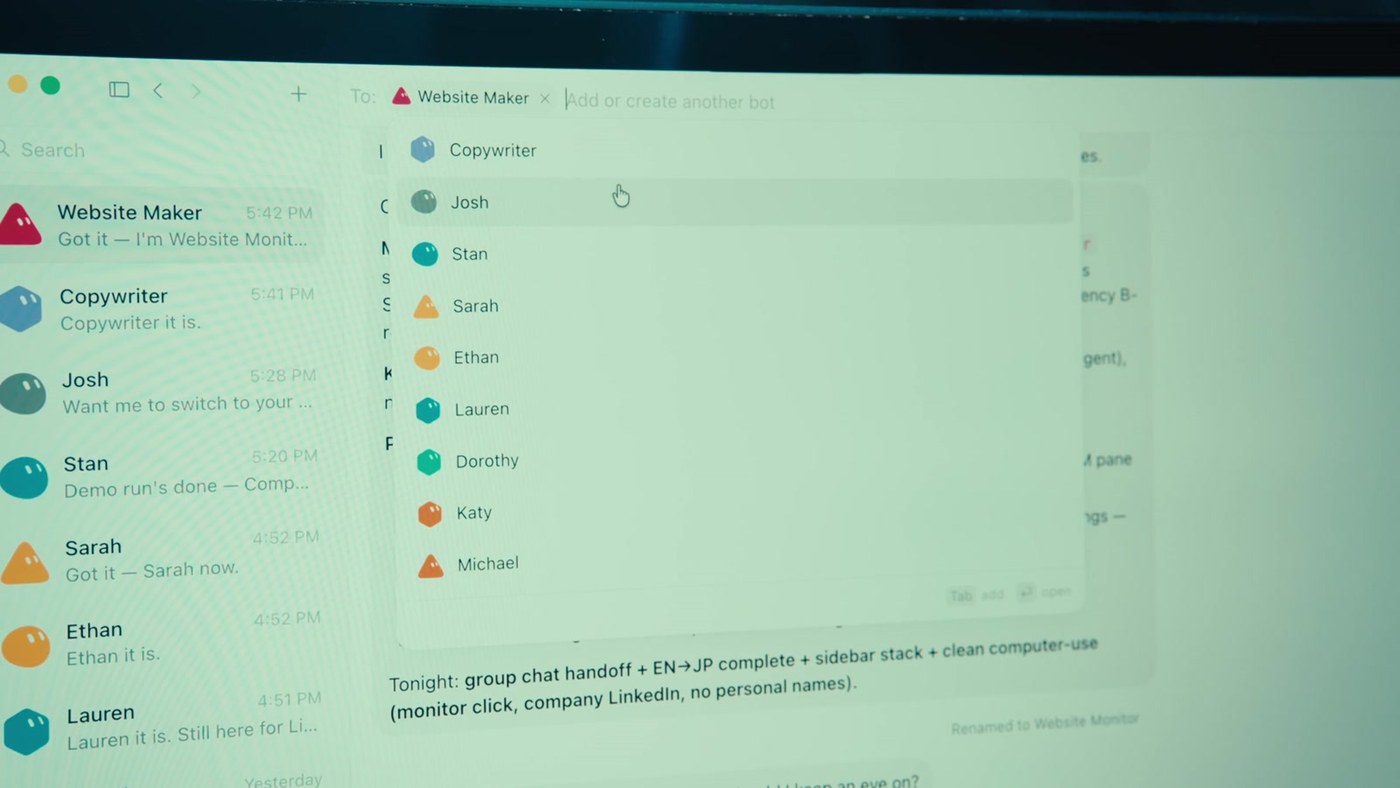
Bots also talk to each other. One can pass a task to another, so a group behaves like a small team rather than a single assistant. SpaceXAI’s own examples run that way internally. A sales Bot updates the CRM from call transcripts and drafts follow-ups. An ops Bot handles new-hire setup and processes invoices arriving in Gmail. An engineering Bot reproduces a bug, files the ticket, then hands the fix to a debugging Bot.
Routines replace automation setup
The routine feature is the part worth watching. You walk a Bot through a multi-step path once. Afterwards it keeps that path and re-runs it on a schedule or on demand. Nobody writes a rule or wires a trigger, which is exactly the friction that has kept ordinary automation tools niche.
One computer, many Bots
Here is a detail the launch coverage has largely skipped. That cloud computer is not per-Bot. SpaceXAI’s documentation states the machine is “isolated to your account, not to an individual Bot,” and that “all of your Bots use the same persistent cloud computer.”
Practically, that means a shared filesystem and shared browser state across every agent you run. For a solo user it is efficient. For a team handing different Bots different credentials, however, it is a question worth asking before anything sensitive gets connected. The documentation itself advises reviewing the security notes first, yet it defers the actual approvals, security and privacy detail to separate pages.
The approval model is similarly thin at launch. Bots run unsupervised and “only come back when something needs your approval.” The announcement never defines what counts as needing approval. That matters more here than usual, because agents signing into real accounts are the same category of software that got an OpenAI agent days of unnoticed access at Hugging Face.
Who can actually use it
Access is narrow for now. Grok Bot ships to SuperGrok Heavy, Cursor Ultra and Cursor Teams Premium subscribers, on desktop and iOS. Enterprise customers join a waitlist instead. SpaceXAI has published no separate pricing, so the cost sits inside those existing tiers.
The timing is not accidental either. SpaceXAI released Grok 4.6 the following day, a model it positions for long-running agentic work. Rivals are converging on the same shape, and Cloudflare’s Kitesurf agent browser similarly gives an agent its own cloud environment rather than borrowing yours.
One caveat about the evidence. Every glowing quote on the announcement page comes from inside SpaceXAI or from early beta users the company selected. Nobody independent has yet run these Bots against real work for a month. Until that happens, treat the efficiency claims as a promise rather than a result.