


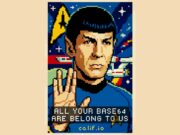





















Java4Shell is a memory-corruption bug in OpenJDK’s Base64 decoder. Calif disclosed it in a write-up and said OpenJDK released a security advisory and Oracle released a patch at 1:00 p.m. PT on Nov. 17, 2026. Calif scores the bug 9.2 out of 10 under CVSS 4.0 and tracks it as CVE-2026-114938. The affected Base64 decoder can corrupt JVM memory. Calif demonstrated remote code execution in specific test configurations. Exposure depends on the runtime, hardware, and application.
Oracle’s Java Management notes list the Oracle Java SE releases in the November 17, 2026 Critical Security Patch Update: 27.0.1.1, 25.0.5.1, 21.0.13.1, 17.0.21.1, 11.0.33.1 and 8u513. That page does not name Java4Shell. Confirm the update for your own distribution, and check Java runtimes bundled inside other applications. Calif says all Java users should update immediately.
The same day, the Cybersecurity and Infrastructure Security Agency told organizations to patch CVE-2026-114938 immediately, starting with internet-facing systems. CISA says specially crafted Base64 input could crash the Java Virtual Machine and allow unauthenticated remote code execution. The alert does not list build numbers, but it points administrators to Oracle’s November 2026 Critical Patch Update.
Which machines are affected
Calif says Java4Shell affects OpenJDK from version 17.0.6 or newer, and names Amazon Corretto, Eclipse Temurin, Microsoft Build of OpenJDK, Azul Zulu, BellSoft Liberica, SAP SapMachine, Red Hat OpenJDK, Oracle OpenJDK, Oracle Java SE and Oracle GraalVM for JDK because those builds come from OpenJDK. That range is the unpatched line. However, it does not describe a build that already has the Nov. 17 fix. The bug also requires an x86-64 processor with AVX-512 VBMI. Calif says the bug does not affect ARM64 CPUs. Calif names Intel Xeon processors from Ice Lake through Granite Rapids, plus AMD EPYC and Ryzen processors from Zen 4 onward.
On Linux, Calif says a check of /proc/cpuinfo has to show all four flags: avx512f, avx512bw, avx512vbmi and bmi2. The OpenJDK 17 floor also misses a build Oracle flagged. Calif says Oracle identified these Oracle Java SE versions as vulnerable: 8u511b33-perf, 17.0.21.0.3, 21.0.13.0.3, 25.0.5.0.3 and 27.0.1.0.3. Those are vulnerable builds, but they are not the patched releases.
Calif says there is no universal exploit, and it is holding the product-specific chains back until administrators have had a chance to upgrade. Researcher samczsun also shared a client-side case with Calif. A malicious TLS server can also compromise a Java program that connects to it, even when that program exposes no service of its own.
If you cannot patch yet
If you cannot update yet, the write-up also offers two startup flags. -XX:-UseBASE64Intrinsics turns off the hardware Base64 path. -XX:UseAVX=2 turns off AVX-512. Calif says to use that second flag only on x86-64 hosts. That limit matters because OpenJDK on ARM does not recognize the flag, and the runtime will fail to start.
What CISA says to do
CISA adds a search step. For example, JDKs and Java runtimes may sit inside third-party applications, container images and appliances. They may not appear as their own inventory entries. If a patch is not feasible yet, CISA gives three temporary controls. Restrict and validate Base64 input at the application boundary. Enforce input-size limits. Limit unauthenticated access. CISA also says to watch for rogue runtimes, unexpected JVM crashes and suspicious Java processes.
How Calif says it found the bug
Calif says it used AI to find and weaponize Java4Shell. Calif says Quang Luong took an hour to discover the vulnerability and two more hours to develop the first working exploit. The token cost was under $200. The credits name Luong for the research, the write-up and the exploits.
Luong says he told Codex to look at the JIT compiler, intrinsics, widely accessible APIs and cryptography. He says Codex brought him the Base64 finding. Calif cites IBM for a separate scale figure: Java powers 90 percent of Fortune 500 companies. That figure is about where Java runs. In other words, it is not a count of systems Calif broke.