



















Project Suncatcher now has a satellite in orbit. Google Research said on October 1 that a Planet-built prototype rode SpaceX’s Transporter-18 mission, then checked in and is operating as expected. The test is the first in-orbit step of a moonshot that asks whether space can host scalable machine learning hardware.
Travis Beals, senior director of Paradigms of Intelligence, wrote the orbit note. Meanwhile, he said the coming weeks will collect data on how Google TPUs take launch stress, radiation, and thermal extremes.
Some things can only be tested in space.
Why Google wants compute in orbit
A September 24 Google Research post laid out the bet. In low Earth orbit, satellites can sit in near-constant sunlight and make up to eight times more solar power than the same panel on the ground. Google wants to know if clusters of solar-powered satellites could one day run larger AI workloads there.
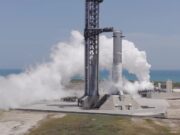
The first question is simpler. Can the chips survive space at all? Therefore, Google partnered with Planet for this rideshare. Planet’s launch note said Transporter-18 left Vandenberg Space Force Base in California, and that Planet also made contact with the Suncatcher prototype.
That sits next to other Google work that already leans on satellites, including WeatherNext 3’s live satellite weather data. Instead, this flight is hardware in orbit, not a forecast model. It also landed in the same news week as Gemini 4 Argon, Google’s new frontier model.
What the TPUs already survived on the ground
Google says a ride to low Earth orbit lasts about 10 minutes. The spacecraft can take sustained loads up to 10 times the force of gravity. TPU chips can see 50 to 100 g. In addition, the team shook the satellite on all three axes to copy launch frequencies. Google said it was pleasantly surprised the hardware held up.
Radiation is the next gate. Solar events and cosmic rays can flip bits. Google ran Trillium TPUs in a proton beam at UC Davis’s Crocker Nuclear Laboratory while they handled AI work. Initial results, Google says, show the chips can take a total ionizing dose greater than a five-year space mission. However, vacuum cooling and real orbital weather still need flight data.
Also, later designs would carry dozens of TPUs per satellite and talk over short, high-bandwidth lasers. Google plans to test that link in 2027 with two satellites in orbit. Finally, a peer-reviewed paper in Joule now details the research behind this mission. Still, this flight is a prototype, not a commercial orbital data center.