





















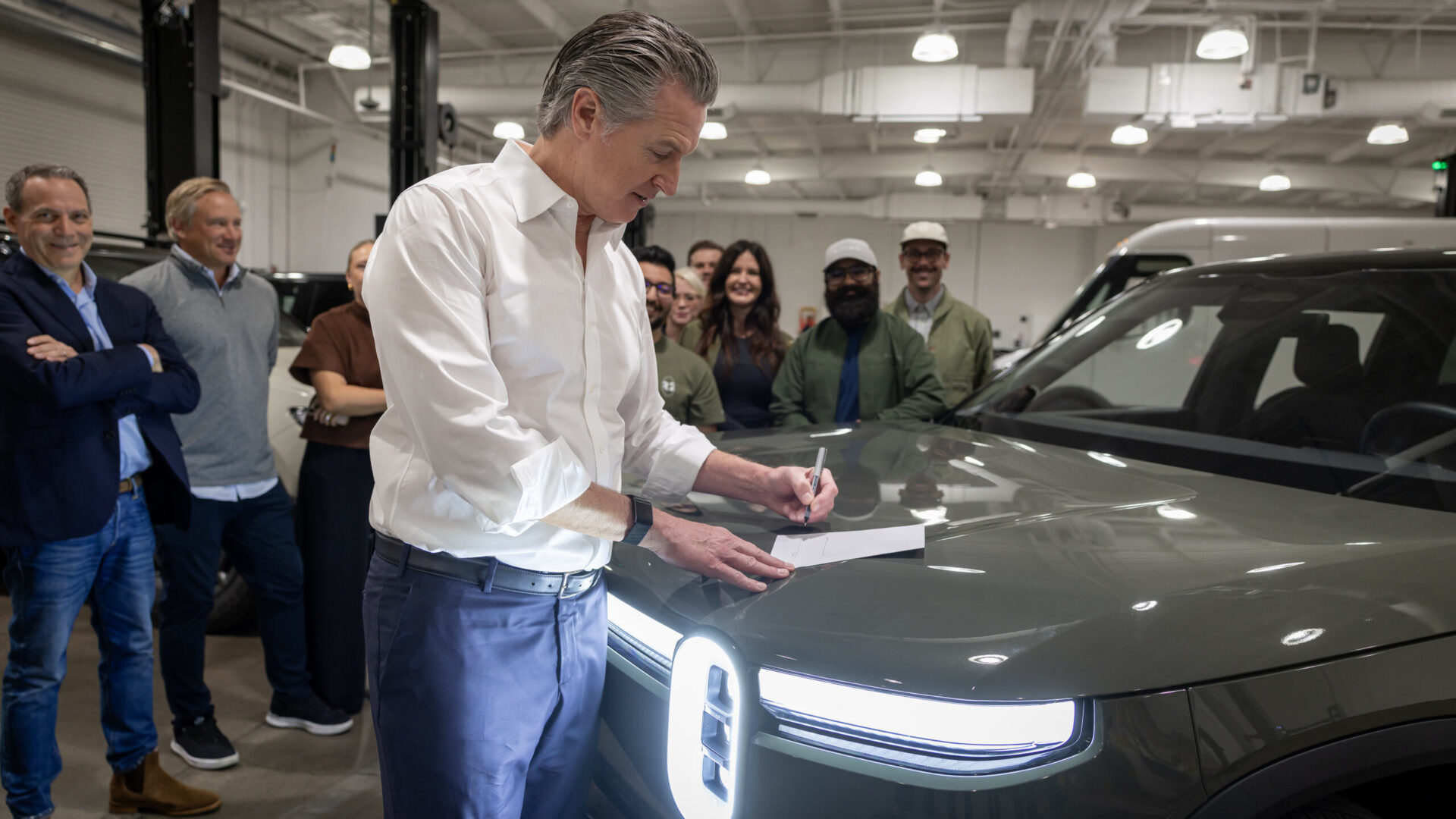
California EV rebate funding is returning through MyFirstEV, a new point-of-sale program for people buying their first zero-emission vehicle. According to the Governor of California’s announcement, eligible buyers will get $3,500 off a new EV or $1,750 off a used one when the program starts later this summer.
However, the money is not available at dealerships yet. California still needs participating automakers, grant agreements, and final program guidance. Therefore, shoppers should treat the announcement as an upcoming incentive rather than a discount they can use today.
How the California EV rebate will work
MyFirstEV will apply the discount at the point of sale. Specifically, new electric vehicles must carry a manufacturer suggested retail price of $50,000 or less. Used EVs must sell for $25,000 or less. Buyers must also register the vehicle in California.
The program covers the purchase or lease of a new light-duty passenger EV. It also covers the purchase of a used model. Meanwhile, California will confirm first-time buyer status through an attestation, according to the text of SB 168.
Participating automakers must match the state’s incentive amount. As a result, California’s $135.5 million allocation could support about $270 million in combined state and manufacturer discounts. The state says the wider budget includes $600 million for clean transportation programs.
The price caps include an unusual exception
SB 168 creates an exception for zero-emission automakers headquartered in California. Their eligible vehicles can receive incentives regardless of the usual new or used price cap. Still, the company must make only zero-emission vehicles, and its headquarters had to be in California on January 1, 2026.
That carve-out could matter for California-based brands with models above $50,000. By comparison, the recently announced $61,990 Tesla Model Y Long Wheelbase sits above the standard cap. Tesla moved its headquarters to Texas, so the California-company exception would not appear to apply. Final eligibility, however, depends on CARB’s guidelines and manufacturer participation.
The law also excludes vehicles weighing more than 8,500 pounds. Moreover, it requires manufacturers to show consumers how much of the discount comes from the state. Another provision limits releasing or reselling an incentive-backed vehicle in another state for at least four years. CARB’s final rules should explain how that restriction works in practice.
The instant discount is only part of the ownership math
For shoppers, the point-of-sale design matters more than the political framing. A tax credit can arrive months after a purchase, while MyFirstEV should reduce the amount due at the dealership. In fact, the program could make a used EV below $25,000 more approachable without forcing a buyer to wait for tax season.
Nevertheless, the rebate does not settle every cost. Charging access, insurance, financing, battery condition, and electricity rates still shape the real monthly bill. California says it has more than 200,000 public and shared chargers, while automakers continue simplifying access. For example, GM Energy Pass now connects drivers to most major US fast-charging networks through one app.
Additionally, the state has not named the automakers that will join MyFirstEV or published a dedicated application portal. Buyers also do not yet have a complete vehicle list. Consequently, the most important next update will be CARB’s operating guidance, not another headline about the maximum rebate.
California expects MyFirstEV to launch later this summer. Until then, the useful takeaway is straightforward: the program promises an immediate discount for a first EV, but the final rules will determine which vehicles and dealerships can actually deliver it.