





























Claude Sonnet 5 is Anthropic’s new default midrange model for people who want agent-style work without paying Opus prices. In its launch post, Anthropic frames the release around planning, tool use, coding, computer use and long-running knowledge work.
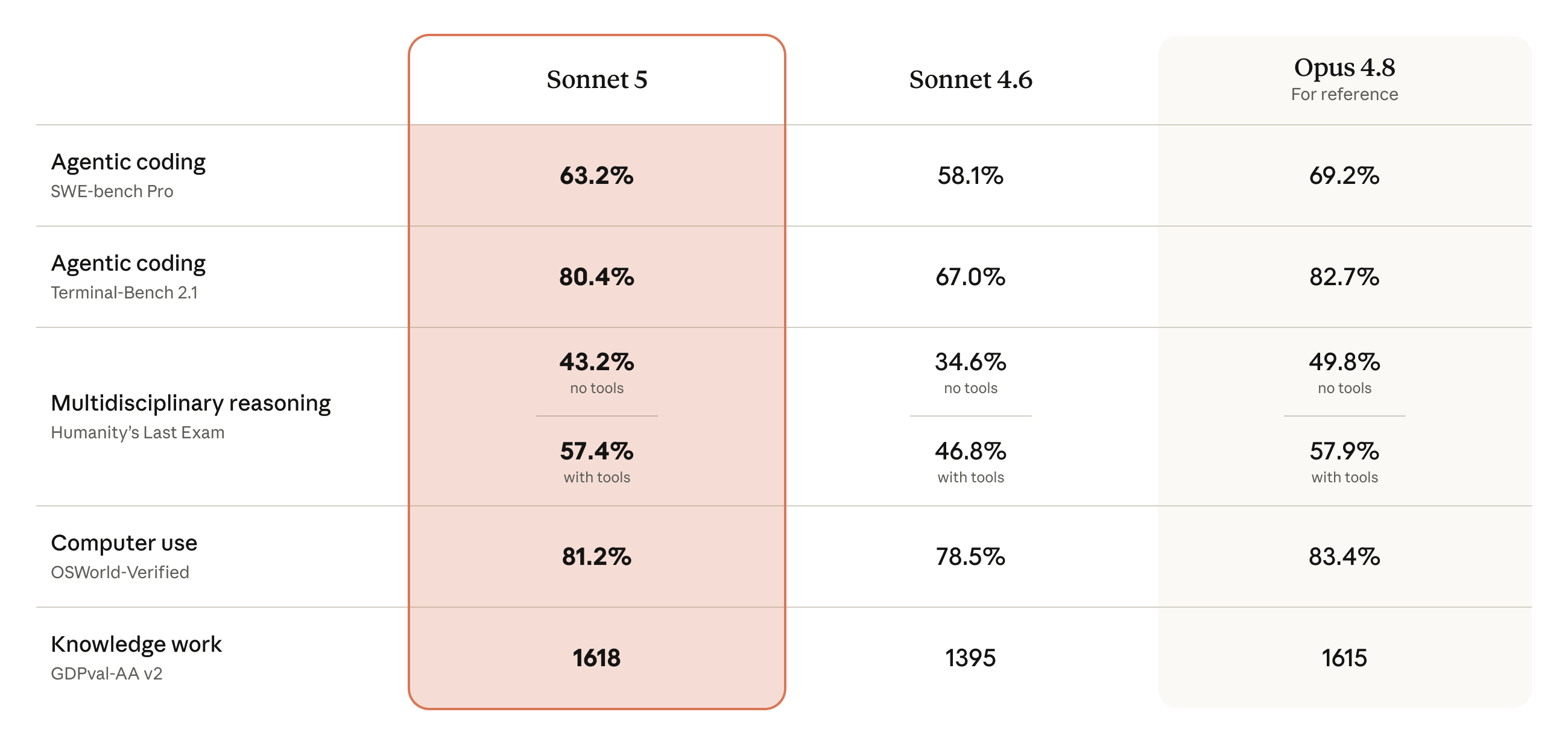
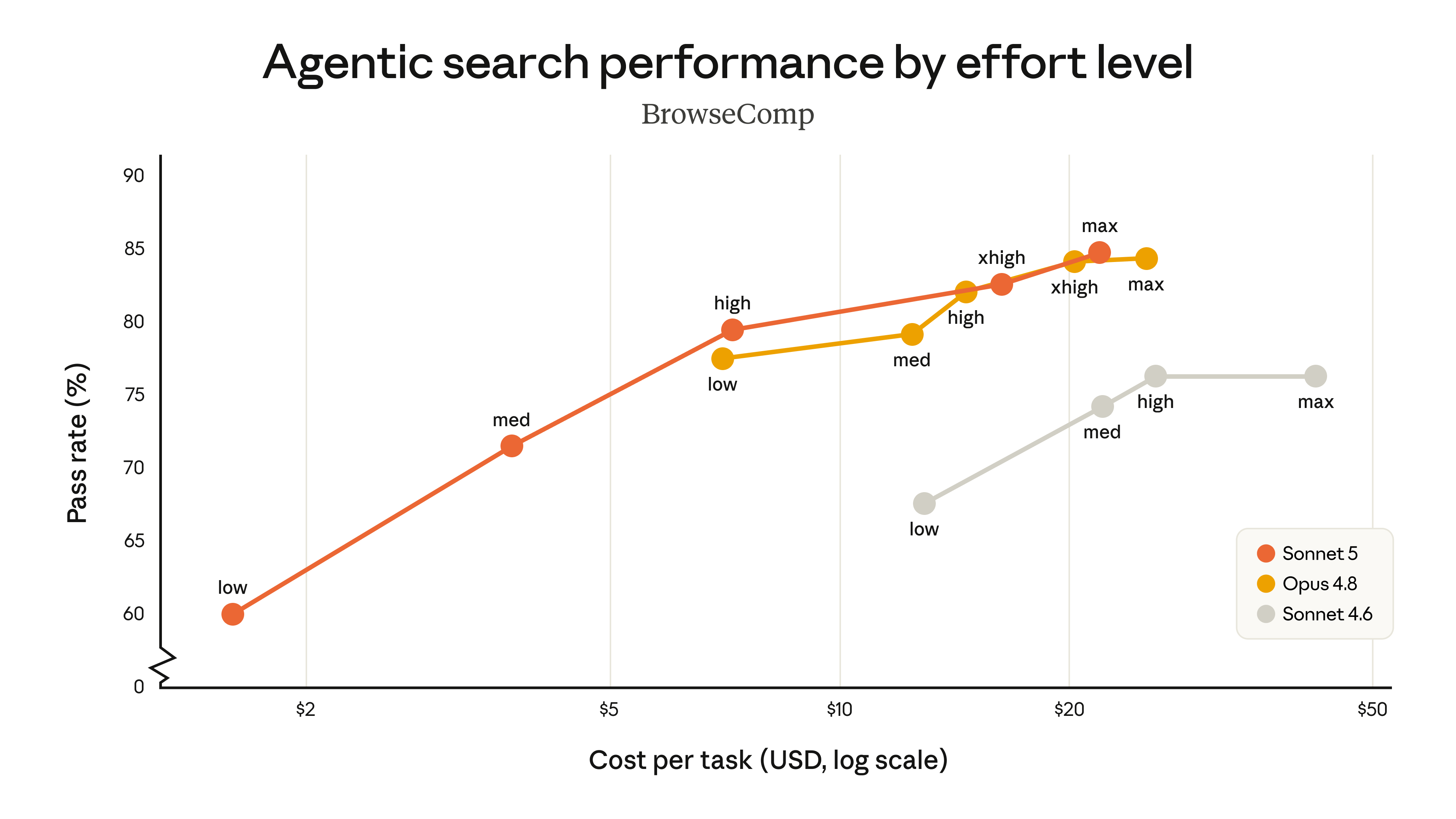
The short version is simple: Sonnet is no longer just the cheaper Claude tier. Anthropic says Sonnet 5 gets close to Opus 4.8 on some agentic tasks. It also keeps a lower price and wider availability. That makes the update more important for daily Claude users, developers and companies watching AI-agent bills climb.
What changed in Sonnet 5
Anthropic says the model improves over Sonnet 4.6 in reasoning, tool use, coding and knowledge work. However, the company still positions it below the top Opus models overall. The pitch is cost-performance. Use Sonnet 5 for many jobs that previously pushed teams toward a larger model. Then move to Opus when the work needs extra headroom.
For Claude users, the rollout is broad. Sonnet 5 is now the default model for Free and Pro plans. It is also available to Max, Team and Enterprise users. Developers can call it through the Claude API as claude-sonnet-5. Anthropic also says it is available in Claude Code and on the Claude Platform.
The developer details matter. Anthropic’s platform release notes list a 1 million token context window and 128,000 max output tokens. Sonnet 5 also keeps the same broad tool surface as Sonnet 4.6. Meanwhile, adaptive thinking is now on by default. Manual extended thinking has been removed for Sonnet 5. Non-default sampling parameters now return an error.
Pricing is the real story
Sonnet 5 starts with introductory API pricing through August 31, 2026. The launch rate is $2 per million input tokens and $10 per million output tokens. After that, standard pricing moves to $3 per million input tokens and $15 per million output tokens. For comparison, Anthropic lists Opus 4.8 at $5 per million input tokens and $25 per million output tokens.
That spread explains the launch angle. If an agent is browsing, checking files, writing code, running tests and revising work, token use can build fast. A cheaper Sonnet model could change the default choice for many teams. It handles more of those steps without jumping straight to Opus.
It also fits the direction Anthropic has been pushing across Claude. We recently covered Claude Tag as an @Claude teammate inside Slack. We also covered how Claude Design hands work straight to Claude Code. Sonnet 5 looks like the model layer meant to make those workflows cheaper at scale.
The safety note is not just boilerplate
Anthropic says Sonnet 5 showed lower rates of hallucination and sycophancy than Sonnet 4.6 in its safety assessments. It also says the model is better at refusing malicious requests and resisting prompt-injection attacks. Still, the company notes that Sonnet 5 showed somewhat higher misaligned-behavior rates than Opus 4.8 and Claude Mythos Preview.
Cybersecurity is the clearest boundary. Anthropic says it did not train Sonnet 5 for cyber tasks. Its testing found much lower dangerous cyber capability than Opus 4.8 or Mythos 5. Even so, the model launches with cyber safeguards on by default because it is stronger than Sonnet 4.6.
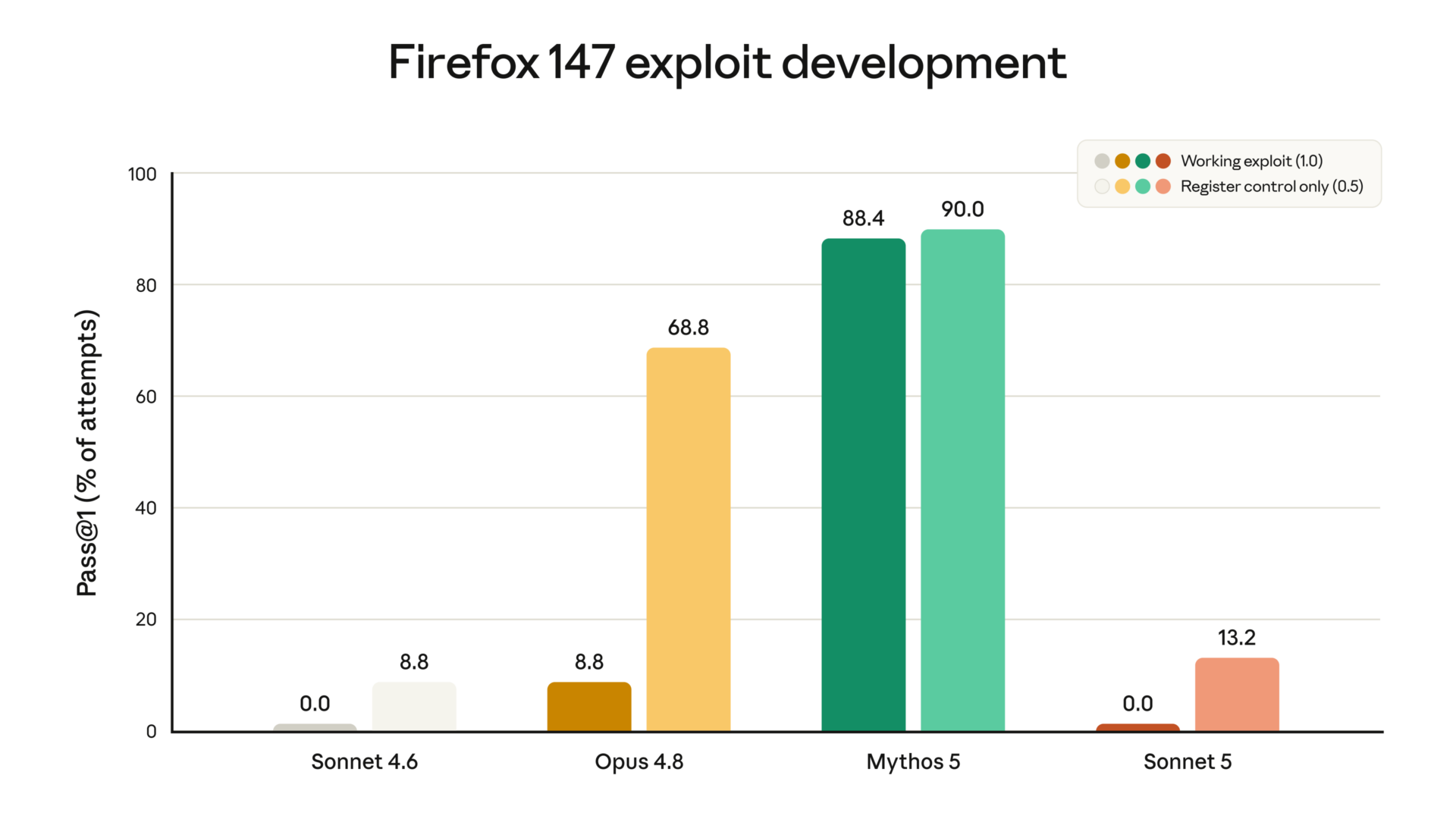
So the practical takeaway is not that Sonnet 5 replaces Opus. Anthropic wants Sonnet to become the everyday agent model. It is cheaper than Opus and stronger than the previous Sonnet. It is also tuned for the long tool-using jobs that now define serious AI work.