





















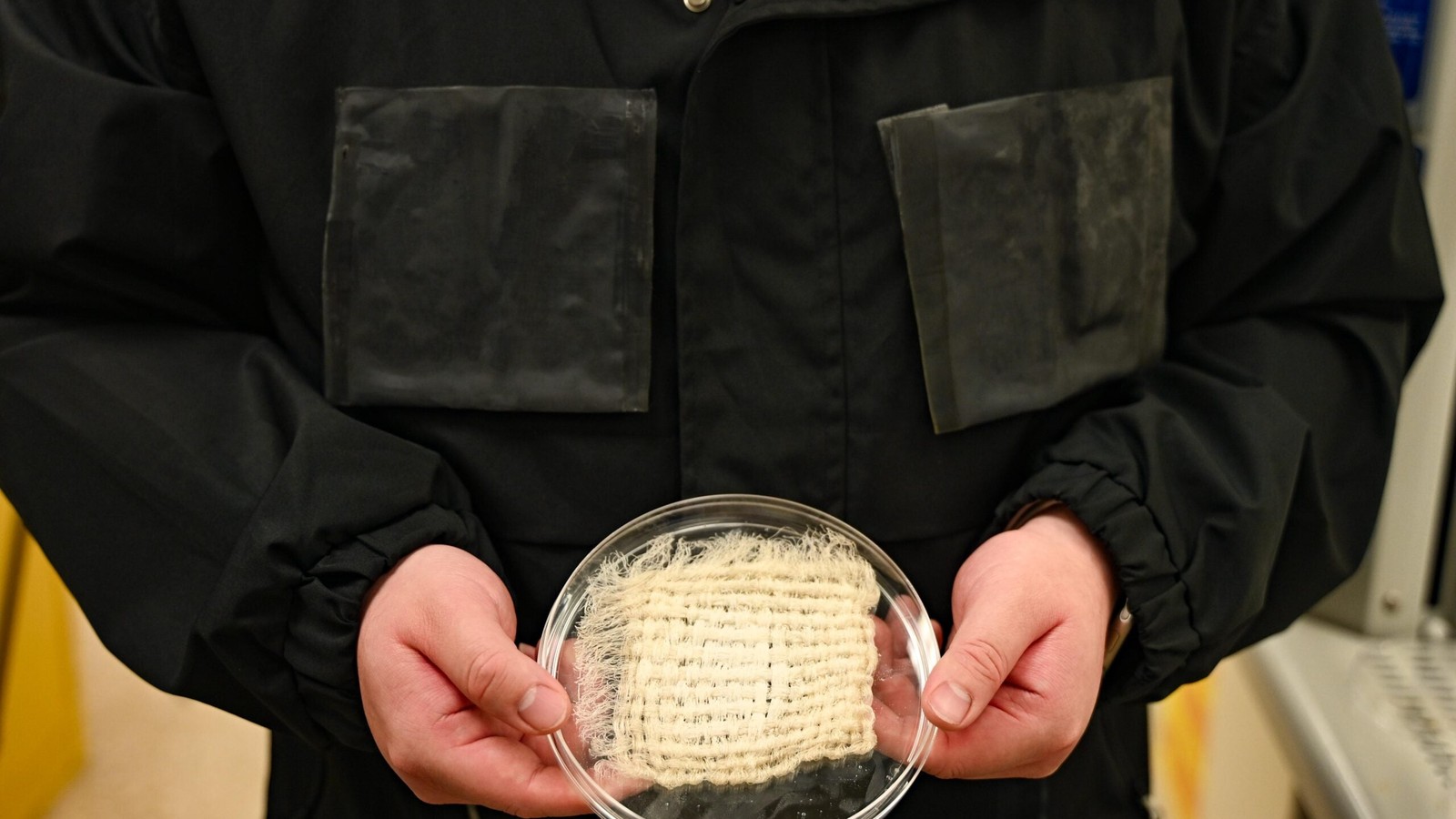
A jacket that refills your water bottle sounds like science fiction. However, researchers at the University of Texas at Austin have built one. Their water-harvesting jacket uses a specially engineered hydrogel fabric that pulls moisture out of the air. Depending on humidity, the prototype produces 400 to 900 milliliters of drinking water per day. That works out to as much as 30 ounces from thin air.
The clever part is how the textile handles that moisture. Instead of soaking it up like a sponge, the fabric moves captured vapor along quick fiber pathways. The vapor then collects in small, detachable harvesting units. Afterward, those cartridges snap into a foldable collector, where gentle heating releases the water in drinkable form. “Water harvesting from air is usually imagined as a stationary device… Here, we wanted to rethink the form of the technology,” said Guihua Yu. He is a professor in the Walker Department of Mechanical Engineering and the Texas Materials Institute.
A desert-tested record for pulling water from air
The team did not stop at clothing. In a companion project, the researchers built a portable harvesting device around the same biomass-derived hydrogel materials. In field tests, it produced about 1.3 liters of drinking water per day. Notably, it hit that mark in both arid and semi-humid conditions. The trials ran in New Mexico’s Chihuahuan Desert and in Austin, Texas.
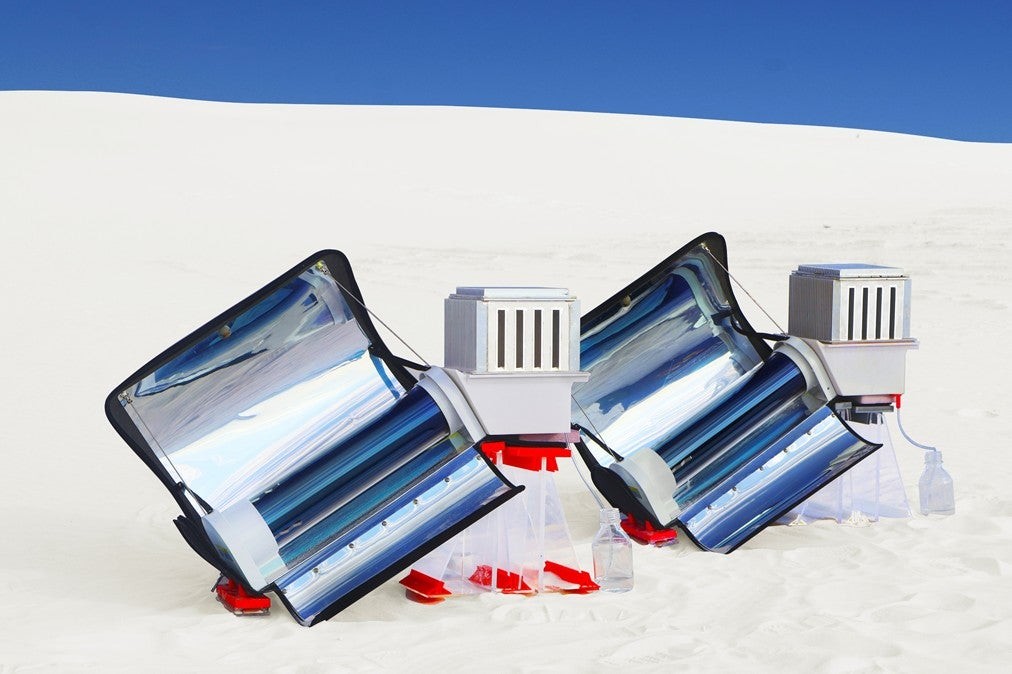
The efficiency numbers explain the excitement. The system yields about 4.3 liters of water per kilogram of moisture-capturing material each day. According to the university, that is a three- to ten-fold improvement over conventional materials at scale. It also sets a record for atmospheric water harvesting. “This is a big stride toward practical atmospheric water harvesting,” said Weixin Guan, the study’s lead author.
From emergency kits to camping gear
Because the textile is flexible, the same material could move beyond jackets into backpacks, tents, and other gear. The researchers point to emergency medical response, remote work sites, and outdoor recreation as early use cases. The findings appear in two journals. Science Advances carries the textile research, while Nature Water details the portable device.
Clothing keeps absorbing jobs that once required dedicated machines. Sony already sells the Reon Pocket Pro, a wearable air cooler. Meanwhile, UT Austin’s fabric points toward apparel that hydrates you too. For hikers, soldiers, and disaster crews, the next survival tool might simply be something you put on.