




























Amazon Leo is finally ready to take on Starlink. The company’s satellite internet venture, formerly known as Project Kuiper, has crossed the threshold needed to begin offering service. Amazon now plans to start that service later this year, according to a Reuters report published July 2.
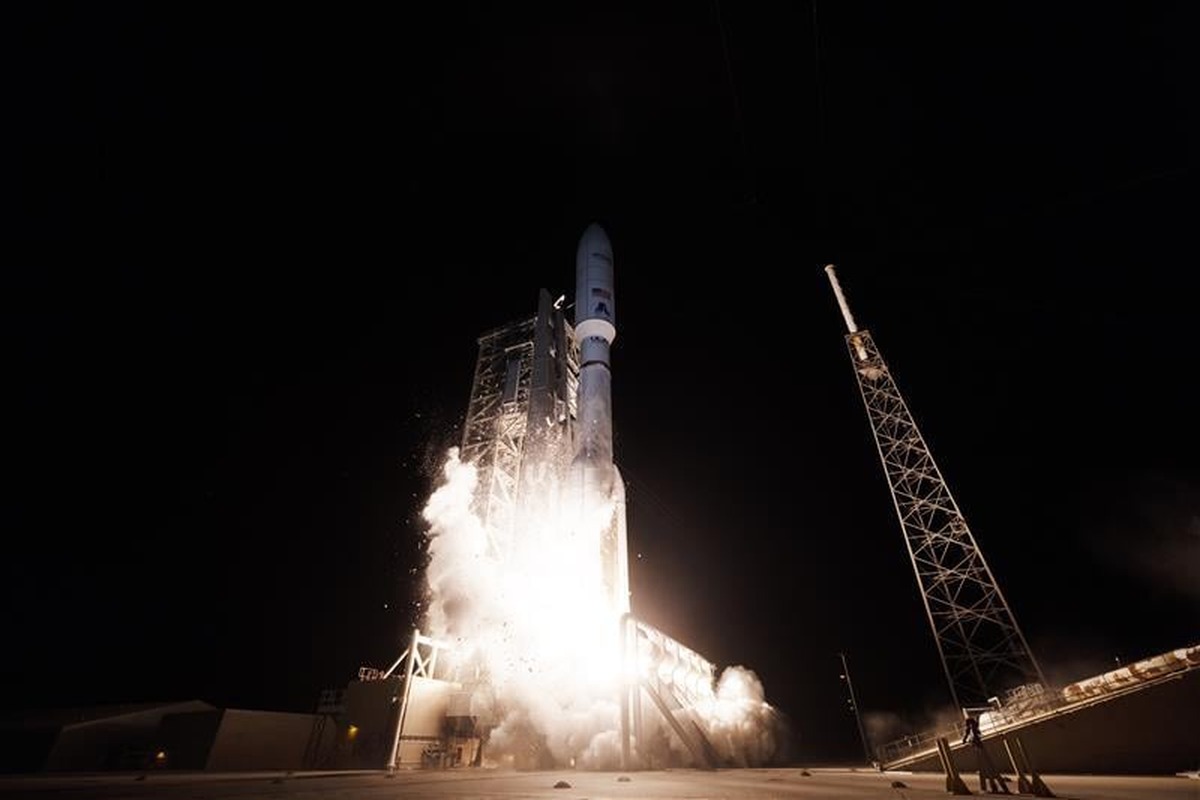
The milestone came after Amazon’s latest mission deployed 29 satellites aboard a United Launch Alliance Atlas V rocket. That pushed the constellation to 394 satellites in orbit, enough, according to a senior Amazon executive, to support continuous service across the first coverage regions.
Last few launches were big for @AmazonLeo – bringing us to 390+ satellites deployed, enough to support continuous service across initial latitudes.
— Chris Weber (@Weber44Chris) July 2, 2026
From the poles outward
Amazon has not revealed which countries or regions will receive service first. However, Reuters reports that coverage is expected to begin near Earth’s north and south poles. From there, it will expand toward the equator as more satellites join the network.
The plan calls for more than 3,200 satellites to deliver global broadband coverage eventually. For now, though, Amazon is focused on the initial rollout, which CEO Andy Jassy previously targeted for mid-2026.
Why LEO matters
Unlike traditional satellite internet services that rely on a handful of spacecraft parked far above Earth, low Earth orbit constellations place thousands of satellites much closer to the planet. As a result, the technology sharply reduces latency while improving speeds. That makes it practical for streaming, video calls, and remote work, not just basic browsing.
It is the same market SpaceX’s Starlink already dominates with roughly 10,000 satellites in orbit. Amazon still trails by a wide margin. Still, having a second major player enter the LEO internet race matters for consumers and businesses that have had few alternatives. The competitive pressure is already visible in aviation, where Wizz Air picked Starlink for its fleet starting in 2027.
What happens next
Before service can reach customers, Amazon still has to raise the newly deployed satellites to their final operating altitudes. Therefore, the initial rollout will not happen overnight. The company is also working through a broader wave of launches to keep building the constellation toward its full target.
The competitive landscape is shifting in other ways too. A recent wave of consolidation, including the Rocket Lab-Iridium mega-merger, signals the satellite internet market is racing toward a fight between a few well-funded operators.
Amazon has not announced consumer pricing for Leo. For now, the company’s message is that the network is ready in principle, with commercial service set to follow later in 2026.