


























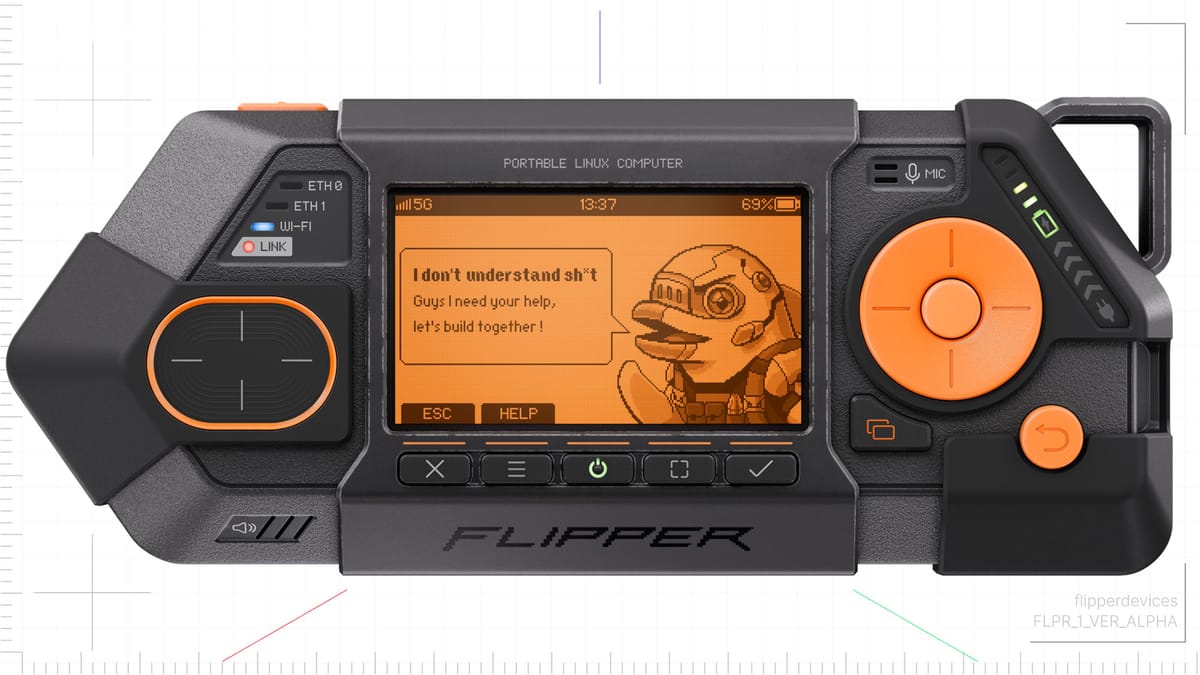
Flipper Devices is finally talking openly about Flipper One, and it is not just a bigger Flipper Zero. The company describes it as an open Linux cyberdeck for networking, radio work, hardware hacking, and local AI experiments.
The project is still in development, and Flipper is asking its community for help. That is a smart move, because the goals are ambitious: mainline Linux support, fewer closed blobs, modular expansion, and a new interface layer for turning command-line tools into something more approachable.
Flipper One is aimed at network work
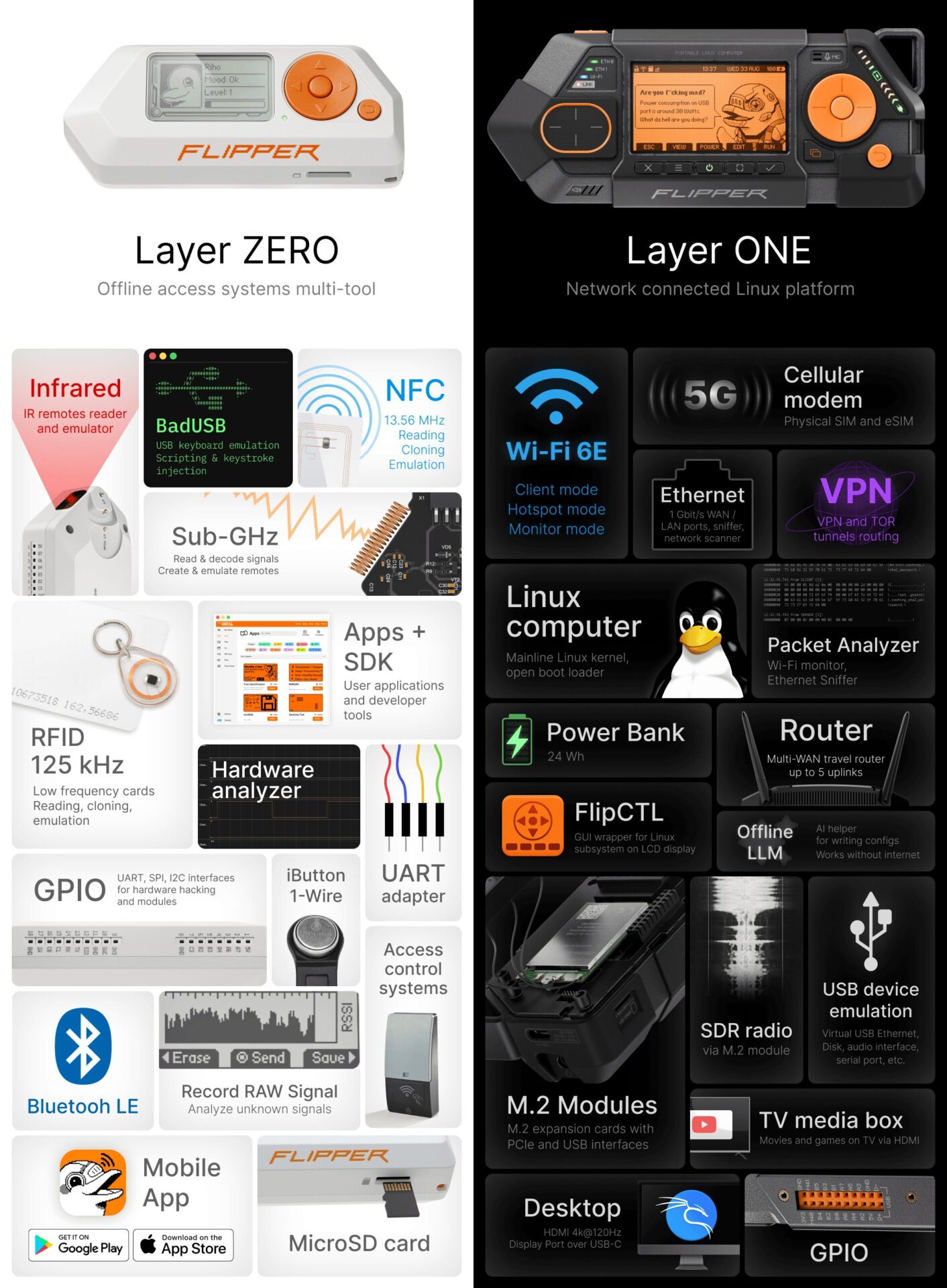
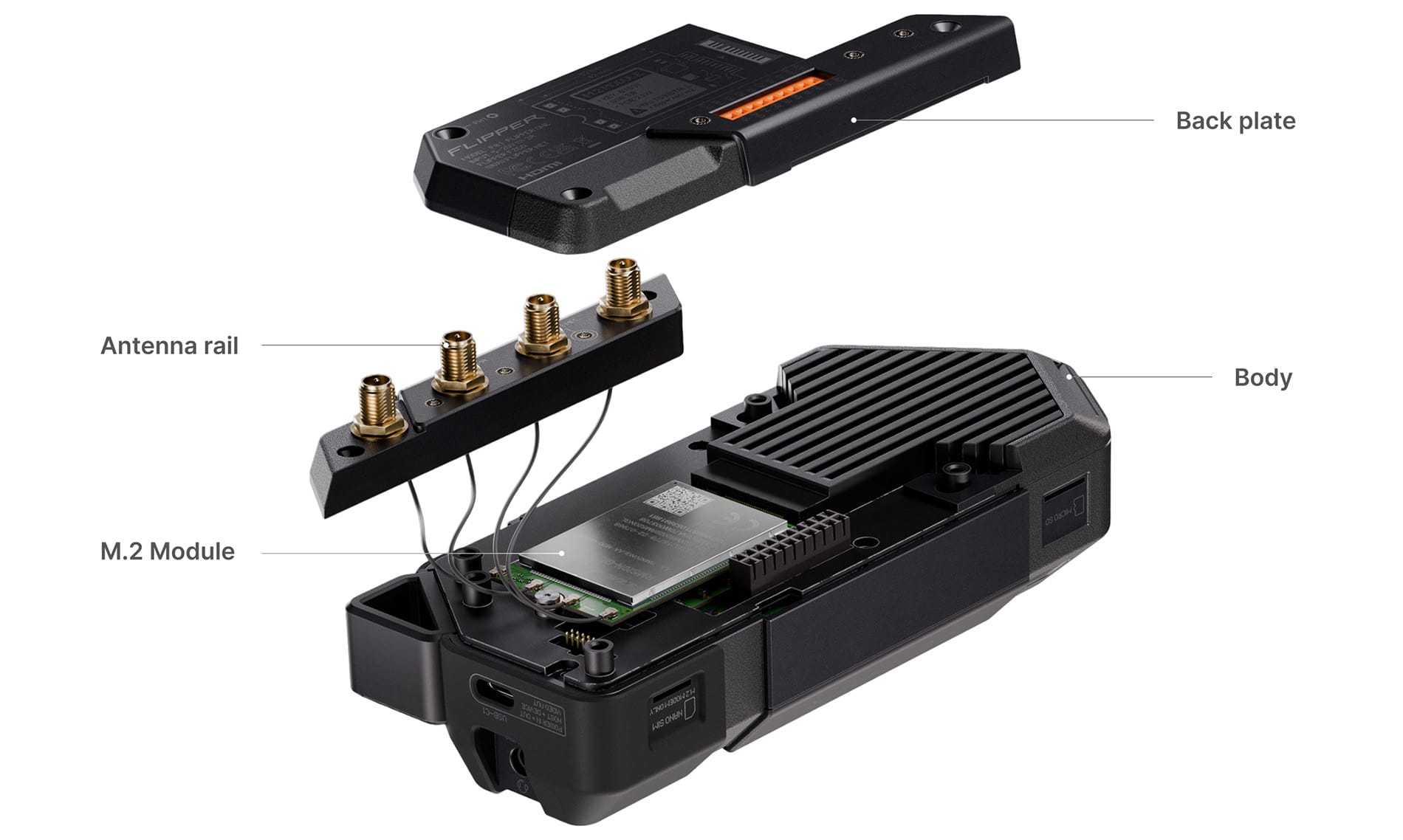
Flipper says the One focuses on IP-connected work. It includes two Gigabit Ethernet ports, USB Ethernet up to 5Gbps, Wi-Fi 6E, and support for add-on modules through PCI Express, USB 3.0, and SATA.
That makes it more like a field computer for network testing than a pocket signal toy. The company says users could build around 5G modems, SDR hardware, fast storage, routing, VPN gateways, and other expansion modules.
The open hardware promise is the hard part
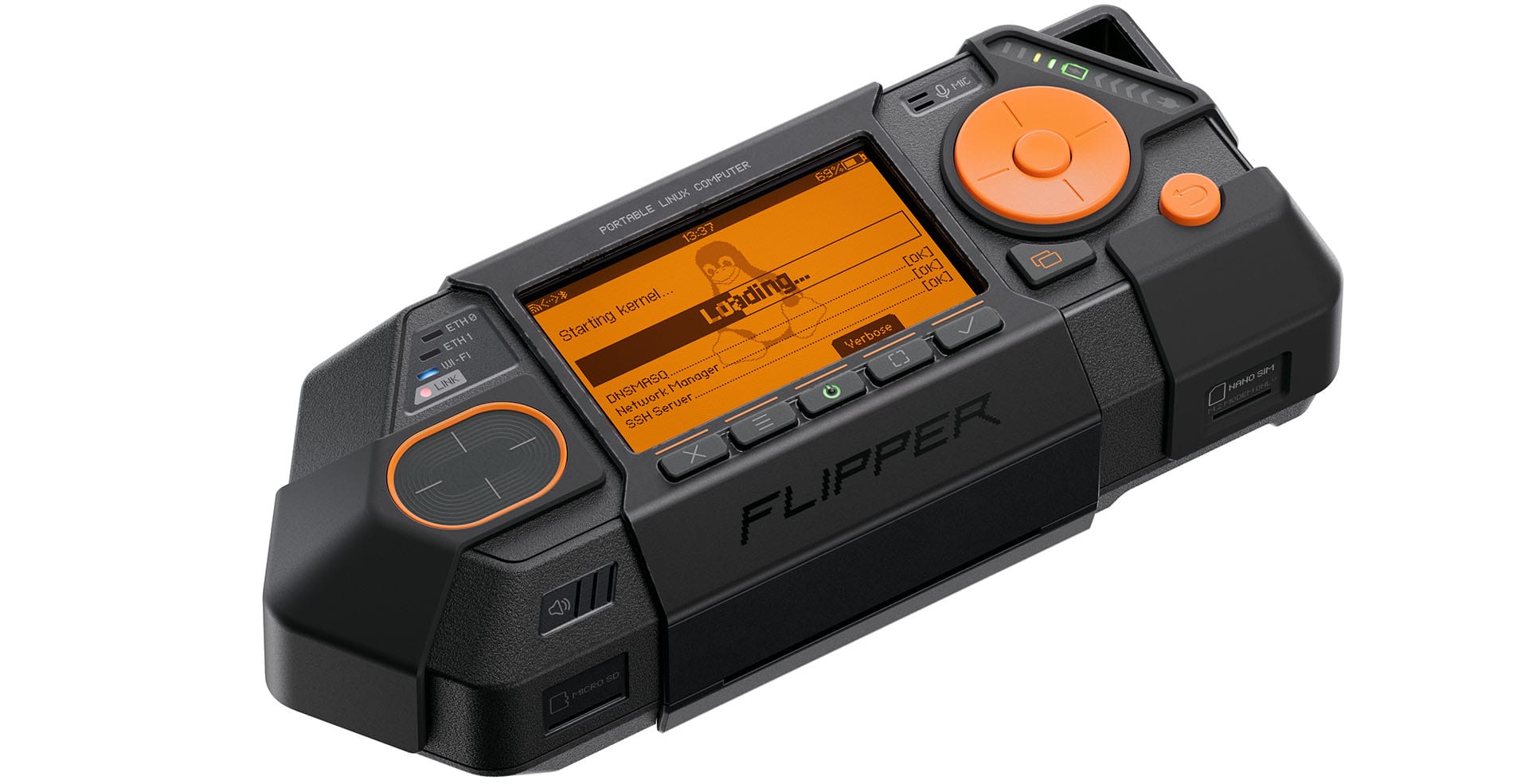
The boldest claim is openness. Flipper says it wants full mainline Linux kernel support and no vendor-locked board support package. It is working with Collabora on support for the Rockchip RK3576 chip.
That promise will be the real test. Hardware enthusiasts have heard big open-platform claims before, and ARM Linux support can get messy fast. Still, if Flipper pulls this off, Flipper One could become one of the more interesting gadgets for developers, security researchers, and network tinkerers.
There is also a practical reason to watch this. Flipper Zero became popular because it made radio and access-control testing feel approachable. Flipper One is chasing a bigger target: a portable Linux machine that can teach serious networking and hardware skills without hiding the stack from the user.