




























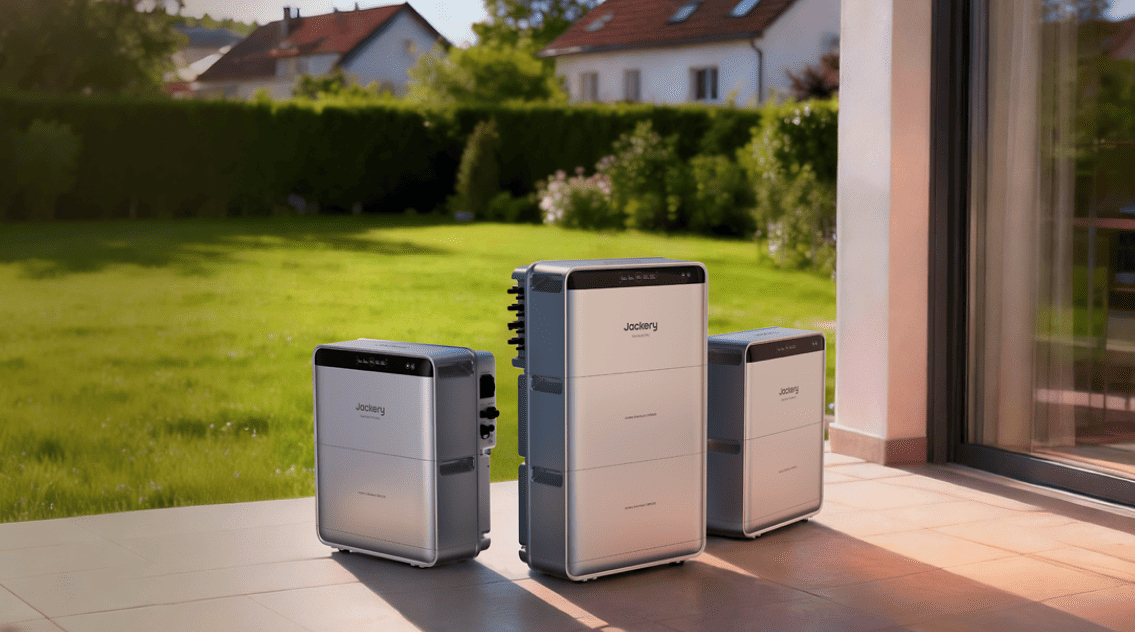
Jackery Ark AI EMS is Jackery’s new pitch for home solar that acts more like an energy autopilot. The company introduced the AI-powered Home Energy Management System at Intersolar Europe 2026. It frames Ark as the “brain” between rooftop or plug-in solar, battery storage, appliances, and the electrical grid.
That sounds like the kind of AI label every hardware brand wants in 2026. However, this one is attached to a real shift in home energy. Batteries are becoming less like emergency boxes in the garage and more like software-managed appliances. Jackery says Ark can forecast solar generation, learn household power behavior, schedule charging, manage peak loads, and explain its automated choices.
The idea is not far from the broader software fight already happening around connected homes. Tech My Money has covered how Samsung’s SmartThings API changes could reshape smart-home integrations. Meanwhile, energy brands are trying to own the same control layer. Otherwise, utilities, car companies, and smart-home platforms may turn it into another subscription surface.
What Jackery says Ark AI EMS does
Jackery describes Ark AI EMS as a Home Energy Management System, or HEMS. It is designed for scheduling, precise control, and whole-home optimization. Specifically, the system looks at upcoming sunlight, battery state, learned home energy use, and connected-device needs. Then it decides when to charge or discharge.
In its Intersolar release, Jackery says the ecosystem uses 24-hour predictive forecasting. It claims that can improve savings by up to 75 percent in combined solar and battery setups. That comparison is against solar installations without batteries. However, the number needs real-world testing. Utility rates, net metering rules, battery capacity, weather, and household behavior can change the math fast. Still, the claim shows where Jackery wants this to go. It is not just backup power. It is daily energy arbitrage.
Jackery also says manual user commands take priority over automation. That part matters. Therefore, if Ark becomes a serious home-energy controller, the most important feature may not be the AI model. It may be the override button. It may also be the explanation layer. Homeowners need enough confidence to let software make electrical decisions.
The hardware around the AI pitch
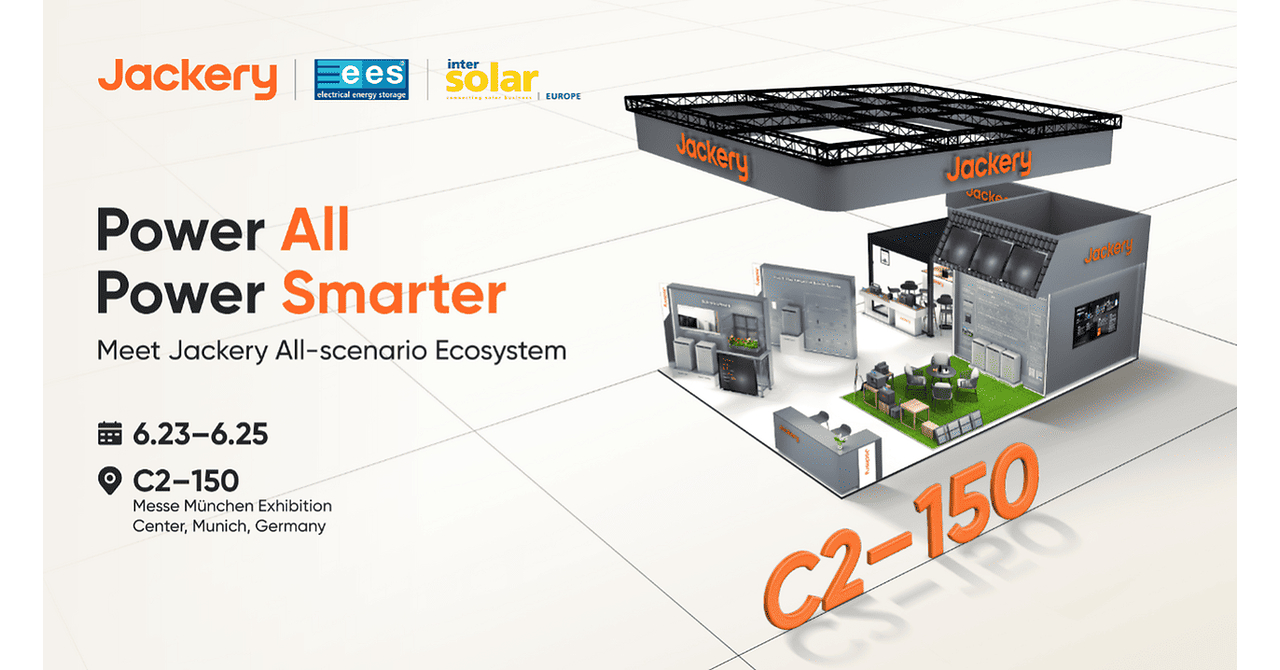
Ark is not launching in isolation. Jackery used Intersolar to show a wider home-energy ecosystem. That included SolarVault Series 3, Solar Roof, FridgeGuard, and several U.S.-market HomePower systems. The named models are HomePower 3600 Pro Max, 2000 Plus v2, and 1000 v2. The company says those systems can support homes connected to the grid, a DIY solar-panel setup, or both.
Additionally, Jackery says SolarVault Series 3 has already launched in Germany. It is set for a U.S. launch in Q1 2027. The company also presented Solar Roof as a curved building-integrated photovoltaic product. Its Graphite and Terra Cotta designs are meant to resemble roof tiles. Jackery says output reaches up to 170W per square meter.
A separate Jackery announcement around The smarter E Europe also described a 4.5 x 3 meter Solar Gazebo. It has integrated solar modules rated up to 2,000W. It is a more playful product than a battery wall. However, it points to the same strategy. Jackery wants generation, storage, and control software in more parts of the home.
That strategy also overlaps with the vehicle and utility side of the market. We recently looked at GM Energy Pass. It shows how automakers want charging, vehicle-to-grid features, and home energy to live inside their own apps. Jackery is coming from the portable-power side. Still, the destination is similar.
The hard part is trust
For now, the biggest open questions are practical ones. Jackery has not turned the Ark announcement into a complete U.S. pricing story. It also has not detailed installation, compatibility, or utility-program support. Moreover, AI energy savings claims are only useful if the software handles messy real homes. That means changing tariffs, outages, panel shading, appliance spikes, and app reliability.
Still, this is the right place for automation to become useful. Solar panels create uneven power. Batteries make timing important. Dynamic electricity rates can punish a bad schedule. As a result, a home-energy system with weather awareness could be valuable. It needs to know the battery and explain when it is buying, saving, or spending power.
The catch is that homeowners should treat Ark AI EMS as a promising control layer, not magic. If Jackery can make the software transparent and dependable, solar-plus-storage could feel less like infrastructure homework. If it cannot, Ark becomes one more smart-home brain asking to control something important.