






























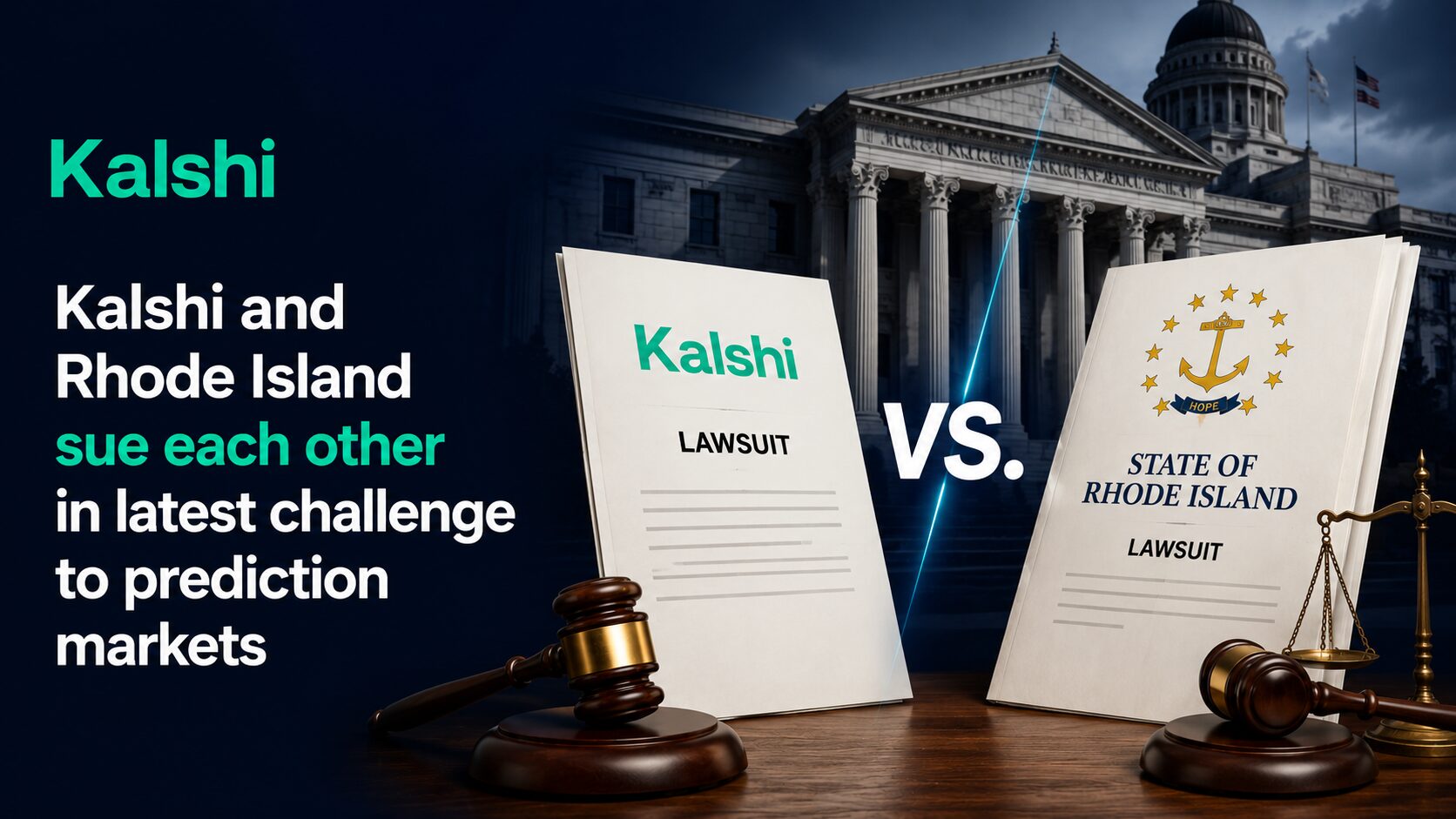
The Kalshi Rhode Island lawsuit shows how quickly prediction markets are leaving novelty status. They are now running into serious state gambling law.
Rhode Island Attorney General Peter Neronha announced a state lawsuit against Kalshi and Polymarket. His office argues that sports-related event contracts amount to gambling and online sports wagering under Rhode Island law. The state wants a court declaration, a permanent injunction, restitution, and disgorgement from the companies.
Kalshi did not wait quietly. According to its federal complaint, the company sued Rhode Island first in U.S. District Court after meeting with Neronha’s office and seeking assurances that the state would not pursue enforcement. Kalshi argues that Rhode Island is threatening a federally regulated business.
Why Rhode Island is pushing back
The state complaint frames prediction markets as sports betting with a different label. Rhode Island says users buy “yes” or “no” positions on real-world outcomes. If they are right, they receive a payout. If they are wrong, they lose. In the state’s view, that structure still contains the familiar ingredients of wagering: money, chance, and a prize.
Neronha’s office also ties the case to consumer protection and state revenue. The release says Rhode Island depends heavily on lottery revenue. It also claims sports betting has produced $2.8 billion since legalization in 2019. The state argues that online prediction markets could increase access for people vulnerable to problem gambling.
Why it matters beyond Rhode Island
This dispute matters because prediction markets sit in a messy zone. They look like finance, betting, and internet platforms at the same time. Kalshi sells event contracts, not traditional sportsbook tickets. However, sports results and player props change the tone. State regulators see a product that competes directly with licensed betting operators.
That tension is not going away. Prediction markets have pushed into politics, entertainment, sports, and global events. Meanwhile, state gambling regulators still operate through local laws and voter-approved gambling frameworks. For readers following Tech My Money’s finance coverage, this case could shape the next wave of event-contract apps. They could become mainstream consumer products, or they could stay boxed in by state-by-state gambling fights.
The next move belongs to the courts. If Rhode Island wins, other states may feel more confident challenging sports prediction markets. If Kalshi wins, the company could gain more room to argue that federal market regulation preempts state gambling enforcement.