























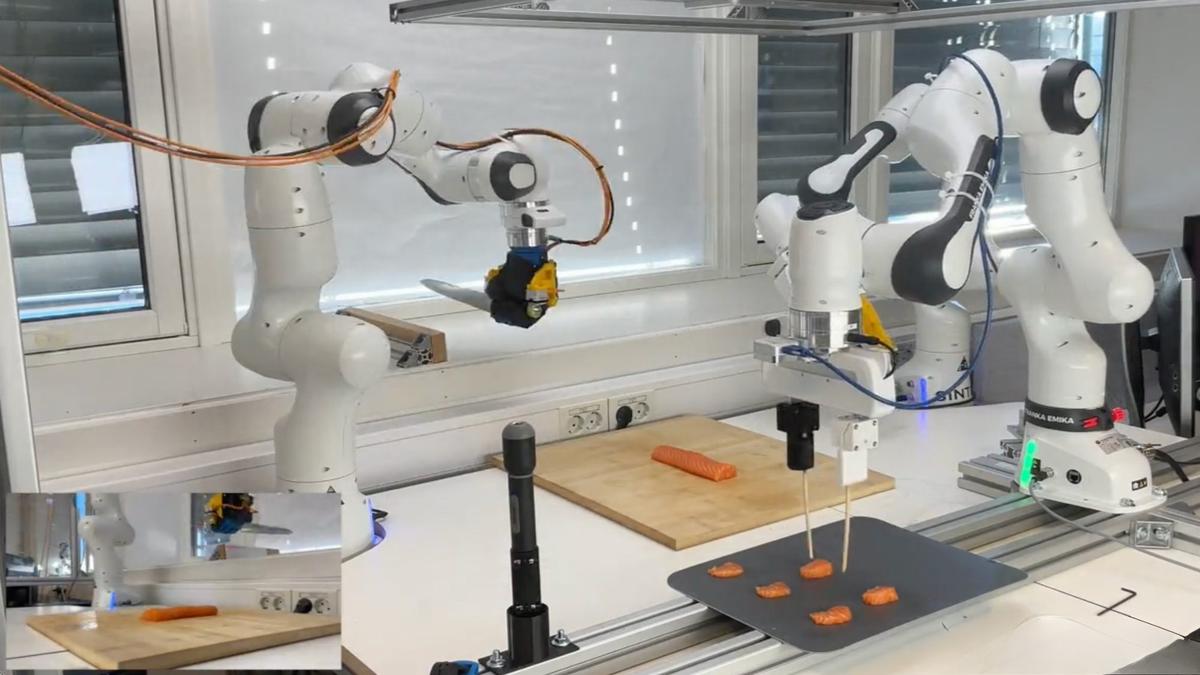
A research team has unveiled the Sashimi-Bot robot chef. This AI-trained system slices and serves delicate raw fish without human intervention. Slicing raw salmon is a major challenge for traditional automation systems. Specifically, typical robots excel at handling rigid components but frequently fumble when confronted with soft, slippery, and irregular food products.
Consequently, scientists at the Norwegian University of Science and Technology (NTNU) engineered a specialized setup to overcome these material limitations. The resulting Sashimi-Bot divided the preparation process across three independent robotic arms working in unison. Notably, the first arm secures and positions the salmon loin on a cutting board. Meanwhile, the second arm wields a chef’s knife to execute clean slices. Finally, the third arm uses chopsticks to arrange the pieces onto a serving platter.
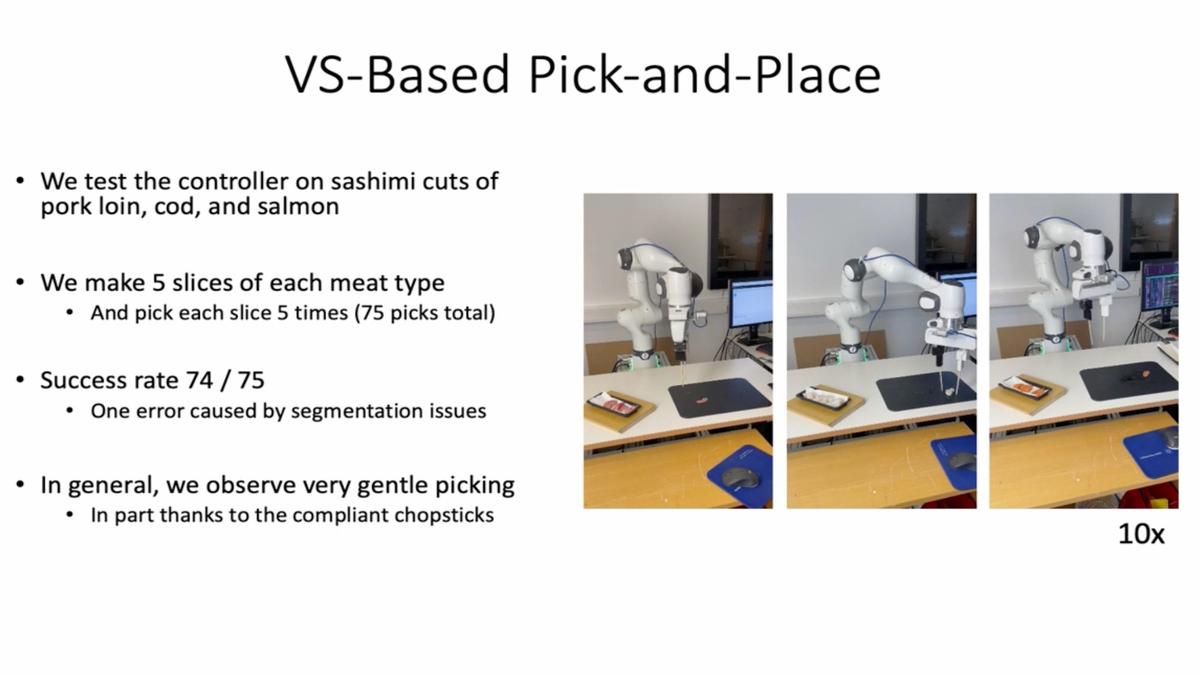
Furthermore, the researchers avoided using real fish during the initial training stages. Instead, they trained the Sashimi-Bot robot chef using deep reinforcement learning inside a virtual simulation. This method allowed the system to practice thousands of precise slicing routines. They used trial and error in a simulation before touching a physical object. By comparison, autonomous systems like the NASA Perseverance Rover rely on simulated trials to perfect their tasks.
How the Sashimi-Bot Robot Chef Works
To ensure the slicing arm does not damage itself or the board, the team integrated a GelSight tactile sensor. This sensor uses a soft gel surface and a built-in camera. It detects exactly when the knife blade makes contact with the cutting surface. As a result, the robot adjusts its downward force in real time to create uniform cuts.
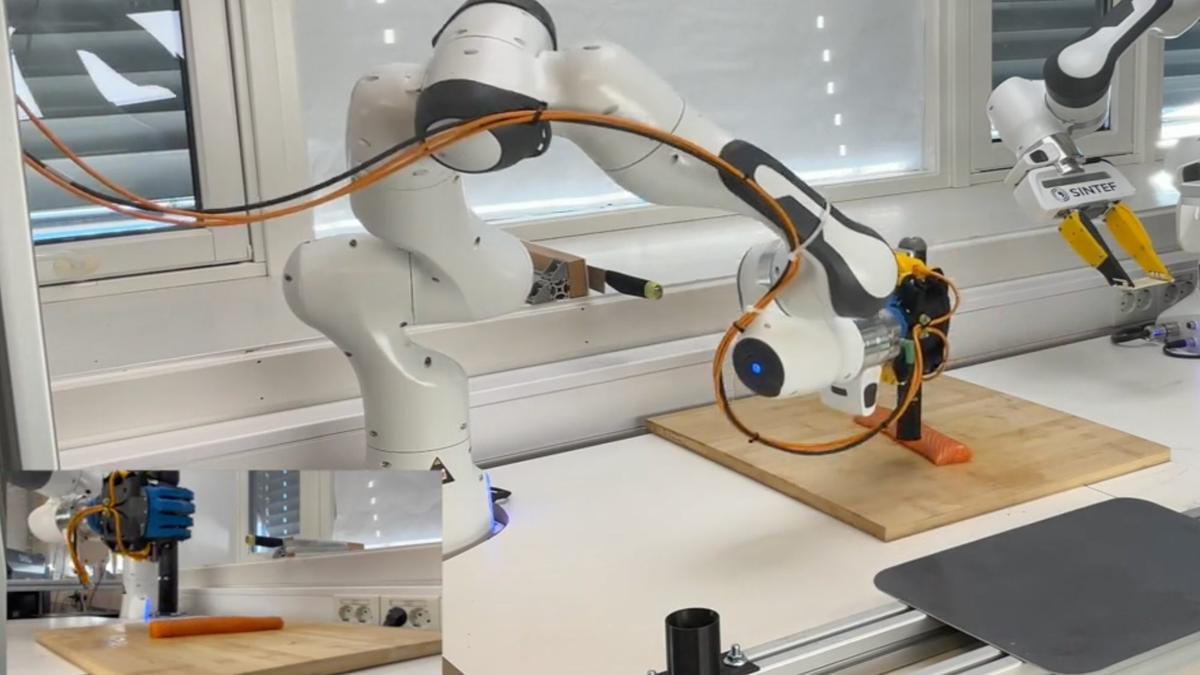
During laboratory evaluations, the robot successfully prepared 34 individual slices of salmon. The system grasped 26 out of 28 fallen fish slices using chopsticks. Additionally, it retrieved the remaining six slices directly from the knife blade. On average, each slicing cycle required 27.9 seconds to complete.
Meanwhile, this development represents a major step forward for food automation. While consumers can buy advanced hardware like the new Steam Machine mini PC, commercial kitchen automation remains difficult. This is due to the unpredictability of raw ingredients. The NTNU team’s research, published in npj Robotics, demonstrates that robots can successfully manipulate highly deformable materials.
What do you think of having a robot prepare your next sushi dinner? Let us know your thoughts in the comments below.