































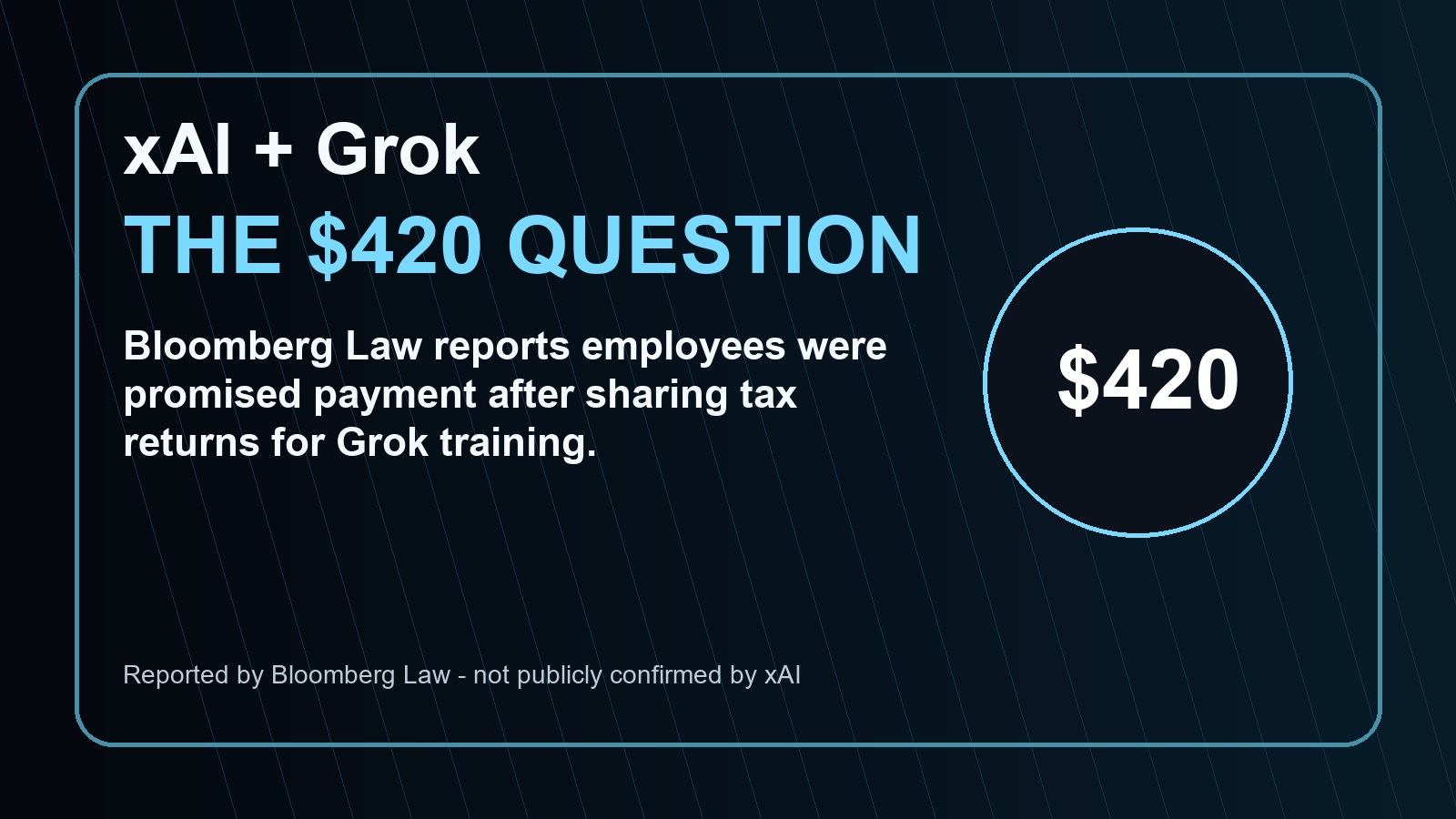
xAI is facing an awkward report about the kind of data people are asked to hand over for AI training. Bloomberg Law reports that some workers were promised $420 for sharing personal tax returns to help train Grok, but had not received the money two months later.
The report says the data request happened earlier in 2026 as xAI worked on Grok’s tax capabilities before the April 15 U.S. tax deadline. Bloomberg Law says it reviewed internal messages. xAI has not publicly confirmed the report.
The amount is funny because it is $420. The privacy issue is not. Tax returns can include income, dependents, deductions, addresses and other sensitive details. Even if a company says the data helps train a model, workers need clear terms, strong safeguards and timely payment if compensation was promised.
This is also bigger than one company. AI firms need high-quality examples to improve specialized tools. The more personal that data gets, the more important consent, retention rules and internal access controls become.
We have been watching that same data-trust tension across AI products, from security work to financial features. Our OpenAI Daybreak coverage shows the same theme from another angle: powerful AI needs serious guardrails.
The awkward part is that employees are not normal data vendors. Even when a request is technically optional, workplace power dynamics can make it feel loaded. That is why sensitive-data projects need more than a clever incentive.
AI companies should document exactly what they collect, how they anonymize it, who can access it and when they delete it. Without that kind of clarity, even a small payment dispute can turn into a bigger trust problem.
For a company building trust in AI, that process matters as much as the model demo.