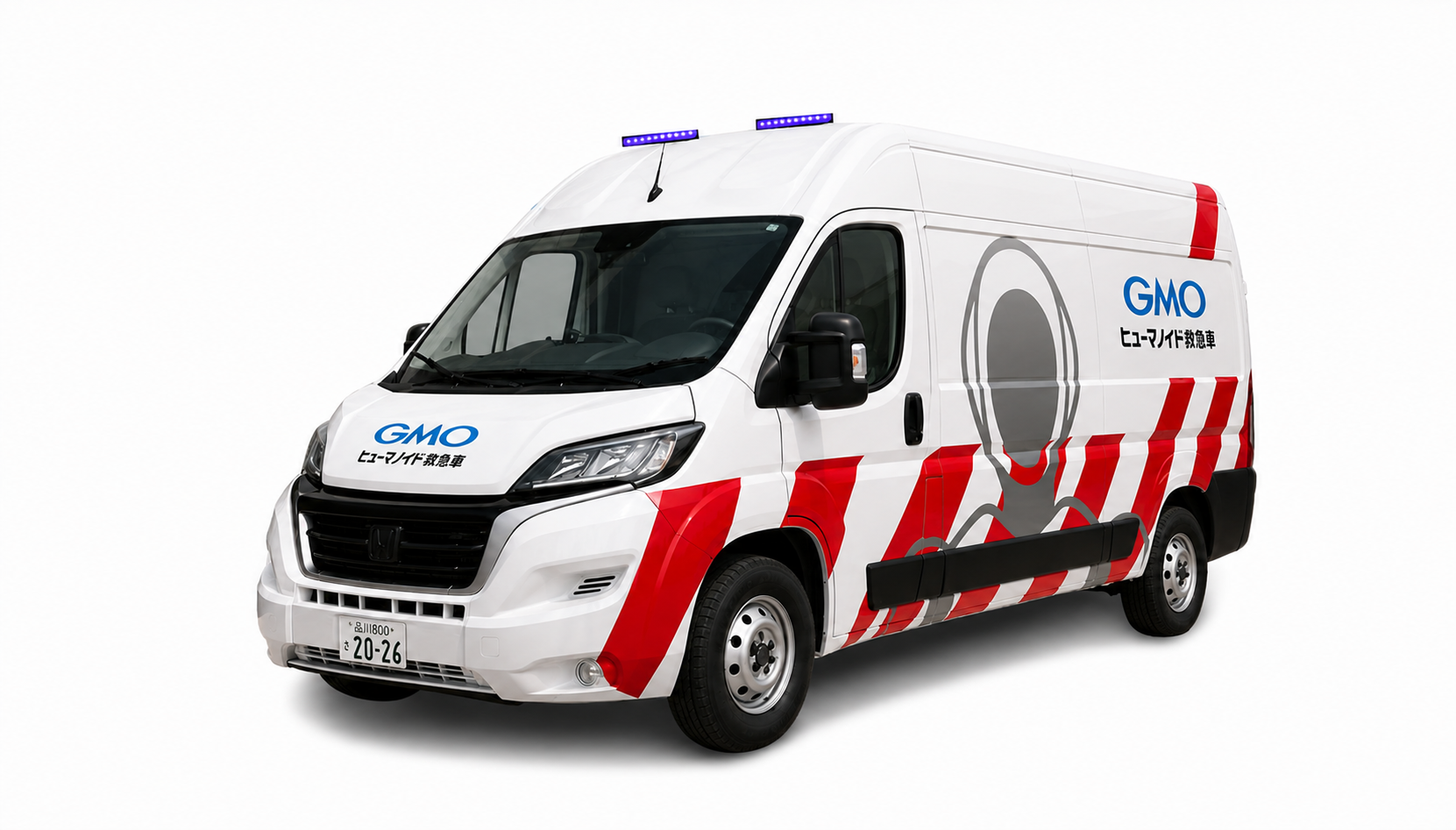
The GMO humanoid ambulance brings repair tools to robots that break down on the job. GMO AI & Robotics announced the maintenance vehicle for a September rollout in Japan. However, its scope is specific: it supports machines GMO AIR has deployed, with dispatch decided case by case.
What the GMO humanoid ambulance carries
Engineers travel with diagnostic equipment, spare parts and tools. Alternatively, if an on-site repair proves impractical, they can swap in a replacement robot. Meanwhile, the damaged machine goes to a suitable repair facility, including GMO’s Shibuya lab.
GMO calls this Japan’s first dedicated humanoid maintenance vehicle, based on its own September web research. That qualification matters. The company has announced a support capability, not independently demonstrated a national first.

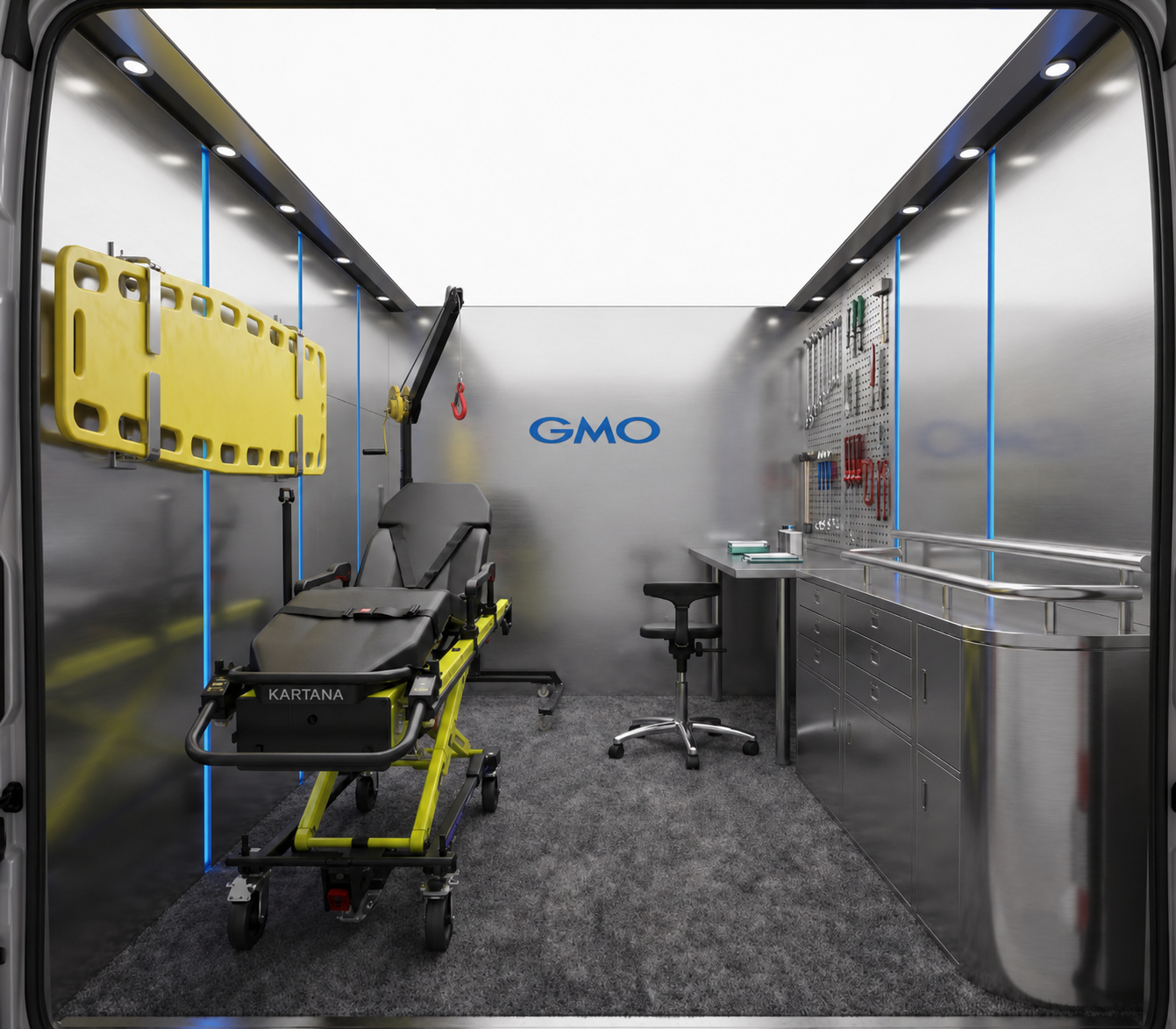
The official interior image shows a stretcher, lifting hook and workbench. Also, GLAMOROUS designer Yasumichi Morita handled the vehicle’s interior and exterior. Emergency-vehicle styling makes the idea immediately legible, but dispatch eligibility remains the important detail for customers.
Airport trials show why support matters
Separately, GMO AIR and JAL Ground Service have announced a Haneda Airport trial spanning May 2026 through 2028. Its study covers baggage, cargo and cabin-cleaning work. However, the partners describe phased testing and safety checks, rather than a completed replacement for human ground crews.
That distinction also applies to the broader humanoid push. Our coverage of LG’s planned NVIDIA-backed humanoid concerns future hardware. Meanwhile, Gemini Robotics 2’s whole-body control addresses how machines move. Keeping a deployed machine running presents another practical problem.
The useful test is downtime
For a business considering robots, a service vehicle raises concrete questions. How quickly can an engineer arrive? Which failures permit a field repair? Can a spare machine perform the same configured task?
Ultimately, those answers determine whether mobile maintenance saves operating time. A replacement body alone does not establish that a workflow can resume safely. Buyers should therefore assess recovery procedures alongside the robot’s advertised abilities. The ambulance is an interesting support model; measured repair times would make the business case clearer.