
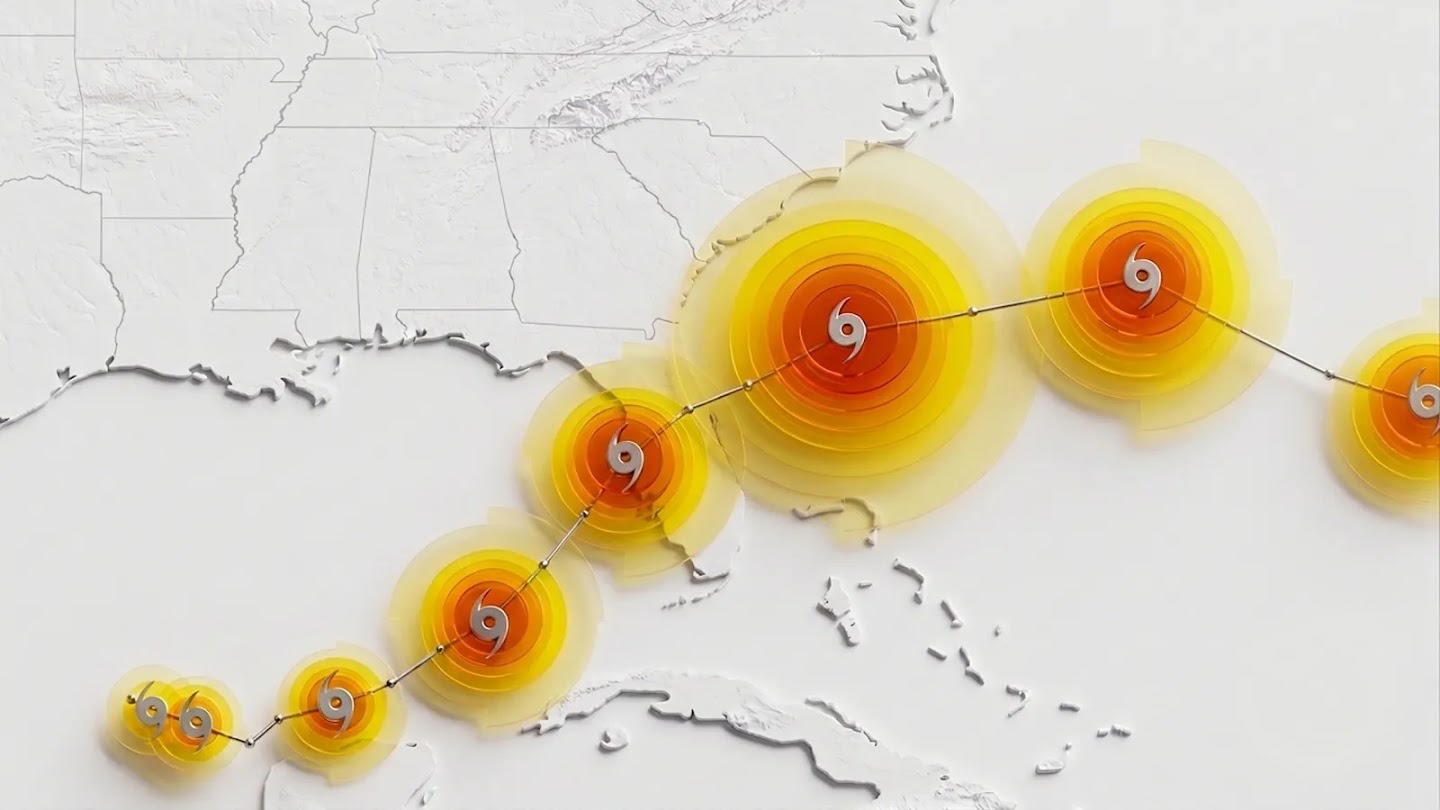
WeatherNext cyclone AI from Google DeepMind and Google Research can predict tropical cyclone track, intensity, and wind structure in one model, according to a DeepMind research post. The teams are also open-sourcing WeatherNext 2 and WeatherNext Cyclones on GitHub. Results appear in a new Nature paper as well.
Meanwhile, the company claims an average of more than a full day of extra predictive accuracy. In other words, three-day WeatherNext Cyclones forecasts match what prior systems delivered for only the next two days. DeepMind frames that step as roughly a decade of meteorological progress.
Why one model matters for hurricanes
Forecasters have long split the job. Global currents steer a storm’s path, so coarser global models often handle track best. Intensity, by contrast, depends on fine-scale physics near the core. Specialized local models usually own that piece. WeatherNext aims to close that gap with a single system trained end-to-end.
Specifically, researchers co-trained the model on nearly 20 terabytes of global atmospheric data. They also used the IBTrACS archive of nearly 5,000 historical storms. That mix is meant to teach both large-scale weather patterns and extreme cyclone behavior. Partners include the U.S. National Hurricane Center, CIRA, the UK Met Office, and other agencies.

Speed, ensembles, and real-world use
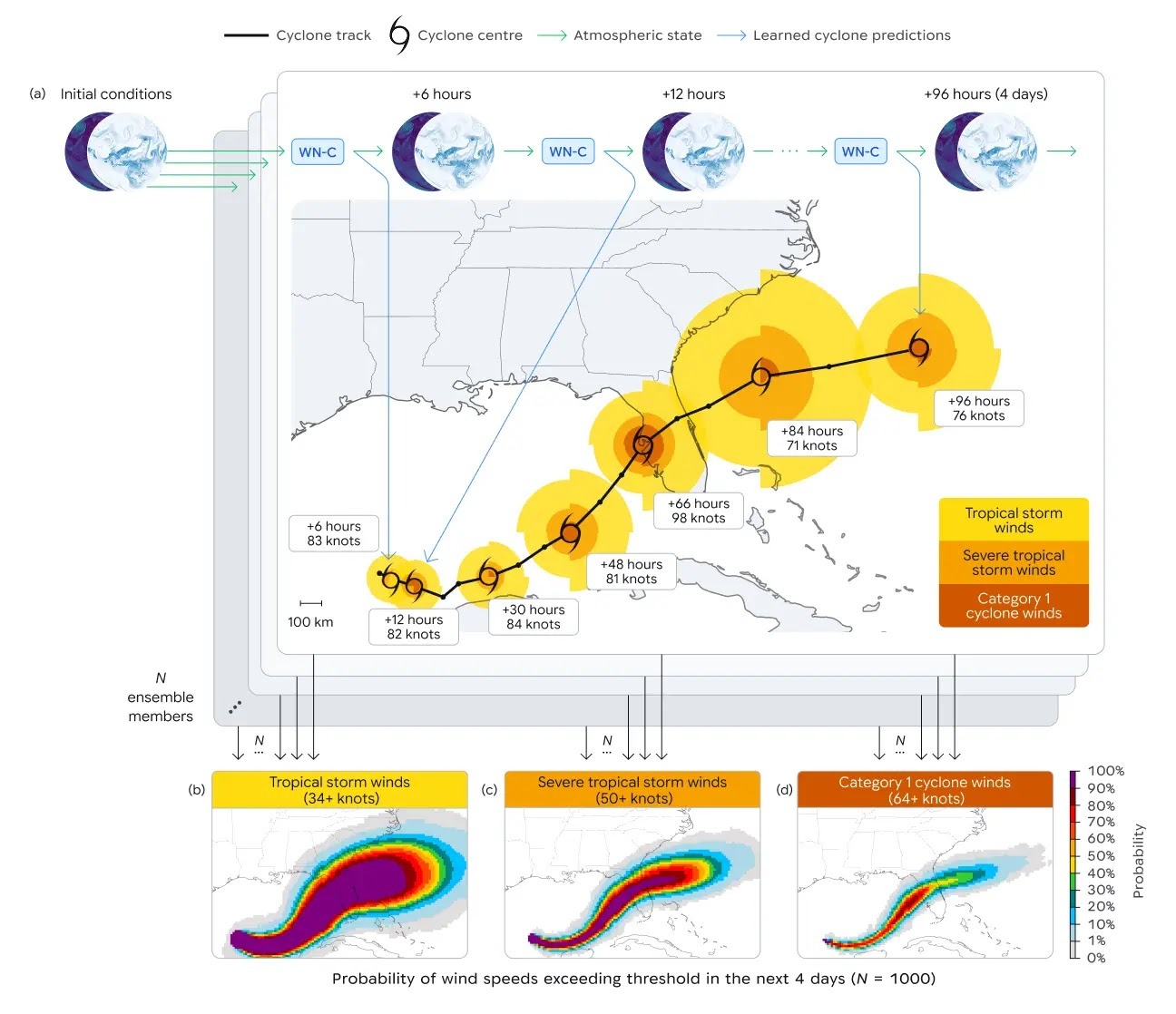
DeepMind says a single 15-day forecast can run in less than a minute on a TPU. Functional Generative Networks help produce ensembles that capture uncertainty and tail risks. Last year the system offered 50 members per run. This year it scales to 1,000 members. That should better surface rare events such as rapid intensification.
Furthermore, the model only needs 28×28 km resolution data. That is about 100 times coarser than traditional high-resolution intensity models. A smaller WeatherNext 2-mini variant runs at 111×111 km and still posts strong results. Scientists still want to understand how accuracy holds at that resolution.
During the 2025 season, WeatherNext already helped the National Hurricane Center on Hurricane Melissa. The model supported forecasts of rapid intensification and Jamaica landfall. This year, the teams say they keep working with NHC while generating 1,000 scenarios per cyclone. Still, official warnings remain the job of local and national weather services.
What is open source
Alongside the Nature paper, Google is releasing code and model weights. That includes WeatherNext Cyclones, used during hurricane season, and WeatherNext 2, a later operational update. WeatherNext 2-mini is available in a free Colab notebook for single-TPU demos. Anyone can explore cyclone and global weather views on Weather Lab, which is part of Google Earth AI.
However, open weights do not replace operational forecast offices. DeepMind is clear that agencies still own official watches and warnings. The release is meant to speed research, support specialized local models, and give nonprofits modern tools.
Readers following Google AI research may also recall earlier DeepMind weather systems such as GraphCast. On Tech My Money, related Google AI work includes the Gemini Robotics 2 whole-body control push and DeepMind’s A24 AI filmmaking research partnership. WeatherNext sits in a different lane: disaster lead time, not robots or cinema.
What to watch next
Finally, the practical test is the next storm season. If WeatherNext’s lead-time edge holds under operational pressure, agencies may lean harder on large ensembles. Those ensembles cover track, intensity, and wind structure risk. Open source means more groups can probe failures, not only celebrate hits. That mix of speed, shared code, and human forecasters is the story Google wants the field to build on.


