

























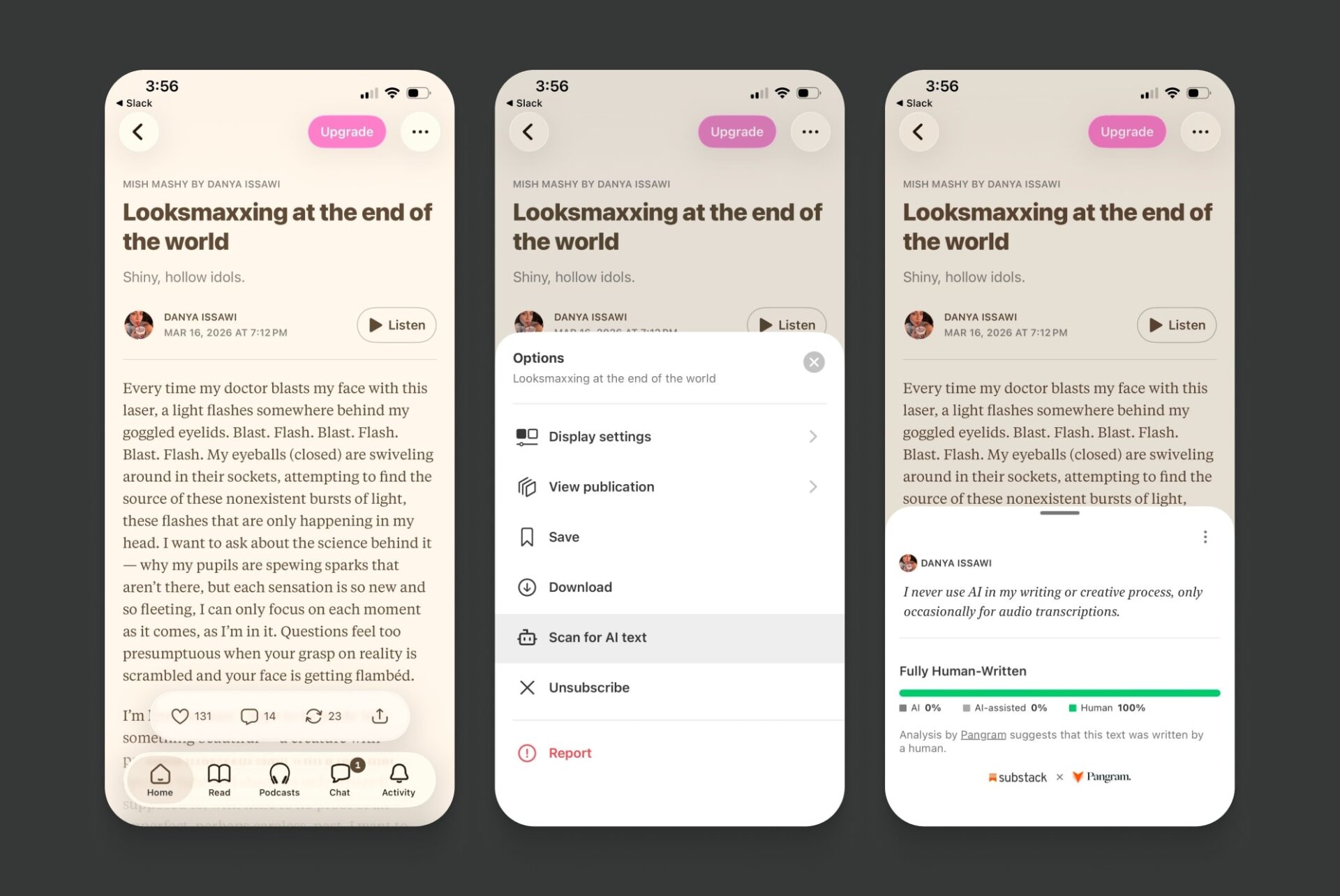
Substack AI detection is rolling out so readers can check how much of a post looks human-written versus AI-assisted. CEO Chris Best announced the launch in Against Claudefishing, and the company is partnering with Pangram for the analysis.
Substack is framing the problem as expectation mismatch, not a blanket ban on AI tools. Therefore, the company wants people to know what they are reading before they invest attention in it.
What Substack AI detection actually does
Readers can scan notes, replies, comments, and posts for an estimate of how much text was written by hand or with AI assistance. The scan works on text longer than 100 words. Importantly, it only covers content published from July 21, 2026 onward. Substack says the analysis appears only when someone requests it.
In addition, the feature is available now on web and iOS. Android support is coming later. Substack Help also documents a Scan for AI text path in the reader menu for posts opened from Subscriptions on the web.

Why Substack is calling out Claudefishing
Best argues that the core issue is not AI itself. Not every AI-assisted piece is slop, and not all bad writing needs AI. Instead, Claudefishing is the act of faking a human connection when no real person sits on the other side of the words. Transparent AI use that still reflects human judgment is treated as a different category.
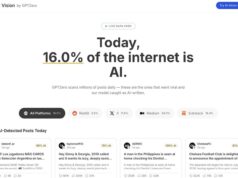
Substack also points to rising AI text volume on other platforms. For example, Pangram estimates AI-generated text can make up as much as 40% of content on some social feeds. Best says Substack does not want to wait until the app “turns into LinkedIn” before it experiments with transparency tools.
Creator tools and clear limits
Creators get a few controls of their own. They can add a “How I make this” statement that explains process and sets reader expectations. They can also run Pangram on drafts before publishing. Moreover, creators can report and remove scans of their own work that they believe are wrong.
Still, Substack is candid about the limits. Pangram can estimate whether AI shaped the text. It cannot measure care, originality of thought, or whether AI was only used as a research source. Best notes that independent evals claim strong accuracy for Pangram, yet no detector is perfect. Substack positions the score as a judgment aid, not a final verdict.
What could come next
Depending on feedback, Substack is considering Reply Rules preferences for AI content, more creator signals for human versus thoughtful AI work, reader recommendation preferences, and stronger anti-spam systems as AI accelerates abuse. For related AI-content context, Tech My Money has covered Superhuman’s GPTZero AI-authenticity deal and Cloudflare’s AI crawler rules for publishers.
Overall, Substack is not banning AI assistance. Best says the company uses AI internally for software, research, and product features. The launch message is simple: people should know what they are getting. When you want Claude’s opinion, Best writes, ask Claude.