




























Uber driver background checks are getting their biggest overhaul since the company began screening drivers over a decade ago. Starting Monday, the ride-hailing giant will permanently disqualify anyone convicted of a violent felony, switch to lifetime SSN trace lookbacks, and add stalking and strangulation offenses to its list of disqualifying crimes. According to Uber’s announcement, the updated standard is the strongest in the industry.
The announcement, published on Uber’s newsroom, arrives amid mounting legal pressure. Shareholders recently sued Uber’s board over alleged safety failures. The company also paid $8.5 million to settle an Arizona lawsuit involving a driver accused of raping a 19-year-old passenger. Uber has faced years of sexual assault litigation that cast scrutiny on its screening process.
What the new standard covers
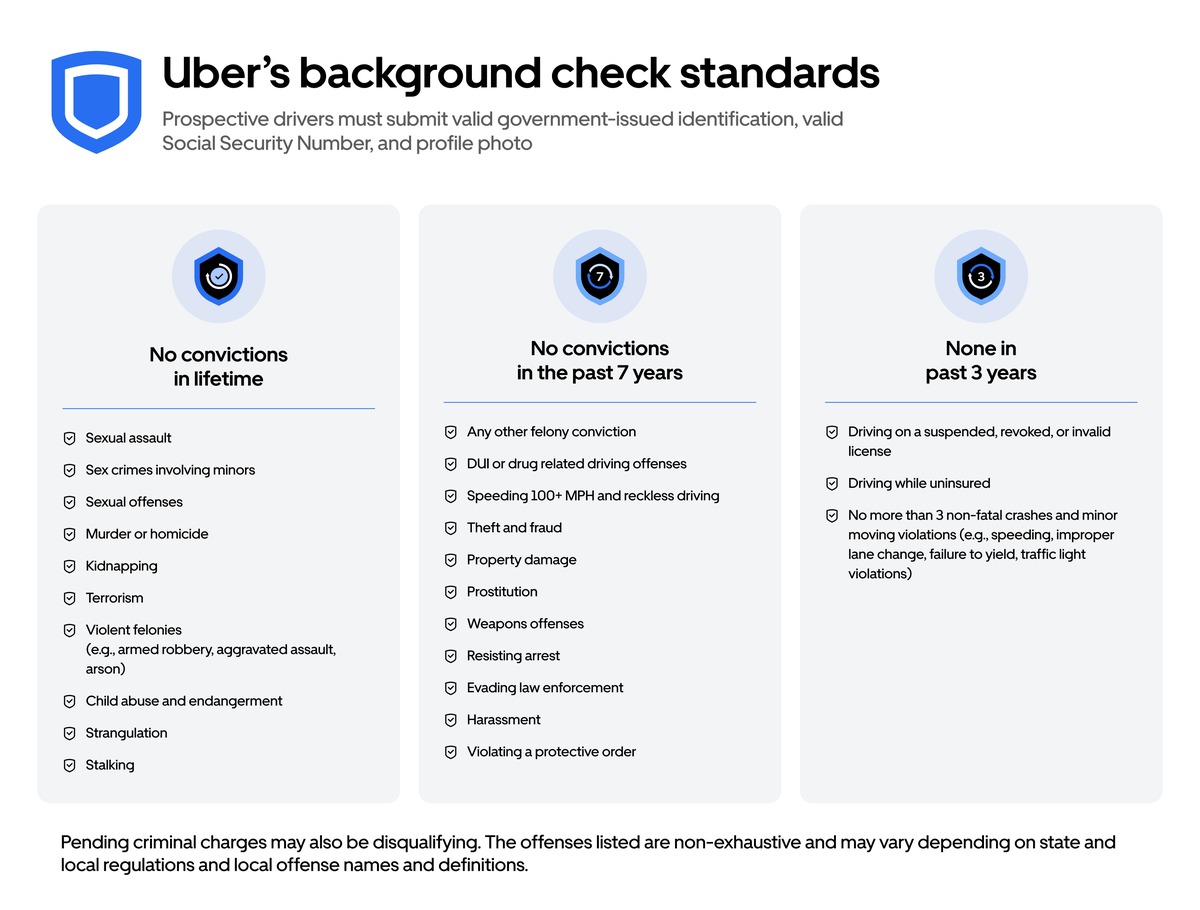
Previously, Uber disqualified applicants for murder, sexual assault, kidnapping, and terrorism indefinitely. DUI, reckless driving, and theft convictions triggered a seven-year lookback window. Under the updated policy, all violent felonies become permanently disqualifying regardless of when they occurred.
The expanded list includes armed robbery, aggravated assault, and arson. Child abuse, child endangerment, strangulation, and stalking convictions now disqualify drivers whether charged as misdemeanors or felonies. Uber cited guidance from domestic violence prevention experts who identified these offenses as predictors of future violence.
From seven years to a lifetime
The most significant operational change is the shift from a seven-year to a 99-year SSN trace. Uber’s background check providers previously searched county court records only for addresses where a prospective driver lived during the past seven years. Now they will search a driver’s entire residence history.
Drivers are rescreened annually, with continuous monitoring flagging new offenses between checks. Uber’s providers are nationally accredited by the Professional Background Screening Association and search federal court records, the National Sex Offender Public Website, international sanctions lists, and suspected terrorist databases. The company believes it is the only rideshare platform taking this step.
A narrow exception
Uber carved out a limited exception for roughly 2,000 long-tenured drivers with no serious safety complaints. If their felony conviction is more than 15 years old and was not sexual in nature, they can continue driving. The company said civil rights advocates warned that cutting off stable income could increase recidivism risk.
“We believe this is the right thing to do for drivers who have rebuilt their lives and demonstrated good behavior on and off the Uber platform,” Uber said in its announcement.
Safety advocates weigh in
The company consulted the National Action Network, Alliance for HOPE International, and the National Network to End Domestic Violence while developing the updated criteria. Several endorsed the changes publicly.
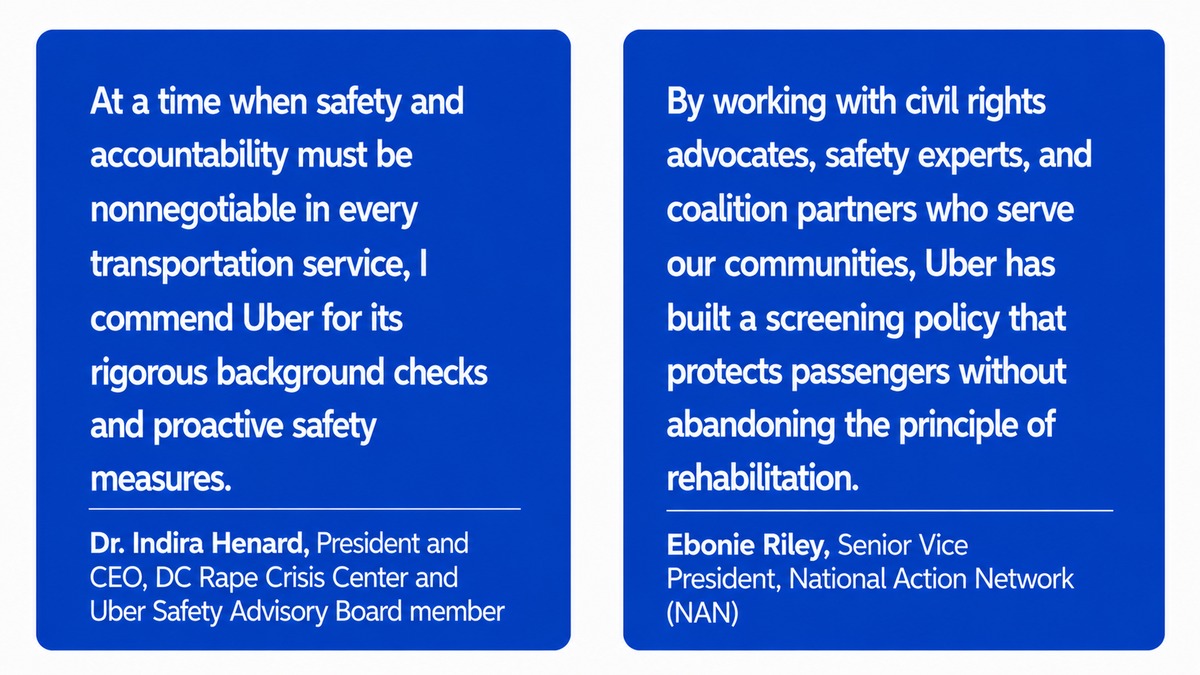
Alliance for HOPE International founder Casey Gwinn called the stalking and strangulation policy “a national standard for businesses of all kinds.” Former FBI Deputy Director John Pistole, an Uber Safety Advisory Board member, applauded the commitment to screening.
Industry context
The tightened screening comes as the ride-hailing industry accelerates toward autonomous vehicles. Companies like Zoox and Waymo are racing to deploy driverless alternatives that sidestep the human-driver screening problem entirely. But for now, the vast majority of Uber’s millions of daily rides still depend on human drivers, and the background check remains the first line of defense for rider safety.