
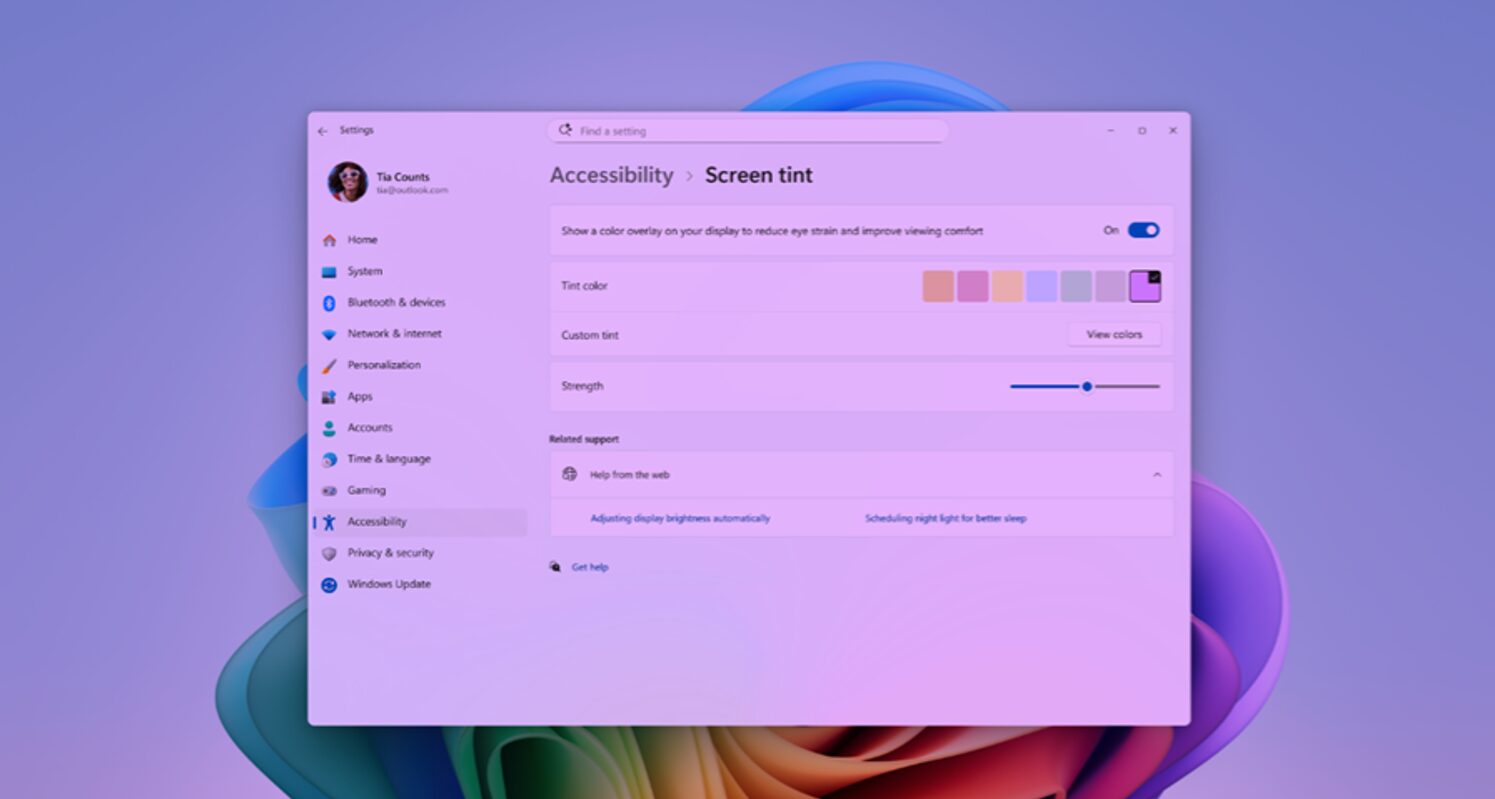
Microsoft is testing Screen Tint, a new Windows 11 accessibility setting. It adds a color overlay across the whole display. The goal is to make bright screens feel less harsh during long work sessions, gaming, or late-day reading.
The feature appears in Windows 11 Insider Experimental Preview Build 29617.1000, released June 26. Microsoft says Screen Tint lives under Settings > Accessibility, or the WIN + U shortcut, inside the Vision section. Users can pick from six preset colors. They can also choose a custom color and adjust a strength slider.
Screen Tint is not another Night Light
Microsoft is positioning the feature differently from Night Light. Night Light warms the display to reduce blue light that may affect sleep. Screen Tint reduces overall screen intensity. It is aimed at people dealing with eye fatigue or light sensitivity during the day.
The two features can run together. That could help users who already rely on Night Light but still find white app windows or office documents too intense. The tradeoff matters. Microsoft says turning on Screen Tint disables Color Filters. Color Filters also disable Screen Tint. Users who need existing color-filter tools may need to keep those instead.
Why this matters for everyday Windows users
Screen Tint is still an Insider test. It is not a guaranteed public Windows 11 feature yet. Microsoft warns that Experimental and Canary-era features can change, disappear, or return later in another form. Still, the idea fits a real problem. Many people already lower brightness, use dark mode, or add browser tools to make a monitor easier to stare at.
The build also includes smaller Windows changes. Microsoft lists updates for Windows Update, Magnifier, Voice Access, audio settings, storage, personalization, and display reliability. Magnifier now supports exact zoom percentages and preset jumps. Windows Update is also moving toward a more unified update flow that can reduce monthly restart friction.
For Microsoft, Screen Tint is another quiet accessibility improvement for Windows 11. It follows other quality-of-life updates, including Windows 11 shared audio support and Windows Update driver recovery. If Screen Tint survives testing, it could become one of those settings users turn on once and keep forever.