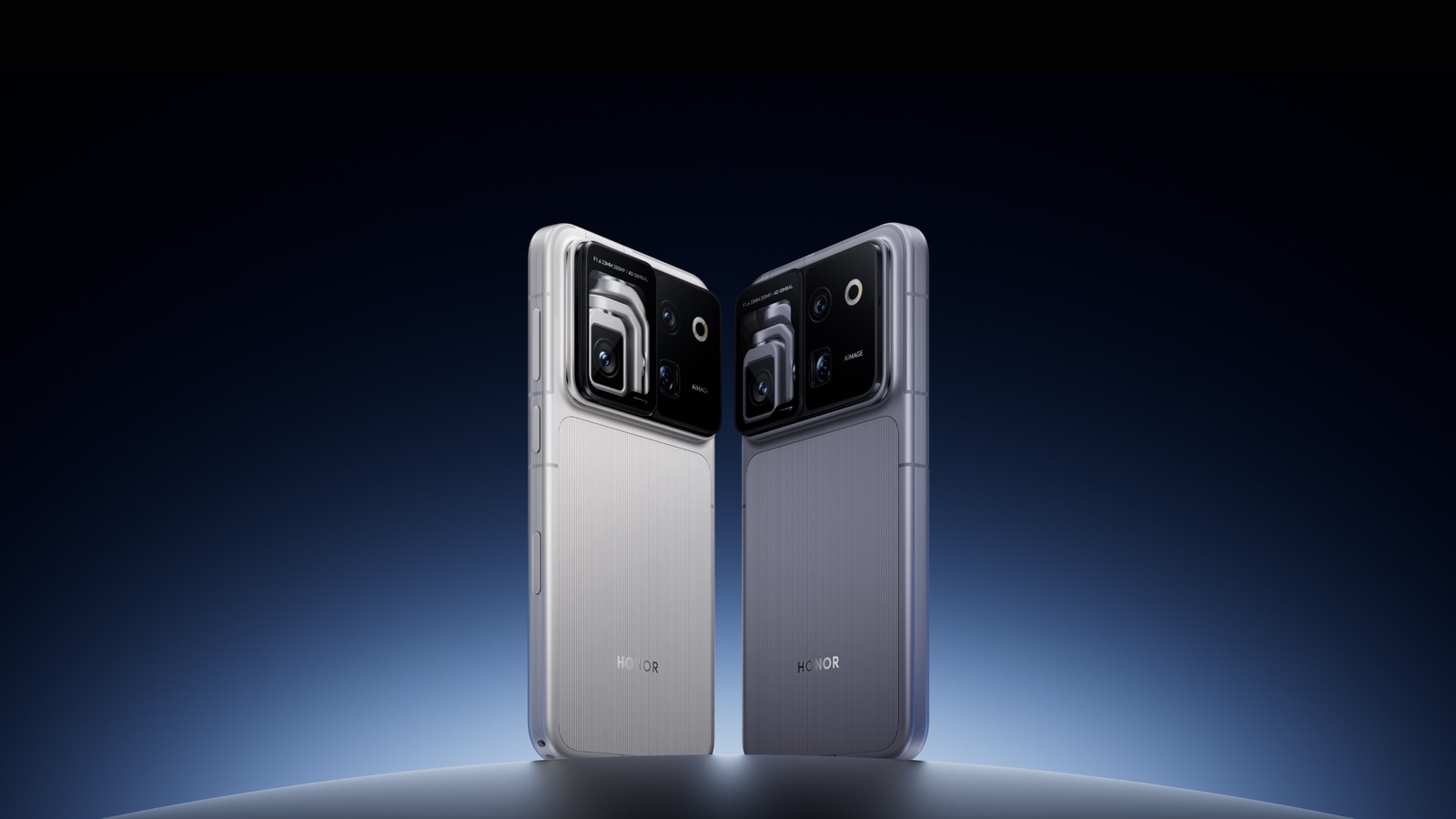
Phone cameras have been getting better by standing perfectly still. The Honor Robot Phone takes the opposite bet. Honor announced it in Guangzhou on 12 August, and its headline feature is a motorised arm that lifts the main camera clear of the body and moves it while you shoot.
Notably, the name is literal. There is no model number. Honor simply calls it the Robot Phone.
Four degrees of freedom, three axes of stabilisation
Two numbers are circulating, and they describe different things. Honor’s arm is a 4-DoF mechanical system, which refers to how it moves. The stabilisation it provides is a 3-axis mechanical gimbal. Both figures come from Honor, so neither is wrong, yet plenty of coverage has treated them as alternatives.
Still, the engineering claims are specific. Honor says the gimbal system is 65% smaller than mainstream gimbals while 200% stronger, and separately that the motor alone shrank by 70%. That titanium motor weighs 2.6g and drives the arm at up to 360 degrees per second. Note that this figure is a speed, not a rotation range. Honor publishes no maximum range anywhere.
Behind it sits a Snapdragon 8 Elite Gen 5 and Honor’s own H1 image chip, a 6.31-inch LTPO OLED rated at 6,800 nits peak, and a 7,060mAh silicon-carbon battery with 120W charging. The main camera is a 200MP sensor at 1/1.28 inches and F1.6, joined by a 200MP periscope and a 50MP ultra-wide.
ARRI supplies the colour science

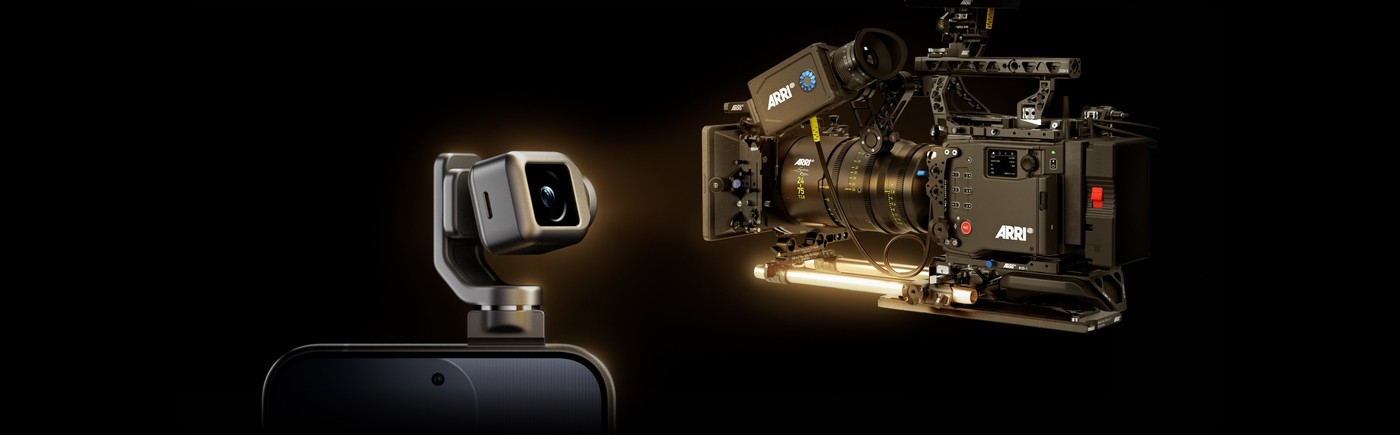
Honor calls the device the first milestone of a partnership with ARRI, whose cameras shoot a great deal of what you watch. Practically that means 10-bit ARRI LogC3 capture and ARRI Looks, with footage landing in DaVinci Resolve without a conversion step. Honor claims up to 14 stops of dynamic range, although ARRI’s own announcement carries no such figure.

The arm does party tricks too. Honor shows it nodding, shaking its head and dancing to music, which is the clip everyone has been sharing. Read the small print, however: the page showing those moves states the features are still under preparation and subject to the final commercial release.
China only, whatever the launch video is called
Pricing starts at RMB 9,999 for 12GB and 512GB, rising to RMB 12,999 for 16GB and 1TB, or roughly $1,480 and $1,930 at current rates. Pre-orders opened on announcement day. Sales then begin on 18 August.
Those are Chinese prices and Chinese dates, though, and they are the only ones Honor has published. The country selector on Honor’s global product page lists China alone. Honor’s CEO did point to a wider August rollout back in July, yet the launch materials name no second market, so treat a global release as unannounced rather than imminent.
The number Honor did not print
Honor documents this arm exhaustively: more than 100 patents, over 100 precision components, 60 manufacturing processes. Yet it publishes no ingress rating at all. Similarly, there is no cycle-life figure, no rated lifespan and no drop or dust testing.
That silence is conspicuous rather than routine. In the same MWC release where Honor first showed this phone, it printed IP68 and IP69 for the Magic V6, so the company clearly knows how to state a number. Spec databases list IP54 here, but Honor itself has confirmed nothing. Outlets that handled the device put it at 248g and 9.59mm thick, and Honor publishes neither of those either.
History explains why that matters. Samsung’s rotating Galaxy A80 camera lasted exactly one generation. Asus kept its flip camera going for three, and at least published rated flip counts. Honor has matched none of those numbers for a considerably more complex mechanism. In fairness, vivo’s micro-gimbal survived four generations, so moving parts are not automatically doomed.
Overall the contrast with the rest of the market is stark. Google’s Pixel 11 Pro arrived the same day chasing 120x zoom with no moving parts whatsoever. Honor is betting instead that a phone can absorb what a pocket gimbal like DJI’s Osmo currently does in a separate device.
It is a genuinely ambitious piece of hardware, and the only mainstream category shipping a load-bearing moving part is foldables, where Samsung’s Galaxy Z Fold8 sits near the same price. Until someone runs this arm for a year, the durability question stays open.