












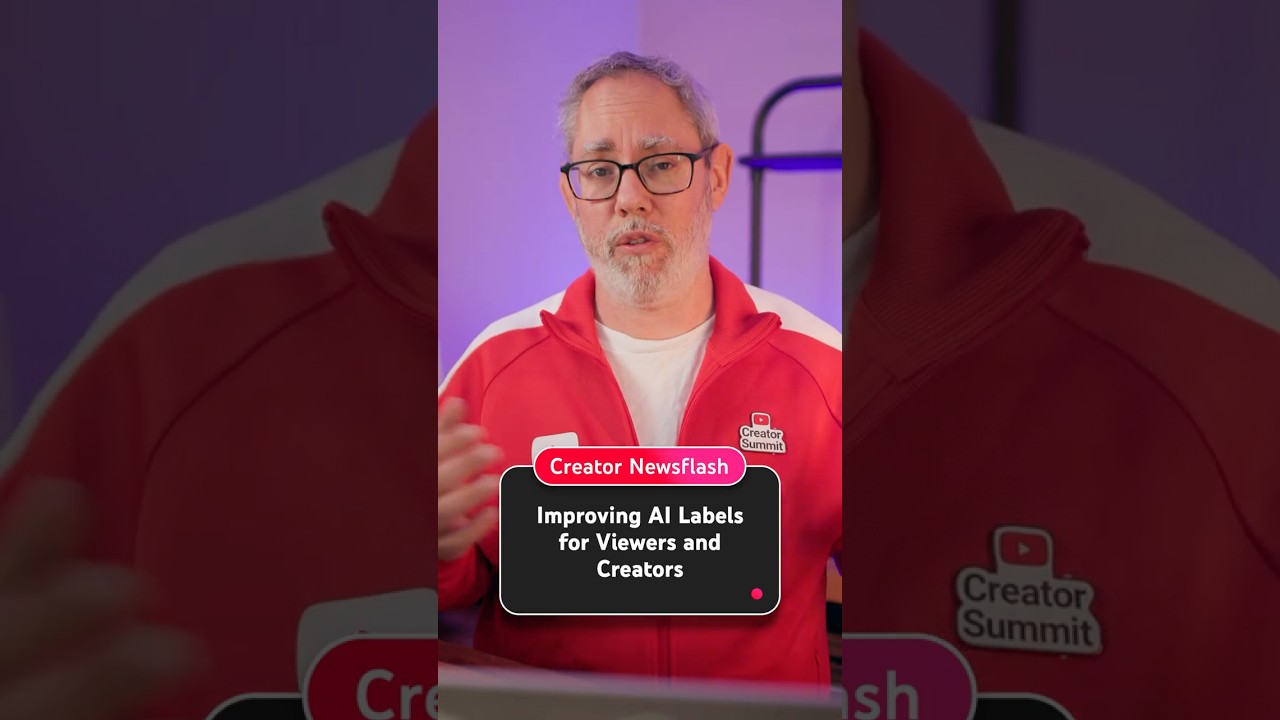
YouTube AI labels are also getting a major new capability — the platform will now automatically detect and apply them to videos it identifies as AI-generated, even when creators have not made that disclosure themselves.
The change targets photorealistic and meaningfully AI-altered content. Previously, YouTube required creators to self-disclose realistic AI use. Now its systems scan for significant photorealistic AI use and apply a label without any creator action.
How YouTube AI Labels Now Work
Labels also appear in more visible positions than before. On long-form videos, the disclosure now sits directly below the player, above the description. On Shorts, it shows as an overlay on the video itself.
YouTube’s detection system uses three signals. First, internal tools identify photorealistic AI generation automatically. The platform also flags content produced with its own AI video tools, including Dream Screen and Veo. The third signal is C2PA metadata — an industry standard that embeds machine-readable AI provenance into the file itself. C2PA-enabled tools sign the file at creation, so YouTube can then read that embedded signature automatically.
Labels from automatic detection are not permanent. Instead, creators who believe their video was incorrectly flagged can update the disclosure status in YouTube Studio. However, labels tied to C2PA metadata or content produced with YouTube’s own tools are permanent and cannot be removed.
YouTube noted that the YouTube AI labels do not affect recommendations or monetization eligibility. Content that is unrealistic, animated, or only slightly AI-enhanced will still surface a disclosure in the expanded description, rather than the more prominent label position.
For creators, the takeaway is straightforward. Any photorealistic AI content that bypasses the disclosure step will now receive a label from YouTube’s detection systems. Updating the disclosure toggle in YouTube Studio before publishing is the safer approach.
YouTube began requiring creator disclosure for realistic AI content in 2024. This update fills the gap where creators miss or skip the policy — and also adds automatic detection for content from Google-native AI tools. Full details are in YouTube’s official announcement.