



















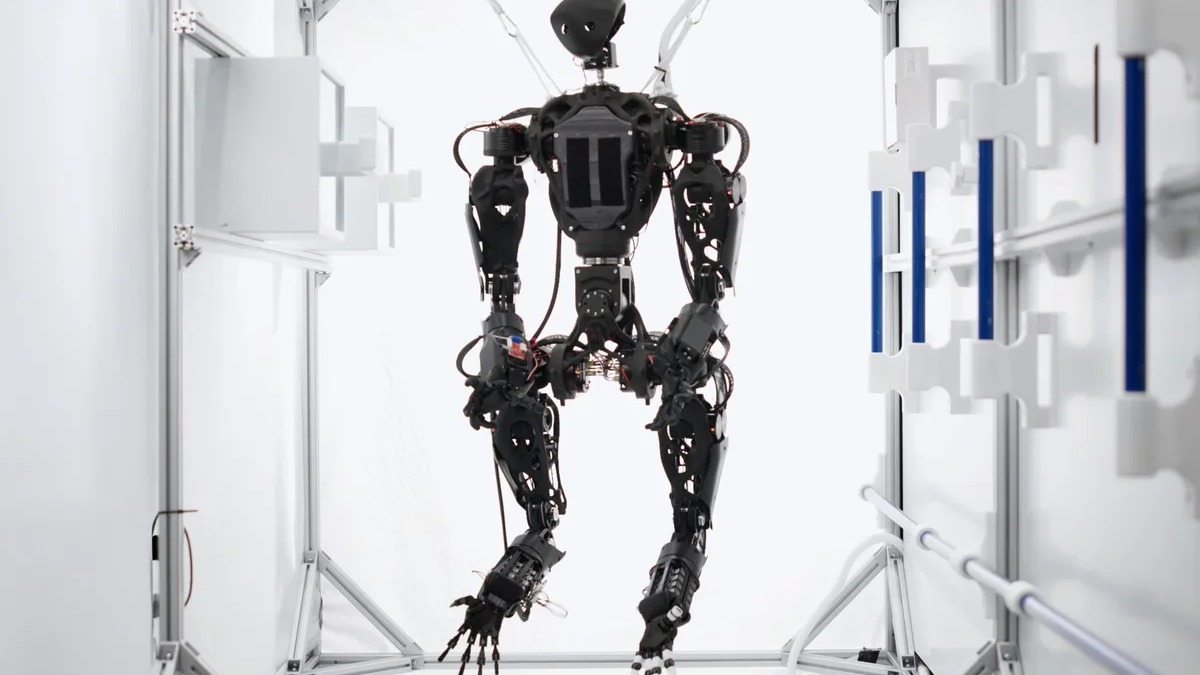
Orbit Robotics is taking a very different path with Helios, a humanoid robot concept built for orbital operations. The Orbit Robotics Helios design does not try to walk like an Earth robot; it uses four arms instead.
That design looks odd at first, but the logic is practical. In microgravity, legs do not help much. A robot needs to brace itself, move through tight station spaces, and handle tools or cargo without floating away.
ORBIT’s own reveal video makes the design easier to understand: Helios uses its extra arms as both anchors and work tools, which is exactly the kind of movement problem a space-station robot has to solve.
Why four arms make sense
Two arms can stabilize the robot while the other two work. That could help with routine jobs such as moving supplies, sorting cargo, checking inventory, or helping astronauts with repetitive maintenance.
The design also points to a larger robotics truth: space robots do not need to copy human bodies perfectly. They need to match the environment. On a station, gripping and positioning matter more than walking.
Orbit also describes itself as an ETH Focus Project, so Helios should be read as a serious research platform rather than a consumer product. The value is in testing what a useful orbital helper should look like before space operators need one at scale.
Astronaut time is expensive
Routine space-station work can consume a lot of crew time. If a robot can handle even some logistics and maintenance tasks, astronauts could spend more time on science, repairs that need human judgment, and mission operations.
That is why the strange body makes sense. A robot built for warehouses, homes, or factories can stand on legs. A robot built for a future station needs to anchor itself, move carefully, and avoid turning a simple handoff into a floating mess.
Helios is still early, but it fits a broader push toward useful humanoid robots. That includes Earth-focused machines like Humanoid names Bosch its manufacturing partner for HMND 01 Robot, which shows how fast this category is spreading across industries.