

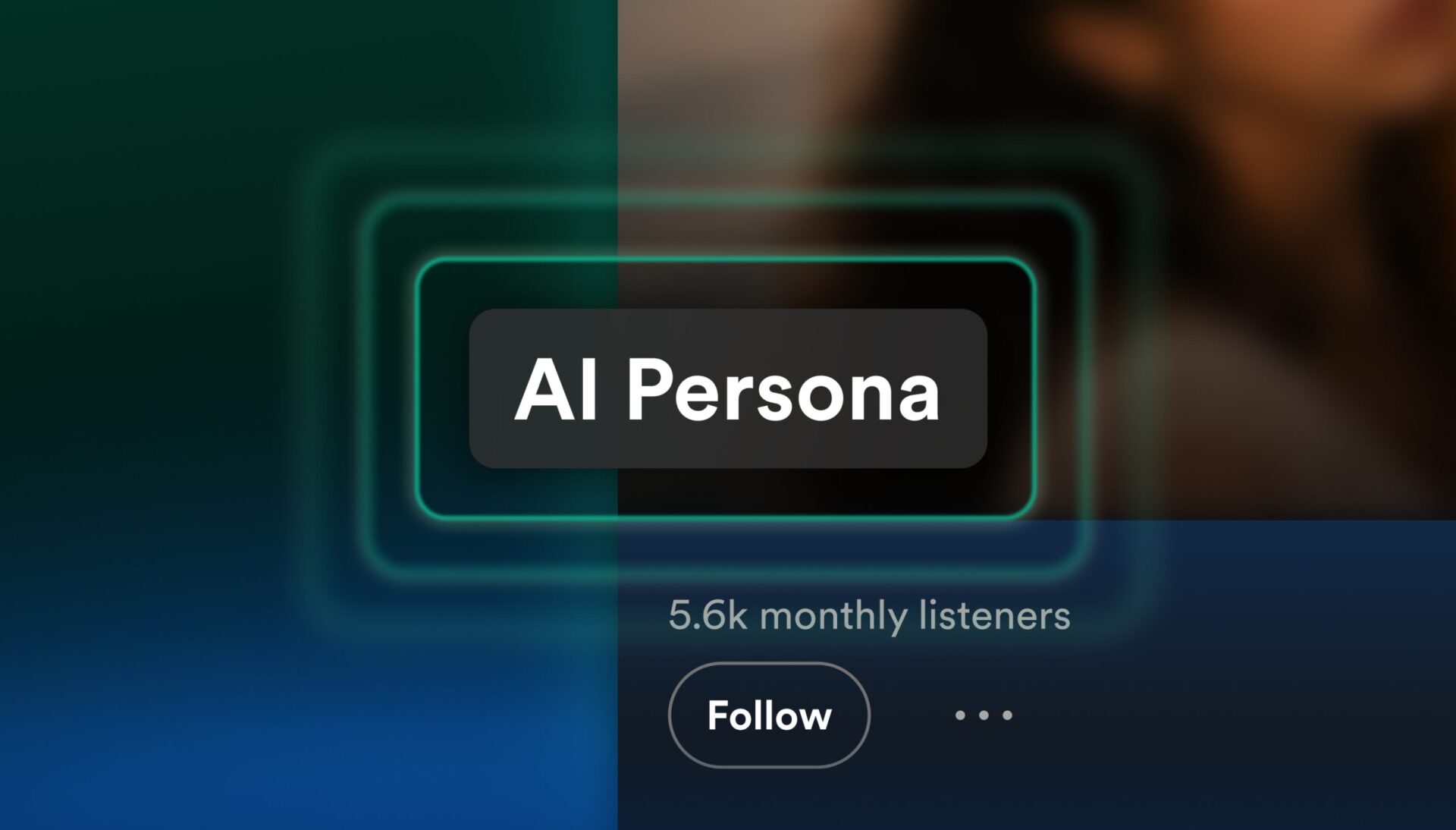
Spotify AI Persona badges will flag artist profiles that do not represent a real person. Starting mid-September, the label appears on mobile profile banners, About sections, Search results, and playlist track rows. Artists can self-disclose today in Spotify for Artists. Spotify will also apply a badge after review when a profile presents a photorealistic AI-generated identity.
Listeners have told Spotify they dislike profiles that look human, then turn out to be generative stand-ins. Therefore the company is treating artist identity as a trust problem, not only a content-moderation problem. Meanwhile the badge is about public identity—name and imagery—not about how the tracks were produced.
How Spotify AI Persona labels work
There are two badge paths. First, an artist can turn on the AI Persona setting under Artist Settings → Profile & Identity. That self-disclosure shows as an AI persona badge once the feature reaches listeners this fall. Second, Spotify reviews high-reach profiles and can apply a Likely AI Persona badge when the public identity appears AI-generated. Artists get a notification, can confirm by self-disclosing, or can appeal. Without action, the Likely label stays.

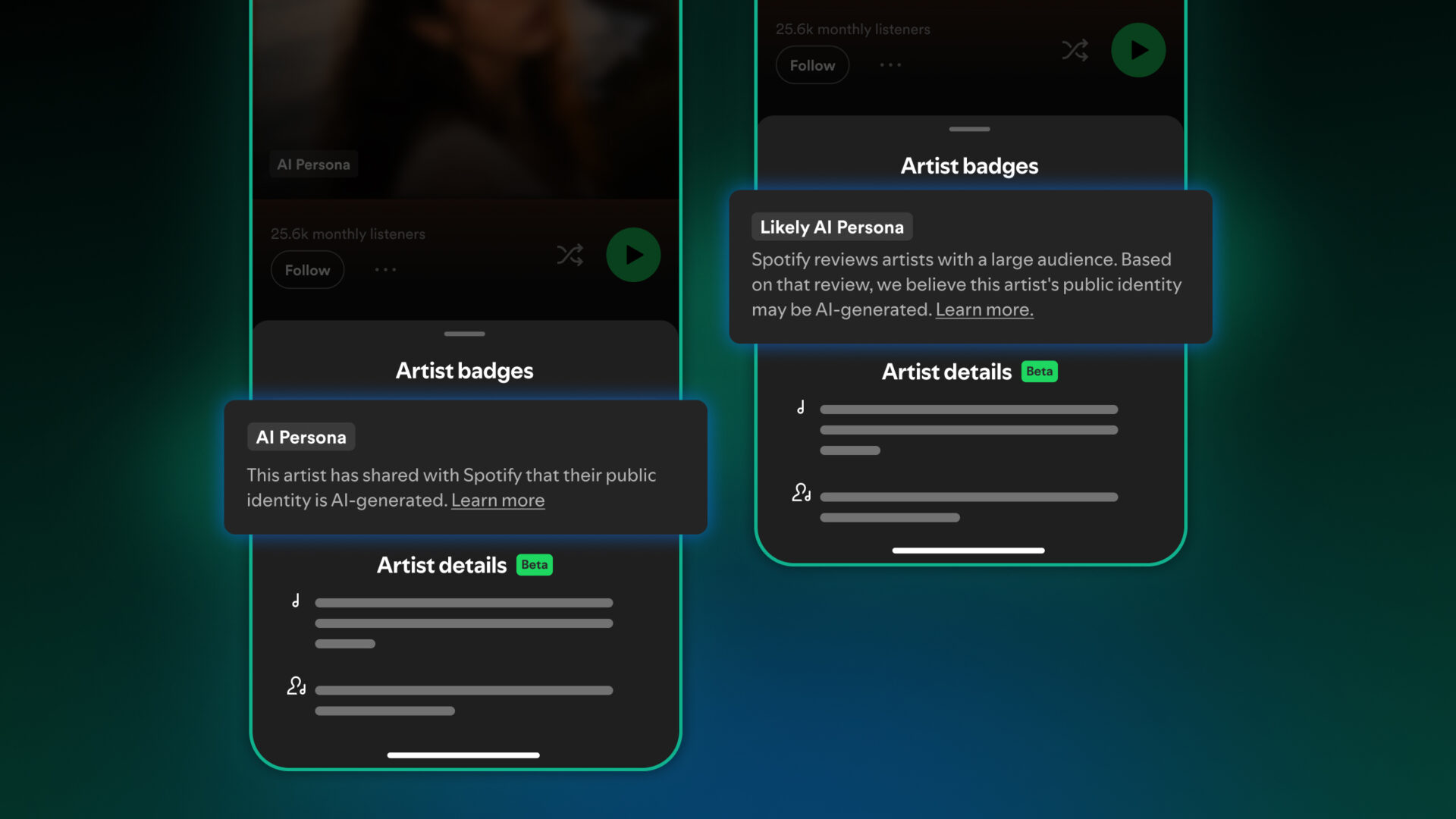
Spotify will not rely on honesty alone. It will start with artists that already meet audience thresholds so labels cover most profiles people actually open. In coming months, listeners should also gain a report flow for suspected AI Personas. Support docs say you cannot reverse a self-disclosure in the portal without contacting Spotify, and you cannot strip a Spotify-applied Likely badge yourself.
Recommendations default off for AI Personas
By default, Spotify keeps AI Personas out of editorial and algorithmic recommendations. You will not see that catalog in personalized mixes unless you show intentional signals, such as following an AI Persona. Spotify frames its programming around authentic artists building careers. However it still leaves creative choice on how artists present themselves—just with clearer labels for fans.
The company draws a hard line between identity and production tools. For production transparency, artists can add AI Credits through distributors and surface deeper contributor context via SongDNA. Spotify says tens of thousands of AI credits already land daily. It hopes AI Persona self-disclosure will follow a similar pattern.
Part of a wider authenticity stack
AI Persona sits next to other 2026 trust products. Verified by Spotify marks real humans presenting authentically; AI-persona-style profiles are not eligible for that check at launch. Artist Details surface career milestones from platform data. Artist Profile Protection lets acts approve releases that hit their profile. Moreover Spotify says it tunes ranking to downrank spam, slop, and low-effort filler when signals allow.
That industry pressure is not only coming from streamers. Platforms are also pushing provenance tools on the supply side, including efforts like Suno audio watermarks meant to flag AI songs for platforms. On Spotify itself, smaller product beats such as user notes on playlist tracks show the service still ships listener-facing features while it polices identity. Still, badges will not solve every deepfake or voice-clone fight. They mainly answer a simpler question: is this profile claiming to be a person who does not exist?
What to watch
Self-disclosure is open now. Listener-facing badges arrive mid-September on mobile first. Watch how often Spotify leans on “Likely AI Persona” versus voluntary labels, how appeals land, and whether recommendation exclusion actually keeps synthetic acts out of Discover Weekly-style surfaces. For now, the practical takeaway is simple: Spotify is labeling fake identities, not banning AI tools wholesale.


