

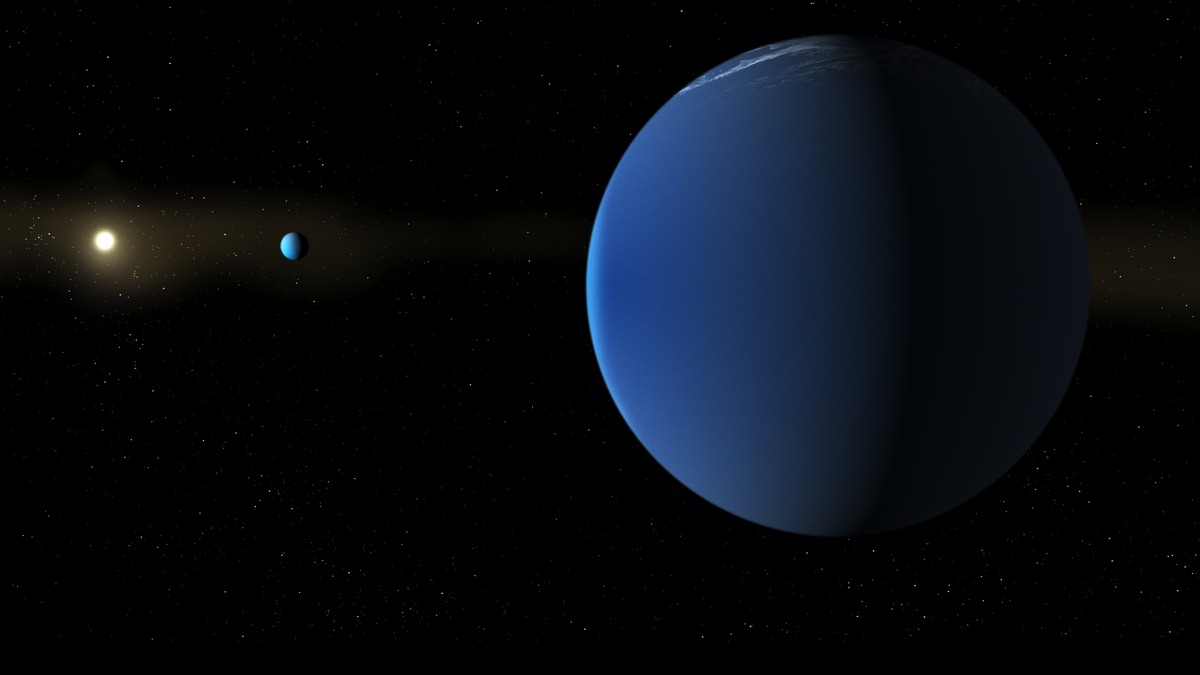
Cotton candy planets sound like science fiction. However, NASA’s TESS satellite just found two of them orbiting the same star. Both worlds are gas giants the size of Jupiter. Meanwhile, their mass is so remarkably low that NASA compares their density to the spun-sugar treat.
Specifically, these planets are designated TOI-791 b and TOI-791 c. They orbit the same star, which makes the discovery especially rare. George Dransfield of Oxford University led the research team. His group analyzed seven years of TESS observations to confirm both cotton candy planets.
What Makes These Planets So Puffy
TOI-791 b is nearly the same size as Jupiter. Yet it has only three percent of Jupiter’s mass. In fact, TOI-791 c is even larger than Jupiter. Still, it carries just 5.9 percent of the gas giant’s mass. As a result, both planets have an extraordinarily low density. That is exactly what earns them the nickname “super-puff.”

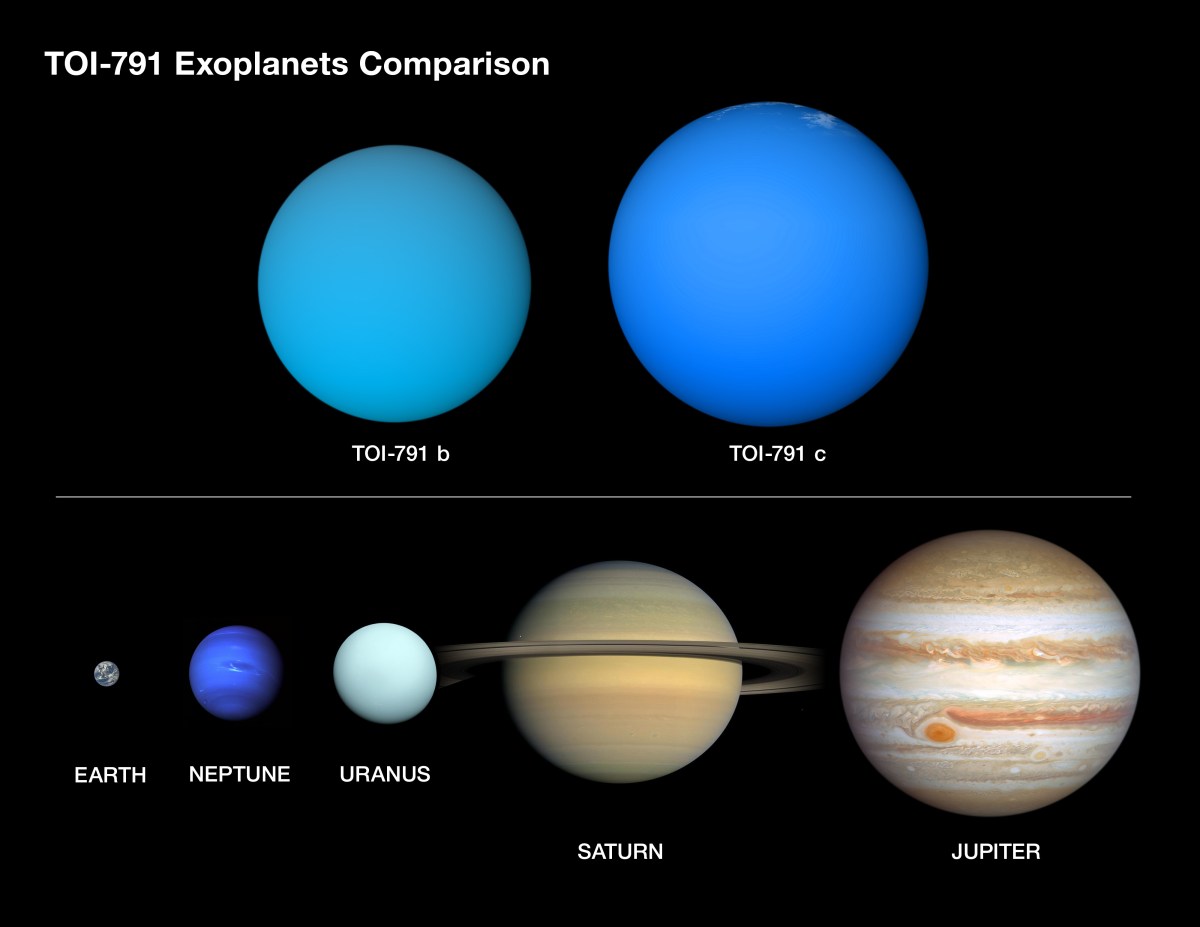
Scientists know of only a handful of super-puff planets. Finding two in the same system is rarer still. Moreover, it gives researchers a natural laboratory for studying planetary evolution. NASA Ames scientist Steve Howell explains that Jupiter-sized planets drive the evolution of planetary systems. Therefore, studying cotton candy planets with Jupiter’s size but a fraction of its mass offers “high value” for science.
How TESS Found Them
NASA launched TESS in 2018 to hunt for planets outside our solar system. The telescope focuses on stars relatively close to Earth. Additionally, it surveys a region 400 times larger than the earlier Kepler mission covered. So far, TESS has identified 7,931 exoplanet candidates. Out of those, scientists have confirmed 897.
For this particular system, TESS gathered 1,122 days of data over seven years. Consequently, that long baseline was critical. Both planets have unusually long orbits for their type. Thus, they are harder to detect. The planets also tug on each other gravitationally as they orbit. Specifically, this alters the timing of their transits across the host star. Scientists used those timing variations to calculate each planet’s mass.
What Scientists Still Don’t Know
Plenty of questions remain. For example, researchers want to learn about the chemical makeup of these atmospheres. They also want to know how rapid spin affects planet shape. Furthermore, understanding how cotton candy planets form is a major goal. Leading theories suggest the worlds formed farther from their star and migrated inward. Alternatively, some process may have stripped away core mass while leaving puffy atmospheres intact.
The discovery adds to a growing catalog of weird and wonderful exoplanets turning up in TESS data. Meanwhile, NASA’s James Webb Space Telescope could help crack open the atmospheric mysteries of super-puff worlds. Indeed, Webb might peer through their diffuse, extended atmospheres to reveal what lies inside.
Why It Matters
Every super-puff planet challenges existing models of planet formation. Most theories predict that gas giants should carry substantially more mass. However, two such planets in the same system, with long orbits, suggests our understanding remains incomplete. Each new discovery like TOI-791 gives theorists more data to work with.
TESS continues to scan the sky for more. Its next target catalogs are already queued. Indeed, the spacecraft has proven it can deliver results on long-timescale targets. As NASA’s exploration ambitions expand, missions like TESS are quietly rewriting the textbook on what planets can look like.


