The NASA PROMISE rover could become the smartest recycling project in spaceflight. In a June 30 news release, NASA said it plans to send PROMISE — short for Polar Rover for Observation, Mapping, and In-Situ Exploration — to the Moon. Remarkably, the vehicle already exists, because it began life as the Earthbound test twin of the agency’s Mars rovers.
From the Mars Yard to the Moon
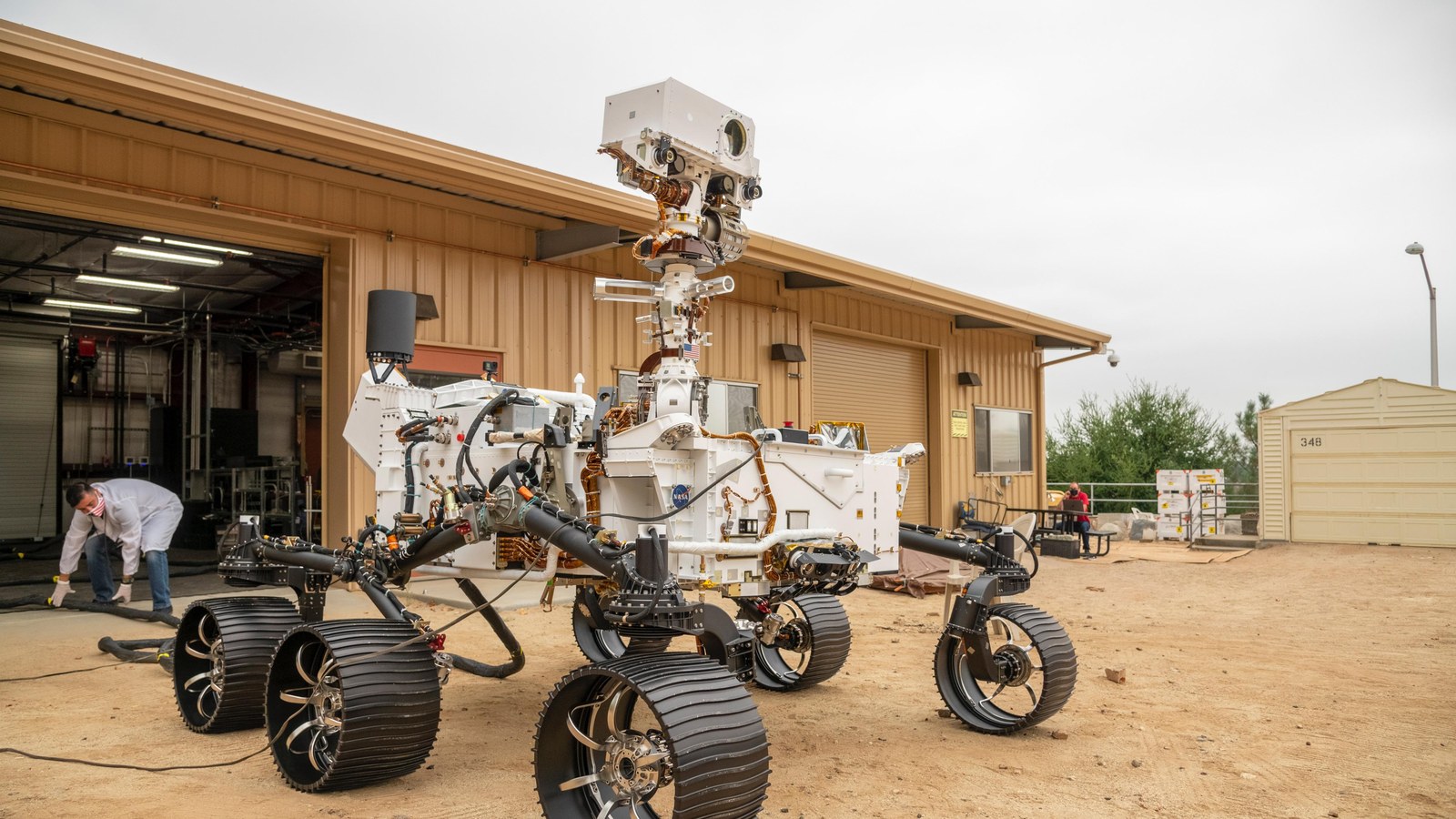
Engineers at NASA’s Jet Propulsion Laboratory built the machine as a ground double for Perseverance and named it OPTIMISM. Alongside MAGGIE, Curiosity’s stand-in, it spent years rolling across simulated Martian terrain at JPL’s Mars Yard in Pasadena. Teams used both testbeds to rehearse risky maneuvers before beaming commands to the real rovers. Because of that shared heritage, NASA describes PROMISE as a hybrid development version of Perseverance and Curiosity.
The flight-proven design still delivers on Mars. In fact, Perseverance just ran a marathon on the Red Planet in record time.

Nuclear Power for the Lunar Night
Solar-powered rovers struggle at the lunar south pole. Shadows run deep there, and a single night lasts about two Earth weeks. PROMISE would sidestep that problem with a multi-mission radioisotope thermoelectric generator. Curiosity and Perseverance carry the same nuclear power source. The generator converts heat from decaying plutonium into steady electricity. As a result, the rover could keep working through darkness and scout water ice inside permanently shadowed craters.
That endurance matters because NASA views the south pole as prime real estate for a future crewed outpost. At NASA’s Moon Base update briefing, program manager Carlos García-Galán called the lunar night one of the bigger challenges ahead. With nuclear power aboard, he said, the rover would not have to worry about it.
A Proposal, Not a Mission Yet
NASA has not approved a final mission, and agency experts are still defining what PROMISE would study. Administrator Jared Isaacman framed the idea as plain common sense during the same briefing. “We’ve had years now of experience operating the two rovers on the surface of Mars, and we’ve got this hardware that the taxpayers have invested a lot in,” he said. “So the question was posed: What if we send it to the moon?” According to Engadget, the rover could launch in the early 2030s, though NASA has not committed to a date.
Meanwhile, the same announcement put real money behind the broader Moon Base effort. NASA awarded roughly $600 million to Astrobotic, Firefly Aerospace, and Intuitive Machines for cargo deliveries targeting late 2028. Taken together, the awards and the rover proposal show one pattern: stretch proven hardware further. The approach echoes the NASA ERNEST rover we covered in June. For now, the Mars twin waits in its garage for a new set of travel papers.