
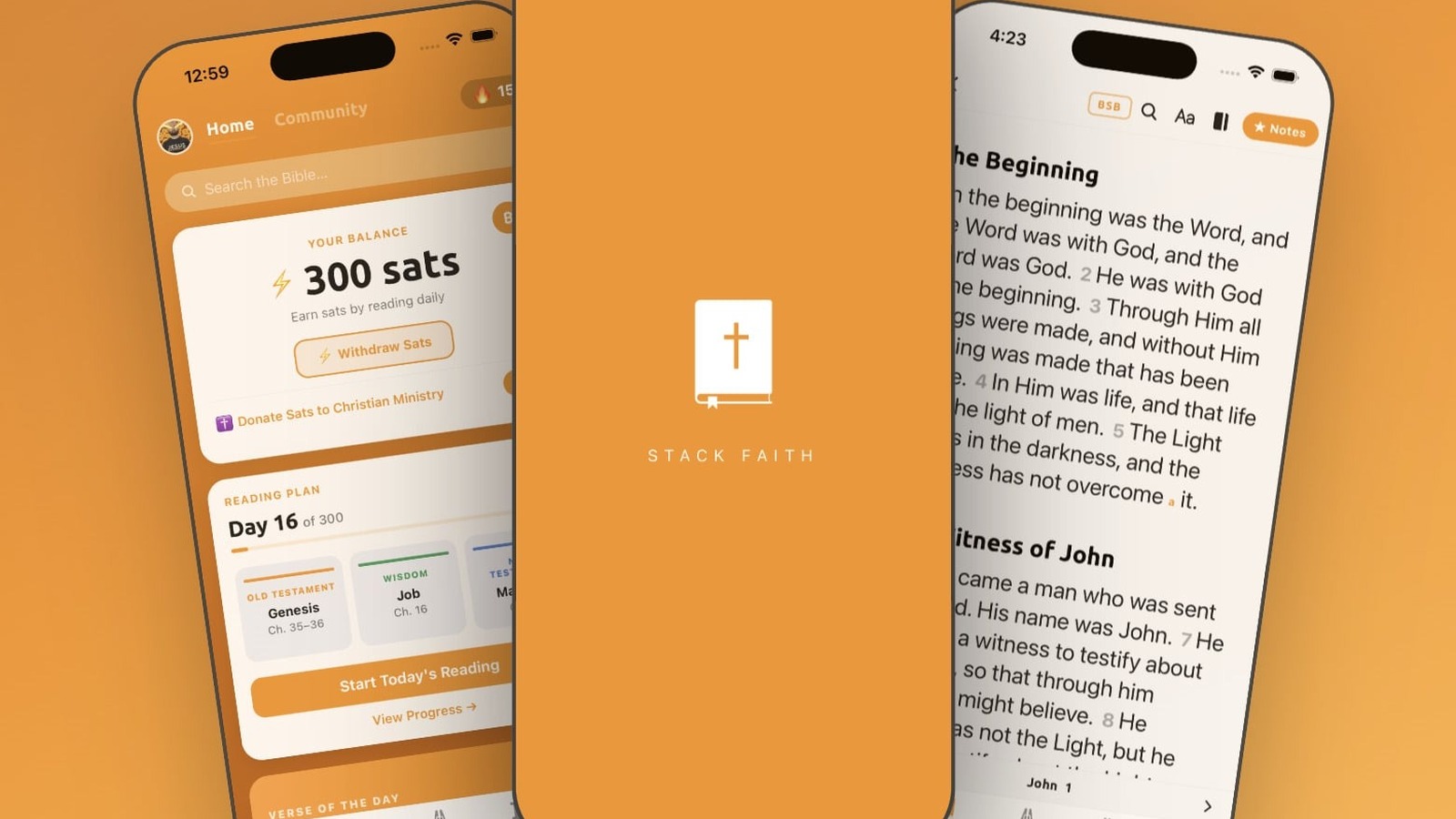
A new iOS app called Orange Bible offers an unusual pitch: read scripture, keep a daily streak, and earn small amounts of Bitcoin. The app itself is free. Its fuller experience, however, sits behind an $8.99 monthly subscription that triples the payouts.
The app was built by Alin Armstrong, who also wrote a self-published book called “The Bible and Bitcoin.” His framing is blunt. “You don’t earn a badge or a digital streak,” he says. “You earn real Bitcoin.”
How the rewards work
The mechanic is simple. Users follow a reading plan and collect satoshis, the smallest unit of a bitcoin, for finishing daily sessions. Longer streaks unlock higher reward tiers, so the payouts grow with consistency. Readers can also route their rewards to partner ministries as donations.
It is worth keeping the scale in perspective, though. A satoshi is one hundred-millionth of a bitcoin, so these rewards are tiny by design. In practice, the draw is the habit and the novelty rather than meaningful income.
What the $8.99 tier adds
The premium tier is where the product gets more ambitious. Subscribers get a 3x multiplier on their Bitcoin rewards for every reading session. They also unlock an AI “Bible Study Assistant” that answers questions about verses and summarizes passages.
The subscription further includes an “Orange Study Bible” with more than 200 notes on biblical economics, wealth and stewardship. On top of that, it bundles a small library, including Armstrong’s own book. Notably, the app pairs the public-domain Berean Standard Bible and King James Version with familiar tools like search, highlighting and a prayer journal.
Faith, Bitcoin and the business model
The pitch deserves a clear-eyed read. The bigger Bitcoin rewards are locked behind the paywall, so users effectively pay $8.99 a month to earn more. That makes the subscription, not the satoshis, the obvious engine here. The app also does not spell out who funds the Bitcoin payouts over time.
There is an ideological layer, too. Orange Bible blends devotional reading with a distinctly pro-Bitcoin view of money and stewardship. For now, it is iOS-only, with an Android version still in development. Apple’s grip on that distribution is itself under pressure, as the recent opening of iOS app stores in Brazil showed. The wider trend is clear, as well, with crypto creeping into everyday products, much like Tether’s plan to push a stablecoin into local payments.
For the right audience, the concept is genuinely clever. It turns a daily spiritual habit into a tangible, if minuscule, reward. Still, it is best understood as a subscription product with a Bitcoin hook, rather than a way to build real wealth from reading.