Midjourney did not just announce another image model. It showed off Midjourney Medical, a new hardware effort built around a full-body ultrasound scanner, a San Francisco spa, and a claim that internal body imaging could eventually become as routine as a workout or a sauna session.
The company calls the system Ultrasonic CT. Its public pitch is that a person steps into a shallow pool, descends through a ring of underwater sensors, and comes out with a reconstructed internal body map in about 60 seconds. There is no X-ray radiation and no powerful MRI-style magnet in Midjourney’s description. There is water, sound, sensors, and a huge compute problem.

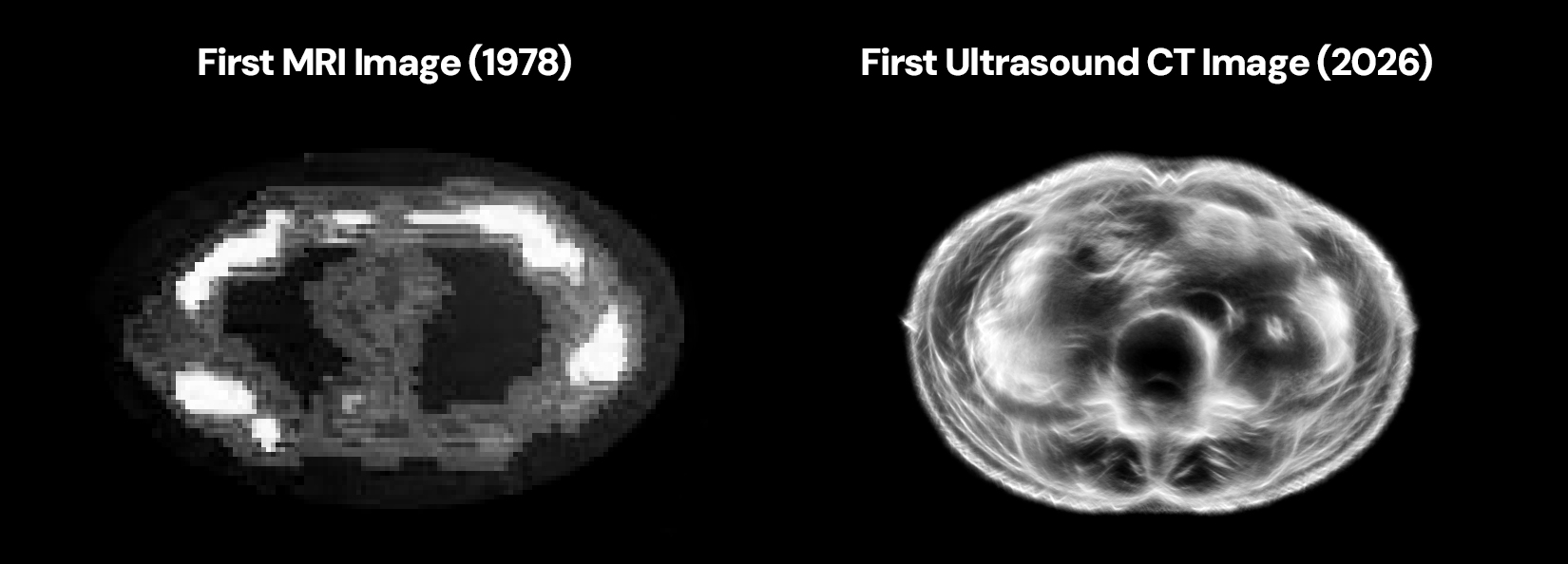
That comparison image is why this story needs the source visuals. Midjourney is not merely saying “we have a scanner.” It is showing early ultrasound-computed-tomography reconstructions next to familiar MRI-style imagery and asking readers to imagine a new category of routine personal imaging. That is a big claim, and readers need to see the evidence Midjourney is choosing to publish.
How the Midjourney Scanner is supposed to work
In its announcement, Midjourney says the scan starts when a user stands on a platform that lowers into water at about two inches, or five centimeters, per second. The body passes through a ring of tiny ultrasonic elements. Each element can act like a speaker and a microphone, sending sound waves and listening for the waves that return.
The company says those waves change as they pass through different densities and stiffnesses inside the body. Water, skin, fat, muscle, organs, vessels, and bone all alter the signal. The scanner then has to reconstruct those changes into images. Midjourney describes this as a massive compute task, not a simple sensor readout.

Midjourney’s body-slice animation shows reconstructed volume sweeps from the scanner. Video: Midjourney Medical.
The video matters because it explains the product better than any single still image. Midjourney is trying to turn a stack of reconstructed slices into a 3D map that can be reviewed over time. The company says its scan-gallery examples include raw reconstructions, AI segmentations, body-volume sweeps, and comparisons with MRI.
Midjourney is showing segmentation, not just pretty slices
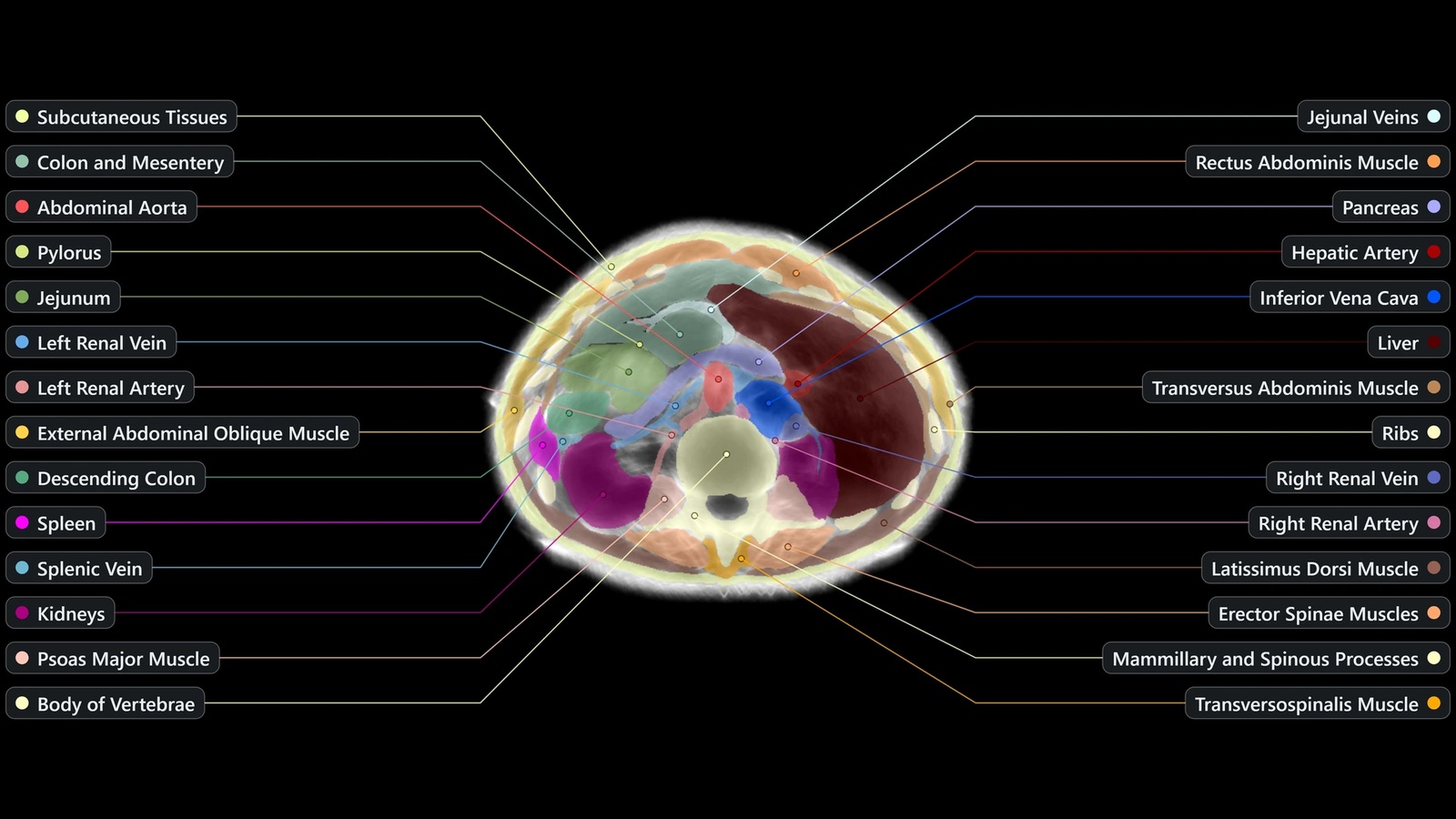
The strongest part of the source material is the scan gallery. Midjourney shows reconstructed scan slices with labels for muscles, organs, blood vessels, bones, and tissue regions. It also shows colored segmentations that try to mark what the system believes it has identified inside the body.

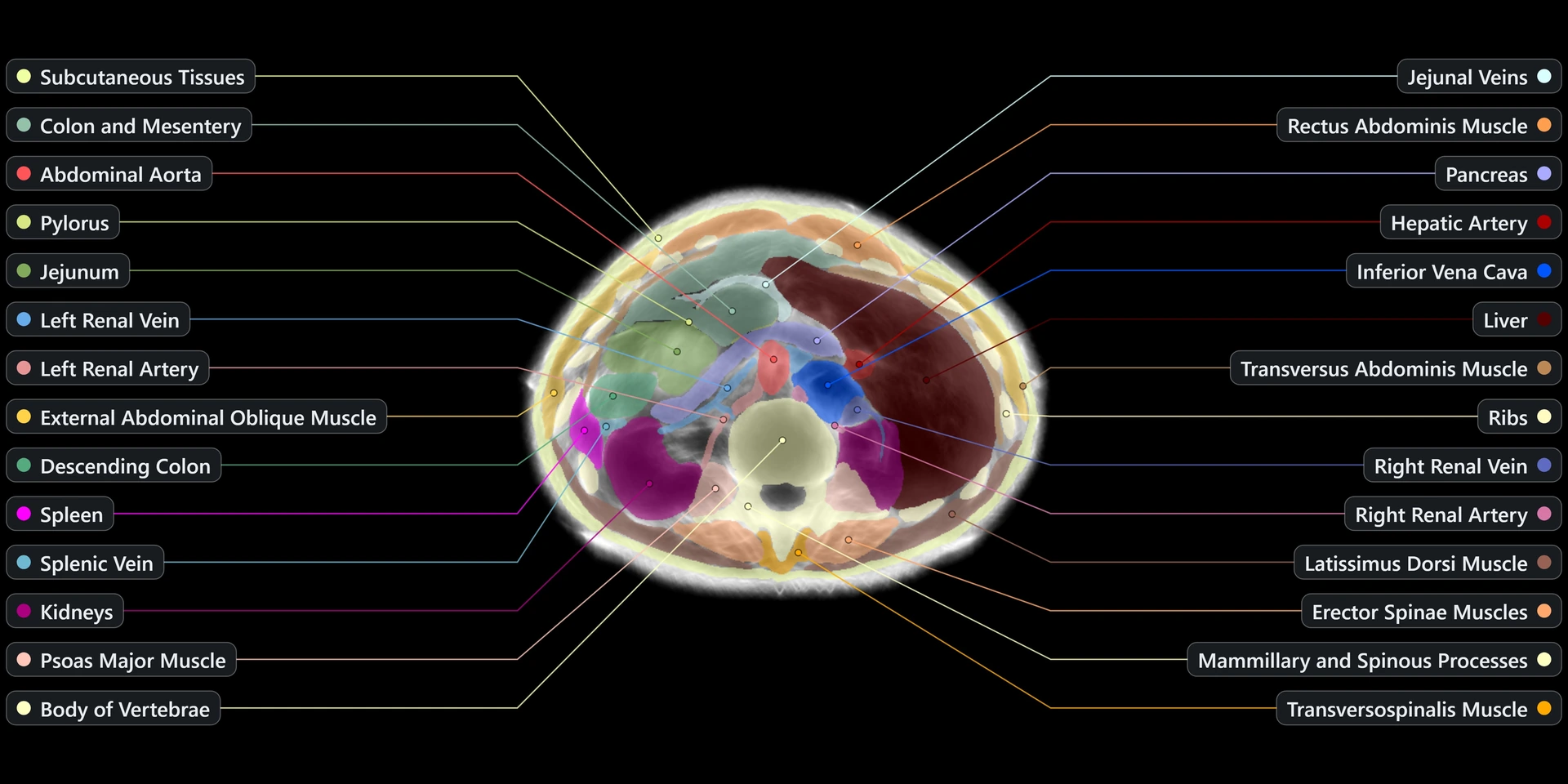
This is where the editorial caution has to sit beside the excitement. Segmentation makes the images easier for ordinary readers to understand, but it also raises the real question: how accurate is the reconstruction, how reliable is the labeling, and how often does the system confuse anatomy or miss something important? Midjourney’s examples are impressive as product storytelling. They are not, by themselves, proof that the system is clinically ready.

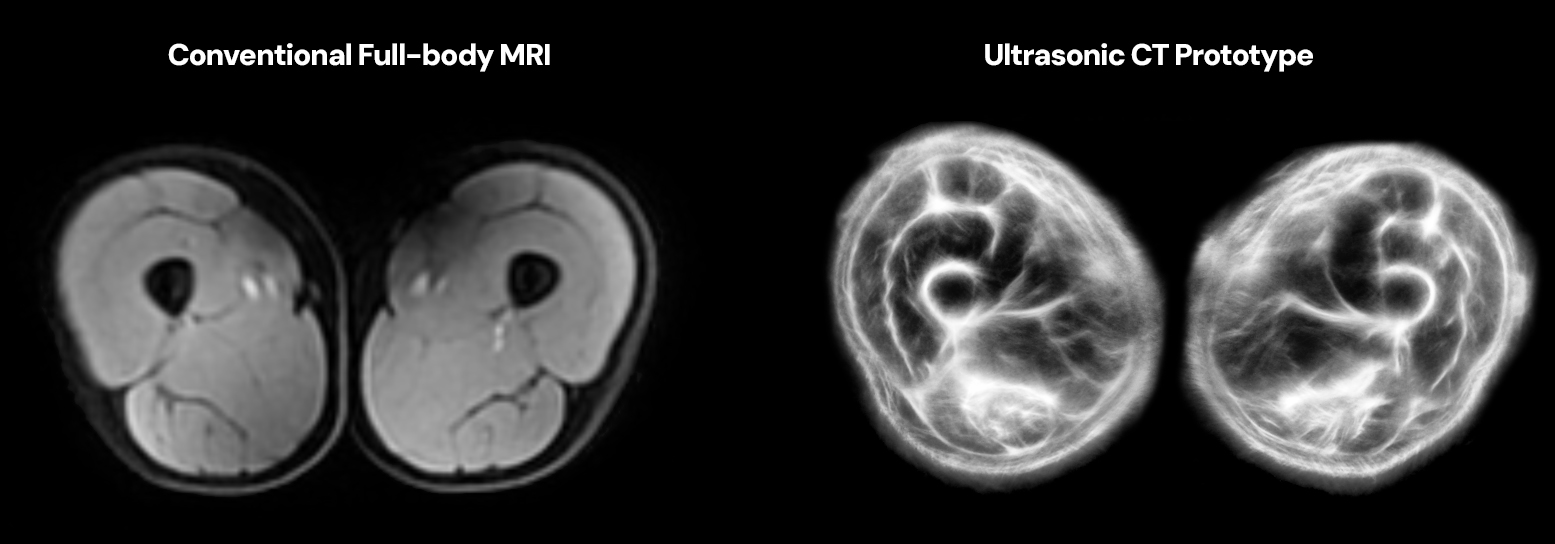
The thigh comparison gives readers a cleaner look at the claim. Midjourney is not presenting a standard handheld ultrasound image. It is presenting a tomographic reconstruction and comparing it with conventional MRI. If that approach scales, it could be meaningful for tracking body composition, muscle changes, or other longitudinal health markers. If it does not hold up under clinical testing, it becomes a polished wellness demo with a lot of unanswered questions.
Butterfly Network is inside the prototype
Midjourney is not building the ultrasound foundation alone. Butterfly Network says the current scanner prototype incorporates 40 Butterfly Ultrasound-on-Chip imaging modules per system under a co-development agreement. Butterfly also says future generations are expected to use substantially more modules.
Butterfly’s statement adds more context to the hardware claim. It describes Midjourney’s scanner as using about half a million sensors and more than two petaflops of processing power. It also points investors to a November 2025 Form 8-K that disclosed up to $74 million in expected payments to Butterfly over a five-year term.

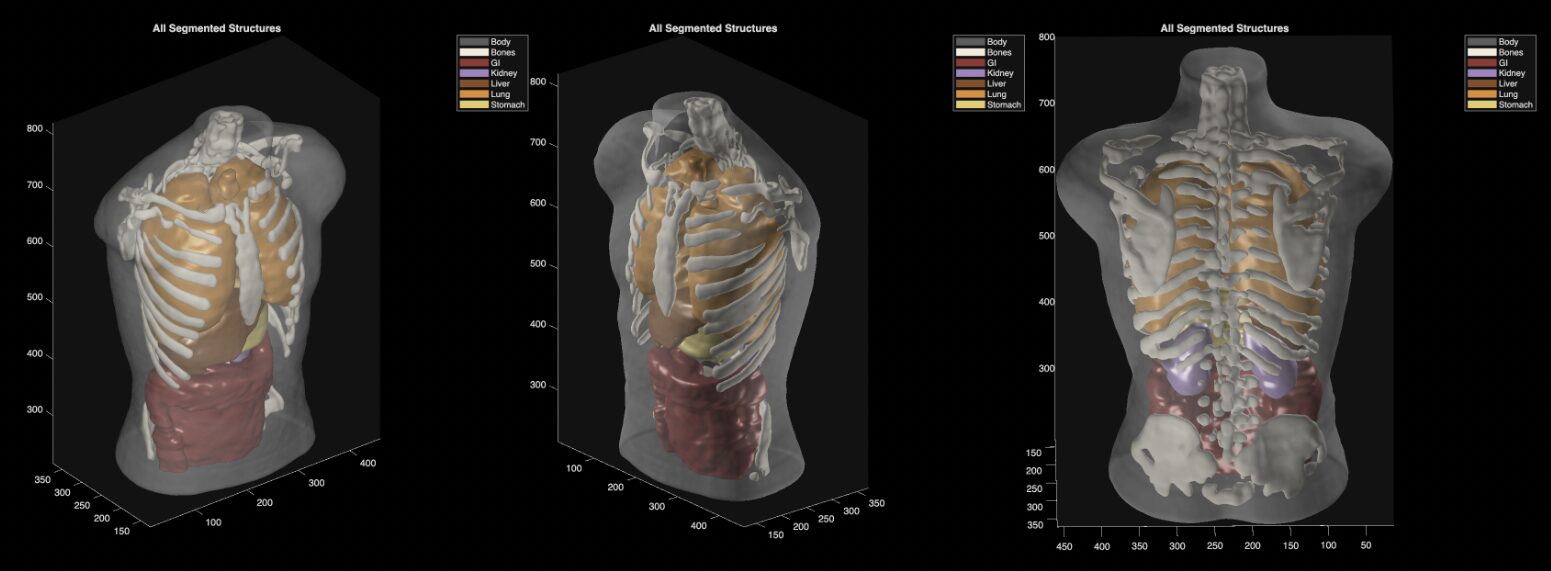
The phantom image is also important. A phantom is not a patient; it is a controlled imaging object. Midjourney says this example helps validate how cleanly structures separate under controlled conditions. That is useful, but it is still an early step on the road from a striking demo to a medical product doctors can rely on.
The spa is part of the product, not just the packaging
The second half of the announcement is the part that makes Midjourney Medical feel different from a hospital-equipment launch. The company wants to put the scanners inside a flagship Midjourney Spa in San Francisco around the end of 2027. Midjourney says the location will include hot tubs, saunas, cold plunges, and 10 scanners.
Midjourney’s spa render video shows the planned wellness setting around the scanner. Video: Midjourney Medical.

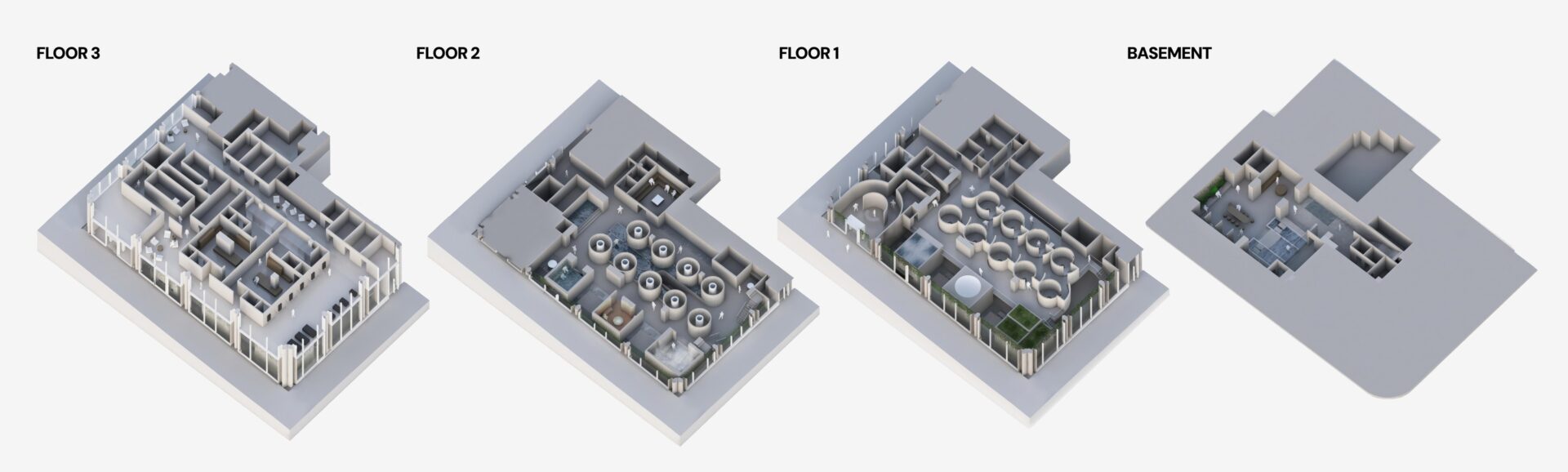
That spa concept is not a side detail. It tells us how Midjourney wants people to use the scanner. This is being framed as recurring personal health awareness, not an occasional hospital procedure. The company imagines users building a scan library, watching their bodies change over time, and sharing that information with doctors, coaches, nutritionists, or AI health tools.
That ambition overlaps with the broader health-tech trend Tech My Money has tracked in products like ASUS VivoWatch 6 Plus. But Midjourney is aiming much deeper than wrist metrics. It wants internal imaging to become frequent, visual, and consumer-facing.
The FDA and privacy questions are the real test
Midjourney is careful to say the first step is body composition maps. That is different from claiming a fully cleared diagnostic replacement for MRI. The company says diagnostic medical capabilities normally require FDA approval, and it plans to submit test results as it pursues more capabilities.
That distinction matters. A fast, comfortable, radiation-free full-body scan would be a major breakthrough if the image quality, reliability, medical usefulness, and regulatory path hold up. But a spa that collects detailed internal body data also raises serious questions about consent, privacy, interpretation, false positives, and who gets to use the scan library later.
Midjourney’s most ambitious line is that a future scanner fleet could reach more than 50,000 units and support a billion scans a month by 2031. That is a staggering target. It is also exactly why this announcement should be covered with both wonder and pressure. The visuals show a fascinating prototype story. The next test is whether Midjourney can turn beautiful reconstructions into trusted medical infrastructure.