
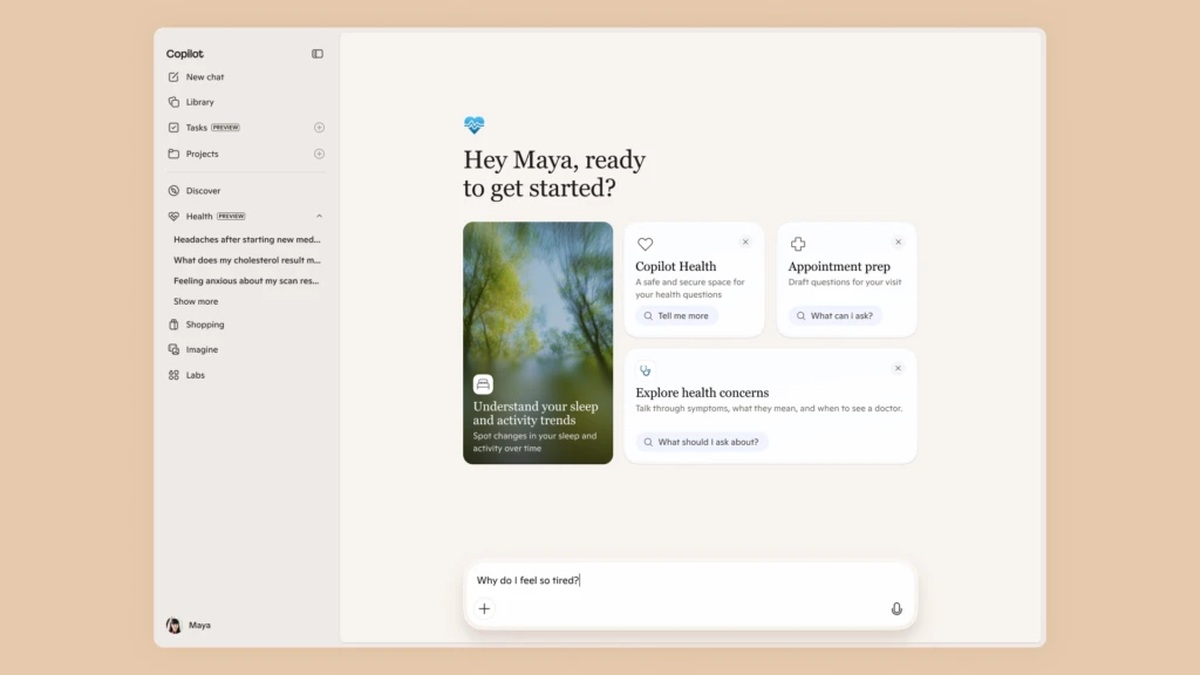
Microsoft Copilot Health sounds useful, but the real product is trust.
Microsoft says Copilot Health is now in preview for eligible US users age 18 and older with Microsoft 365 Personal, Family, or Premium subscriptions. The service can connect health records, bring in Apple Health data, explain lab results, and help people prepare for doctor visits.
More Than Symptom Search
The preview is trying to solve a real problem. Health information is scattered across provider portals, PDFs, lab reports, wearable apps, and half-remembered doctor conversations. Microsoft says Copilot Health can connect records from more than 50,000 US provider organizations and help users make sense of that information.
That could be helpful before appointments. A person could ask better questions, understand a lab trend, or prepare a cleaner summary for a clinician. Used carefully, an assistant could reduce the fog around medical paperwork.
The Privacy Bar Is Higher
Health data is not like calendar data. A bad summary can create anxiety. A missing caveat can lead someone in the wrong direction. Microsoft says Copilot Health is not intended to diagnose, treat, cure, or prevent disease. It also says users should not treat it as a replacement for professional medical advice.
Those disclaimers matter. The product will need clear consent controls, plain privacy language, and strong guardrails around uncertainty. If Copilot Health can do that, it may become a useful layer between patients and messy records. If it cannot, the convenience will not be worth the risk.
The preview also has a narrow audience for now. It is not for work accounts, and it is not a global public rollout. That matters because health-data features often depend on provider connections, regional rules, and user consent flows. Microsoft can expand later, but the first version is clearly controlled.
The strongest use case may be appointment prep. If Copilot Health can turn messy records into a short list of questions, it could help people use limited doctor time better. That is valuable, as long as the assistant does not blur the line between explanation and medical advice.