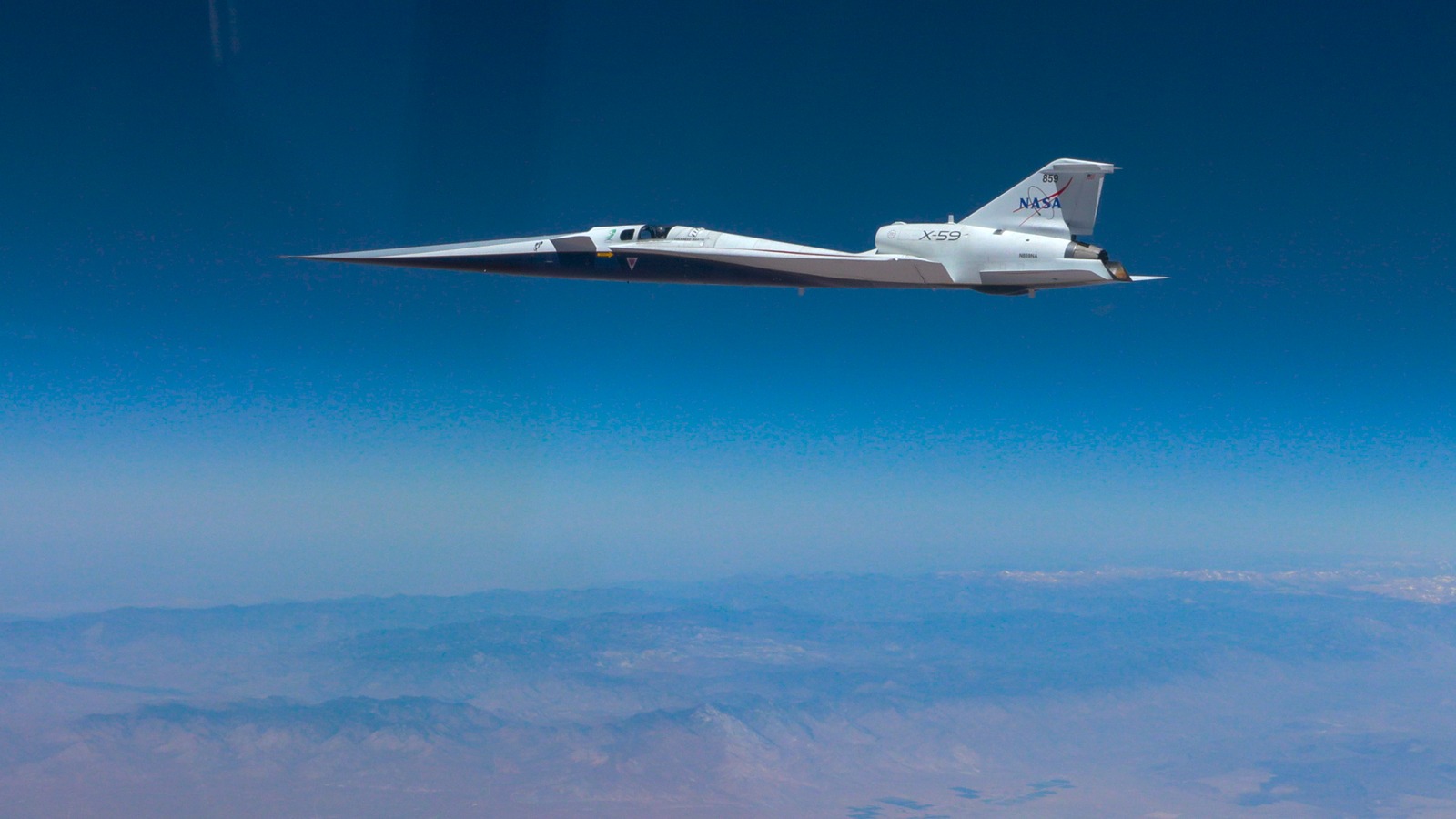
The NASA X-59 just went supersonic for the first time. In an update from NASA, the agency confirmed its quiet supersonic jet broke the sound barrier on June 5 over Edwards Air Force Base in California.
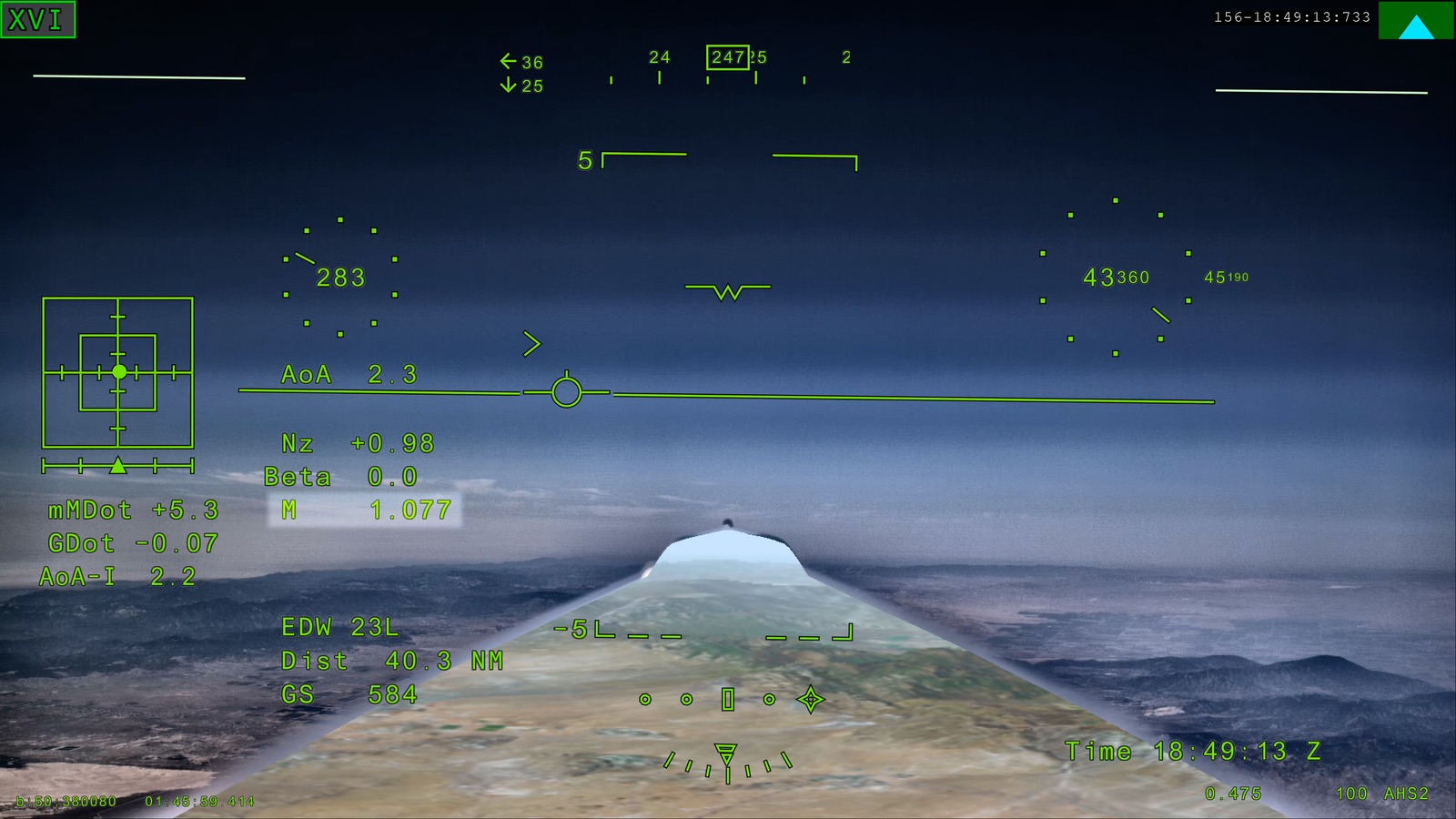
NASA test pilot Jim “Clue” Less flew the 81-minute mission. The X-59 topped out around Mach 1.1, or 713 mph, at 43,400 feet. In fact, the cockpit display captured the moment exactly. It read Mach 1.077 as the desert floor rolled past below.


Why the NASA X-59 flies quiet
The NASA X-59 exists to solve one stubborn problem: the sonic boom. Regulators banned commercial supersonic flight over US land in 1973 because of the noise. So NASA and Lockheed Martin’s Skunk Works shaped this jet to produce only a soft thump. Its needle nose and top-mounted engine do that quieting work.
Ironically, nobody could hear the X-59’s signature on this flight. An F-15 chase plane flew alongside to monitor the jet. Meanwhile, the F-15’s old-fashioned sonic booms drowned out whatever sound the X-59 made.
Mach 1.4 comes next
NASA is not slowing down. “In the coming days, we expect to take the next step and push to Mach 1.4,” said NASA Administrator Jared Isaacman. He also credited the team for flying 16 times in 90 days since the jet’s October 2025 debut.
That Mach 1.4 “mission conditions” flight, at roughly 55,000 feet, matters most. Those are the exact conditions for the jet’s eventual flights over US communities. During those overflights, NASA gathers data on how people perceive the quiet thump. Regulators will then use it to write noise standards that could finally legalize supersonic flight over land.
Aerospace milestones keep stacking up this year. Tech My Money recently covered Blue Origin’s push to return New Glenn to flight before 2026 ends. Now the X-59’s quiet boom joins that momentum, with a path toward faster commercial travel.