

OpenAI dots are beginning a gradual rollout, with one personal agent available first and teams of agents still on the roadmap. In its September 29 announcement, OpenAI describes an agent that keeps working between conversations. It gives no date for adding more dots.
The company says dots run on GPT-6 Astra and have their own cloud computer. They can also connect to more than 4,000 apps through plugins. That builds on the agent approach behind ChatGPT Work, while bringing ongoing responsibility into the foreground.
Who gets OpenAI dots, and what is included
According to the current setup documentation, rollout covers Pro and Business Premium in eligible markets. Eligible subscribers may still need to wait for access. Enterprise workspaces, including Edu and Healthcare, can try an admin-enabled beta.
The first dot carries no extra charge within those eligible paid plans. The plans also include an allowance for deeper work, with higher limits during the first month. That makes “included” the useful distinction: this is a paid-plan benefit, not a free standalone agent.
For now, creation requires the desktop app or a desktop browser. After setup, messaging works in the mobile app where access is available. Mobile web does not support dots, and users cannot create one on mobile. A dot also cannot initiate calls at launch.
A company demo, with permissions attached
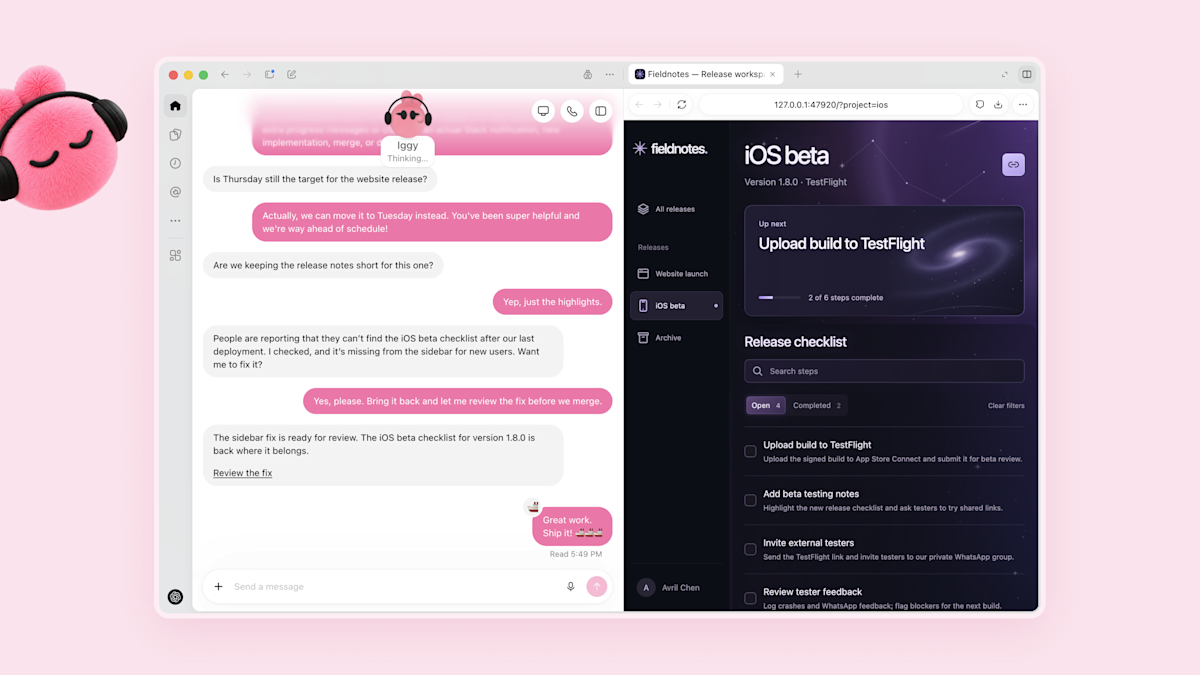
OpenAI illustrates a dot spotting a missing app release checklist and preparing a repair for review. The screenshot below shows that company example. This company example does not establish how reliably the agent handles unfamiliar projects or changes in production.

The underlying model follows OpenAI’s GPT-6 Astra rollout. Meanwhile, the important practical boundary is what the agent can access. Local computer access is optional and starts off, rather than coming with every dot by default.
In its safety explanation, OpenAI describes isolated cloud workspaces and checks around actions. For supported sign-ins, a separate form keeps passwords outside the model’s context. These are company-described safeguards, not an independent security audit.
OpenAI distinguishes background research from other work. Proactive research uses read-only tools; it cannot directly send messages, edit connected apps, or operate a browser or desktop. Other actions still depend on authorization and applicable checks.
Disconnecting an app does not erase its context
The privacy FAQ adds a limit worth understanding before connecting services. Disconnecting stops new access, but information already in the dot’s context remains. Moreover, users currently cannot inspect or edit individual dot memories.
Deleting the dot clears its own context. However, files and separate ChatGPT conversations or Codex threads remain. OpenAI also excludes users under 18 and warns that dots can still make mistakes. Ongoing help therefore comes with an ongoing need to review consequential work.


