
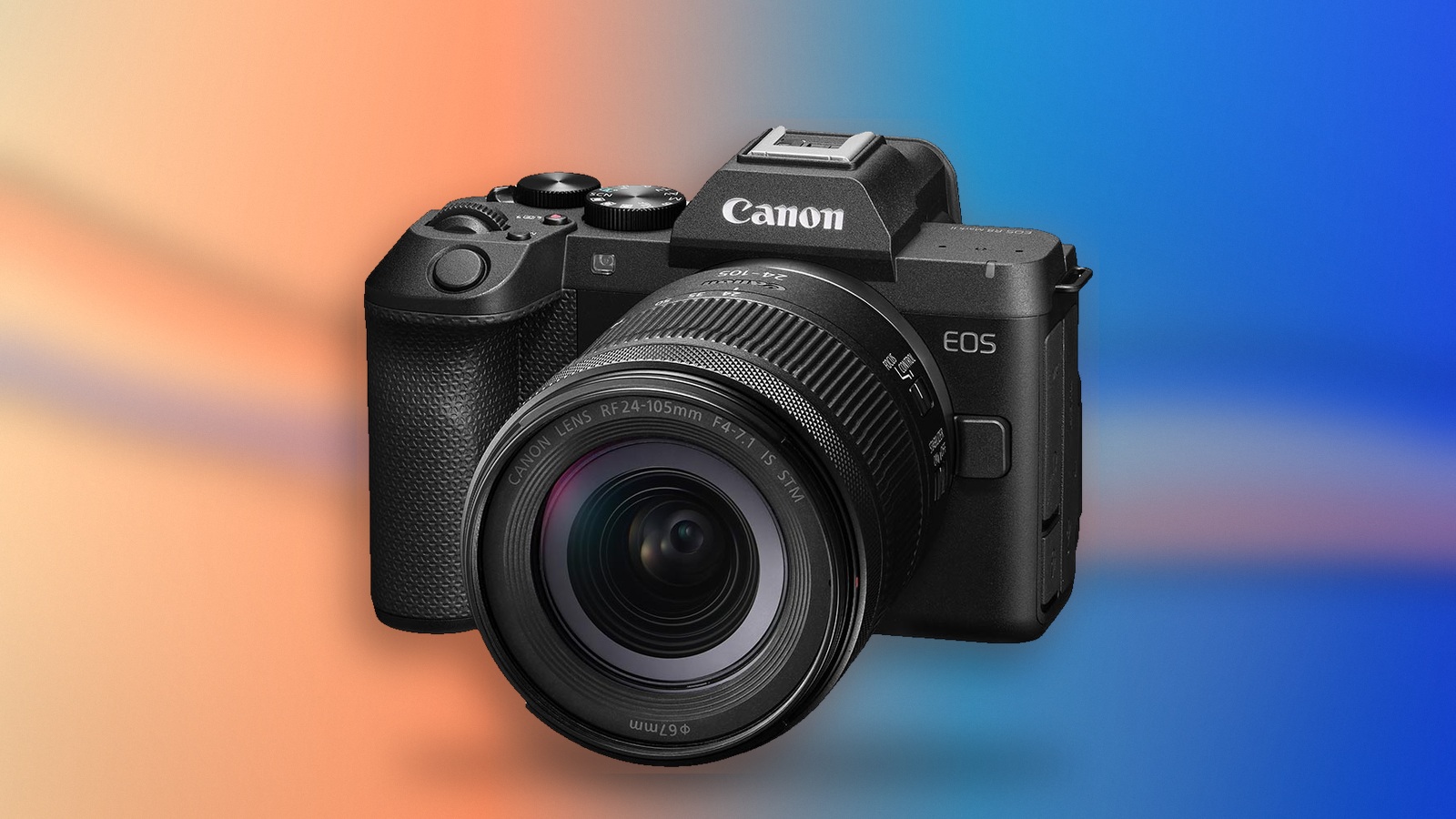
The Canon EOS R8 Mark II puts a more angular body around a practical upgrade: in-body image stabilization. In its U.S. announcement, Canon sets an estimated $1,899 body price and late-October availability. However, the appeal goes beyond its nod to classic Canon cameras. A new autofocus joystick, deeper bursts and priority tracking for registered people should make this compact full-frame model easier to live with.
Canon retains a 24.2-megapixel full-frame sensor and emphasizes portability. At approximately 1.2 pounds, it calls this the lightest EOS camera with in-body stabilization. That is a claim about Canon’s own lineup, rather than every stabilized camera on the market.
Classic lines, more useful controls
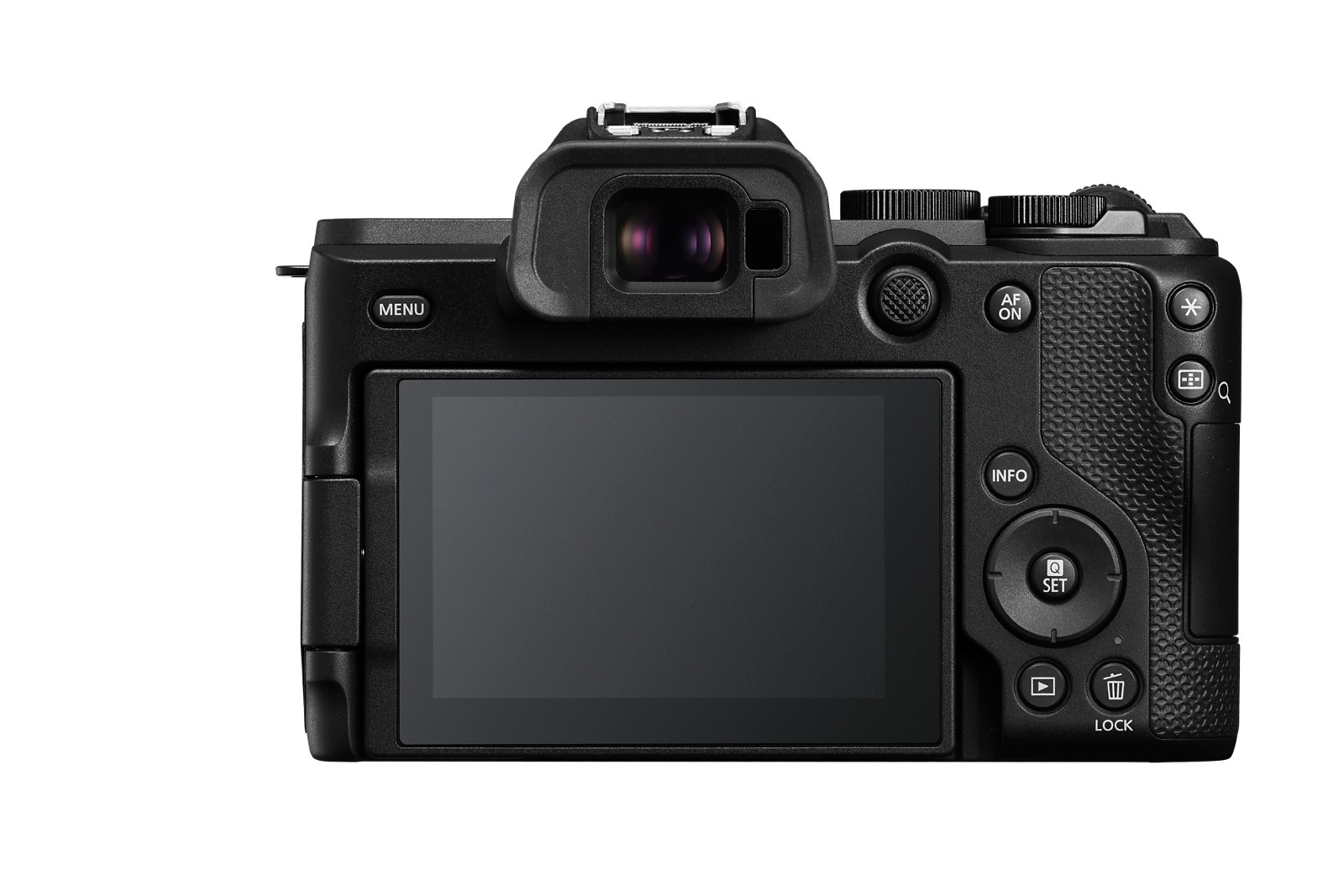
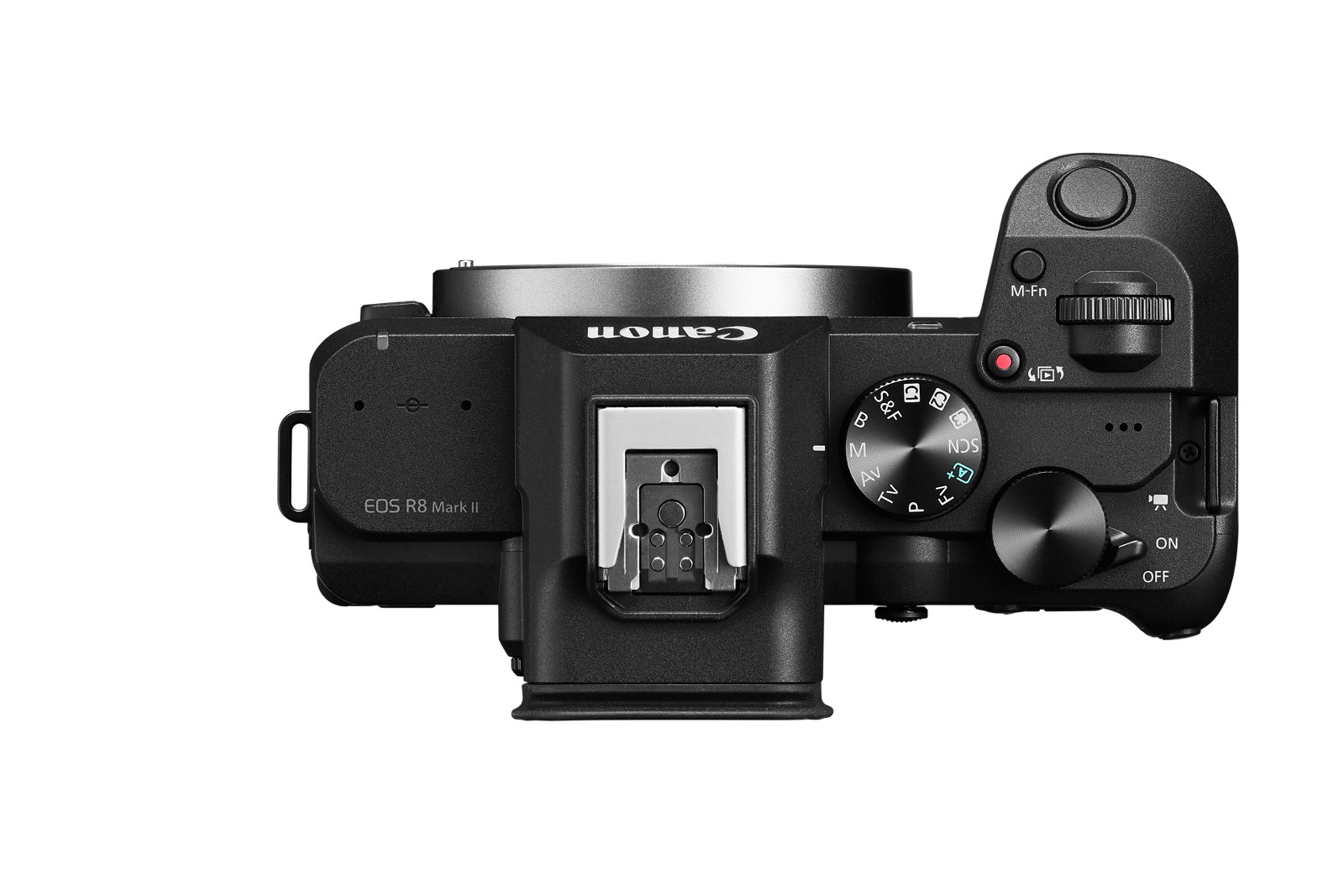
Canon’s own heritage imagery pairs the new camera with the EOS 650 film SLR. The squared shoulders and flatter surfaces make the connection visible. Still, the R8 Mark II uses a modern control layout, including a multi-controller joystick for selecting the autofocus point.
For photographers who change focus positions often, that control deserves more attention than the retro styling. Meanwhile, the optional EG-E2 extension grip adds height for larger hands and helps balance bigger lenses. Canon says it preserves access to the battery and tripod mount. It is an extension grip, not a promise of extra battery capacity.

Stabilization is the bigger upgrade
The original R8 lacked in-body stabilization. Now, the Mark II adds five-axis correction that can work alongside stabilization in compatible lenses. Canon also includes peripheral coordinated control to reduce blur toward the edges with wide-angle lenses.
Specifically, Canon’s Japanese announcement rates coordinated correction at up to 7.5 stops in the center and 7.0 stops at the edges. Those figures use the RF24-105mm F2.8 L IS USM Z at 105mm under CIPA2024 testing. Consequently, they should not read as a guaranteed result with every lens or shooting situation.
The practical promise is steadier handheld shooting without immediately reaching for a tripod. However, stabilization cannot freeze a moving subject. Sports, pets and children still demand an appropriate shutter speed.
Faster bursts need the right expectations
The electronic shutter reaches up to 40 frames per second, with autofocus and exposure tracking. Meanwhile, pre-continuous shooting can retain up to 20 frames from before the shutter button goes fully down. That gives photographers a buffer against slightly late reactions.
Canon reports 58 percent more uninterrupted JPEG shots and 30 percent more RAW shots than the original R8. Additionally, Dual Pixel CMOS AF II tracks people, animals and vehicles. Register People Priority lets the camera favor specific people, a useful distinction when several faces enter the frame.
However, Canon warns that electronic-shutter shooting can produce rolling-shutter distortion with some subjects and conditions. The alternative electronic first-curtain mode tops out at approximately 6fps. Therefore, the headline burst rate needs context when judging this camera for fast action.
Video, creative looks and the total price
For hybrid shooters, the camera records uncropped 4K at 60p oversampled from 6K, plus uncropped Full HD at 180p. It also offers Slow and Fast mode and Wi-Fi 6 transfers. Meanwhile, Negative Filmtone and Positive Filmtone join a selection of 16 color filters.
Canon’s official launch film shows the camera’s design and creative positioning. It is promotional material, rather than independent testing of autofocus or stabilization.

For context, Canon’s EOS R6 V targets full-frame video creators. Our coverage of the Sony FX5’s open-gate and RAW features explores a more cinema-focused direction. Here, the R8 Mark II’s combination centers on portable stills shooting with substantial video capability.
Finally, Canon estimates $2,099 for the U.S. kit with the RF24-50mm F4.5-6.3 IS STM lens. The EG-E2 grip adds $99.99, while the new Speedlite EL-5 Ver.2 costs $379. Canon expects all of these in late October, with prices and availability subject to change. The styling attracts attention, but stabilization and handling are the upgrades to weigh against that final system cost.