
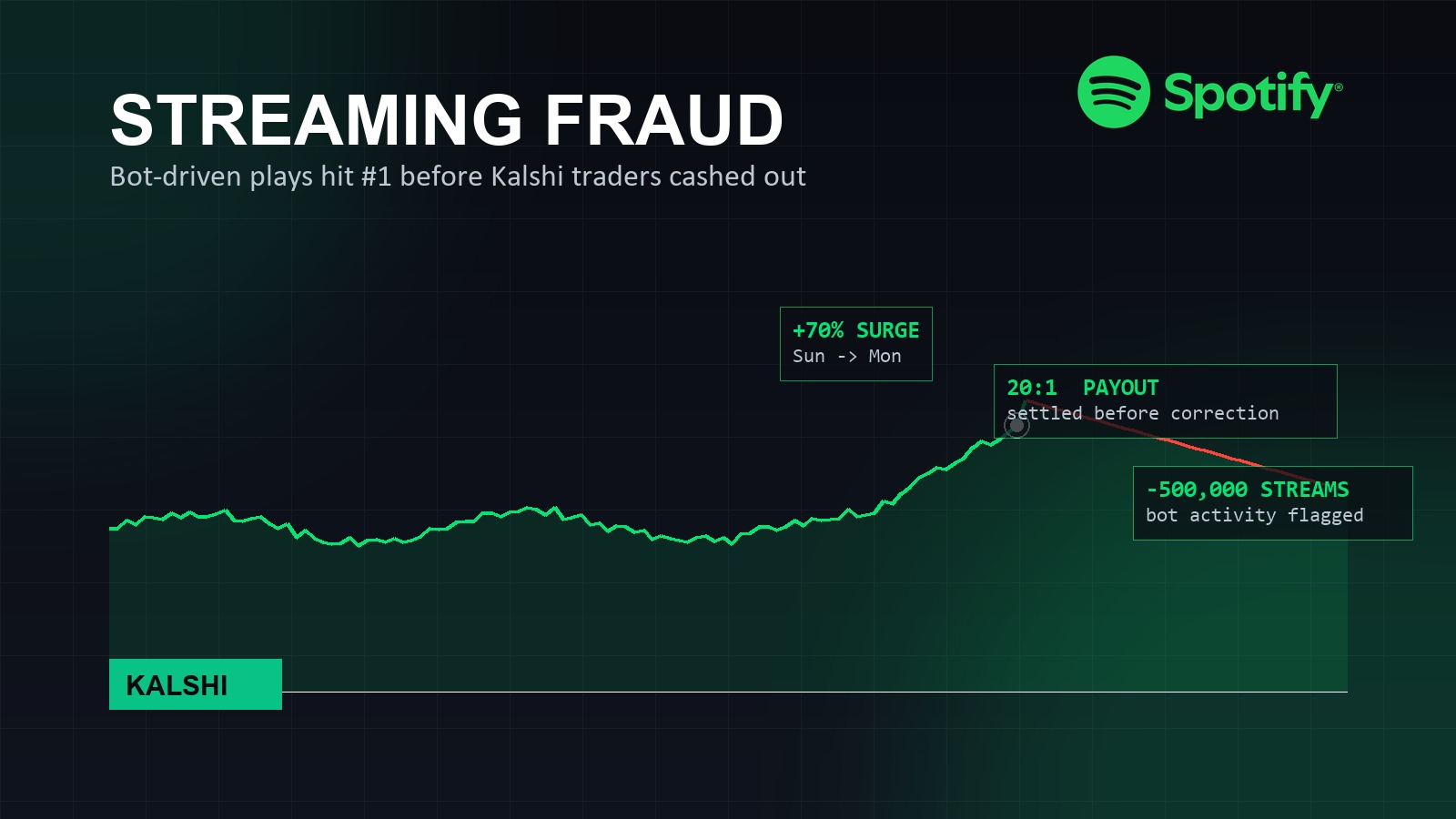
Spotify streaming fraud has crossed into the prediction-market world. The Financial Times reports that Spotify deleted over 500,000 plays from Malcolm Todd’s song “Earrings” after detecting suspected bot activity. However, Kalshi traders had already collected payouts of roughly 20-to-1 on bets the track would reach number one.
Indeed, streams of “Earrings” jumped nearly 70 percent between Sunday and Monday. Consequently, the surge vaulted the 2024 track to the top of Spotify’s daily American chart. Meanwhile, Kalshi traders wagered on whether Todd would land a chart-topping song by the end of June.
After Spotify’s bot-detection systems flagged the manipulation and stripped the suspicious plays, “Earrings” tumbled to fourth place. In fact, Kalshi had already settled the market and paid the winning bettors before the correction took effect.
Still, there is no indication that Todd or his team participated in any manipulation. Specifically, Kalshi says it is investigating the incident and remains in contact with Spotify. Additionally, the prediction-market platform has battled integrity questions before, recently asking some traders for employer information to curb insider trading.
When Chart Rankings Settle Real-Money Bets
Streaming fraud is nothing new for Spotify. However, prediction markets add a financial incentive that changes the stakes entirely. Furthermore, when chart rankings determine real-money payouts, fake streams do not merely inflate royalties. Instead, they move markets.
Therefore, Spotify’s legal team reportedly asked Kalshi to remove the Spotify logo from its app and website. As a result, Kalshi added a disclaimer noting its products carry no Spotify endorsement. Moreover, Spotify says it runs best-in-class systems to detect fake streams and does not pay royalties on manipulated plays.
A Pattern of Manipulation
The incident fits a broader pattern of Spotify streaming fraud. Notably, prosecutors secured a guilty plea from Michael Smith in an AI-assisted streaming-fraud case involving billions of artificial plays. Meanwhile, prediction markets face their own integrity scandals. For example, Tech My Money covered how Polymarket paid creators to post fake betting videos in a separate case.