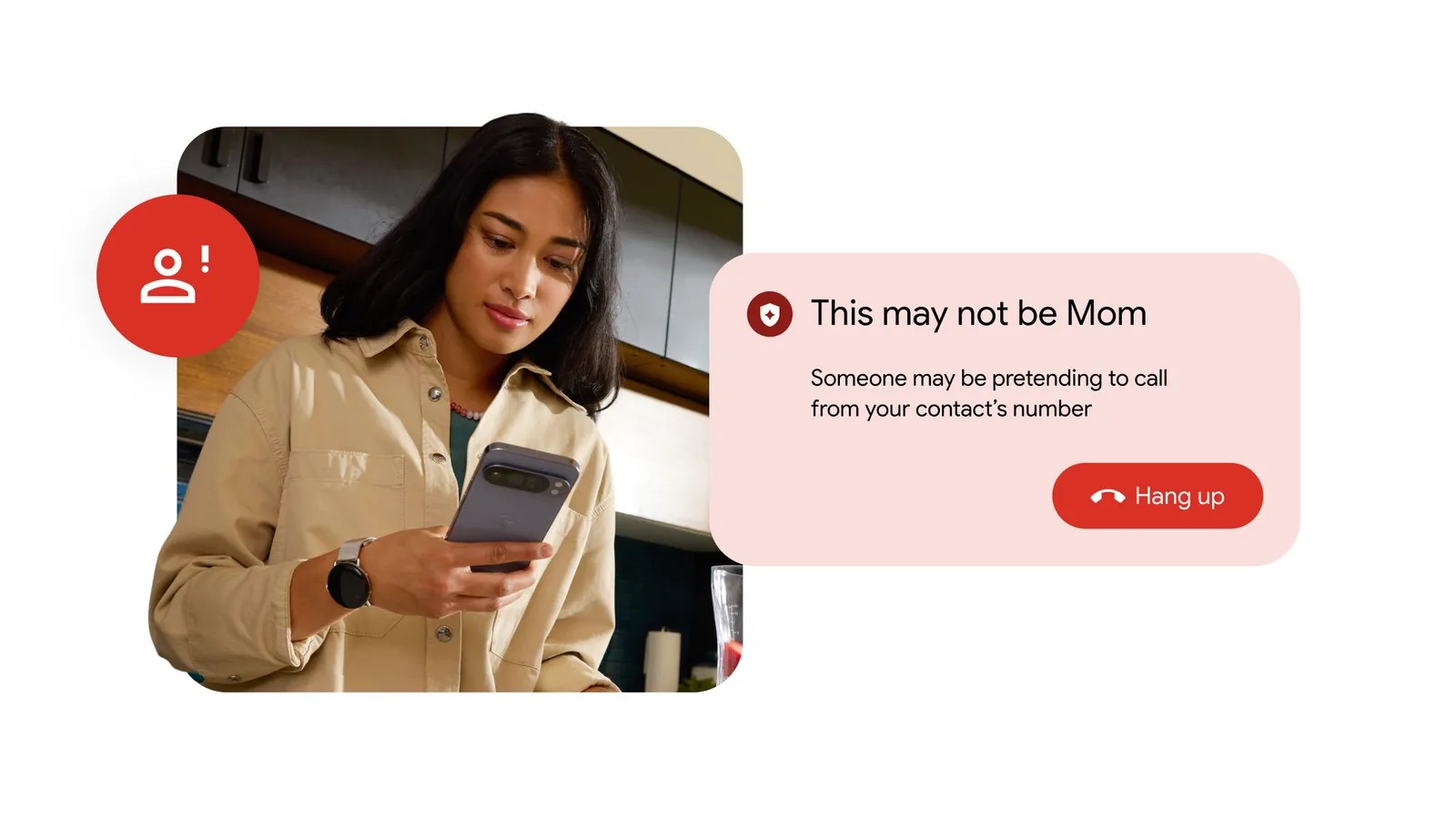
Android fake call detection is rolling out to catch a nasty scam trick. The call may look like it came from someone in your contacts, but it actually came from a scammer spoofing the number.
Google announced the feature in the June Android Drop. It also explained the security model in a separate Google Security Blog post. Phone by Google can now verify whether an incoming call is really coming from your contact’s device.
Caller ID alone may not help if someone spoofs a trusted number. AI voice clones can make the trick even more convincing. Google’s answer is a private device-to-device check.
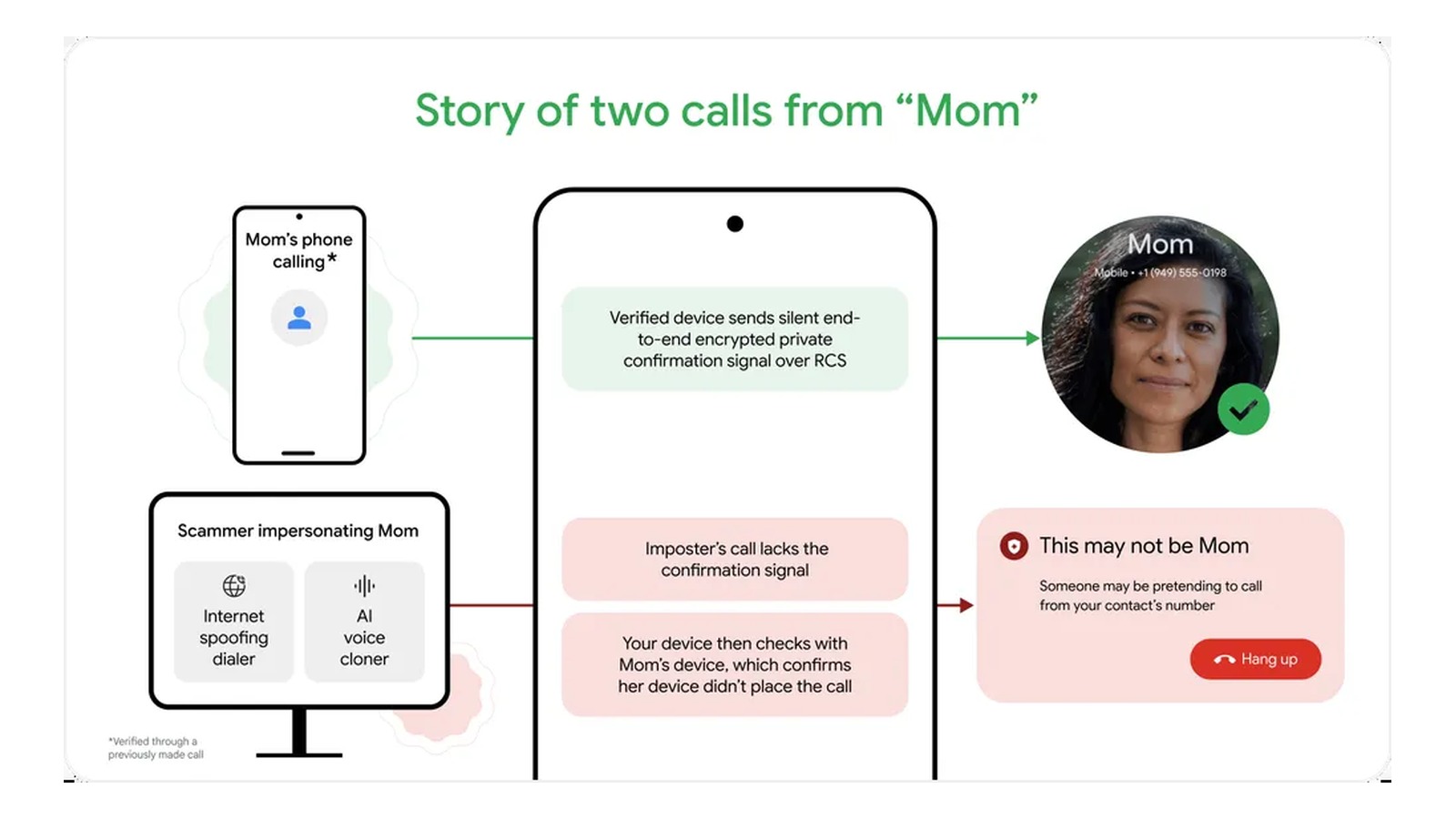
When your contact calls and both sides use Phone by Google, the caller’s device sends a silent confirmation signal in real time.

How the warning works
Google describes it as a digital handshake that uses end-to-end encrypted RCS technology. If the confirmation signal is missing, your phone can ping your contact’s real device.
If the real device says that person is not calling, Android can warn you to hang up. That alert matters because scammers are moving beyond suspicious unknown numbers. They can now combine number spoofing with realistic AI-generated voices.
What you need to use it
Google says fake call detection is on by default. It begins rolling out globally this month, starting with Pixel devices. It works on Android 12 and newer devices with Phone by Google.
Android’s feature page also says Google Contacts, Google Messages, and RCS capability are required. So this will not catch every spoofed call. It is strongest when both people use the Google phone stack.
Even with that limit, this is a meaningful step beyond generic spam labels. It follows Google’s earlier Android push against bank impersonation calls. We covered that broader security lane when Google previewed Android tools for bank scam calls.