
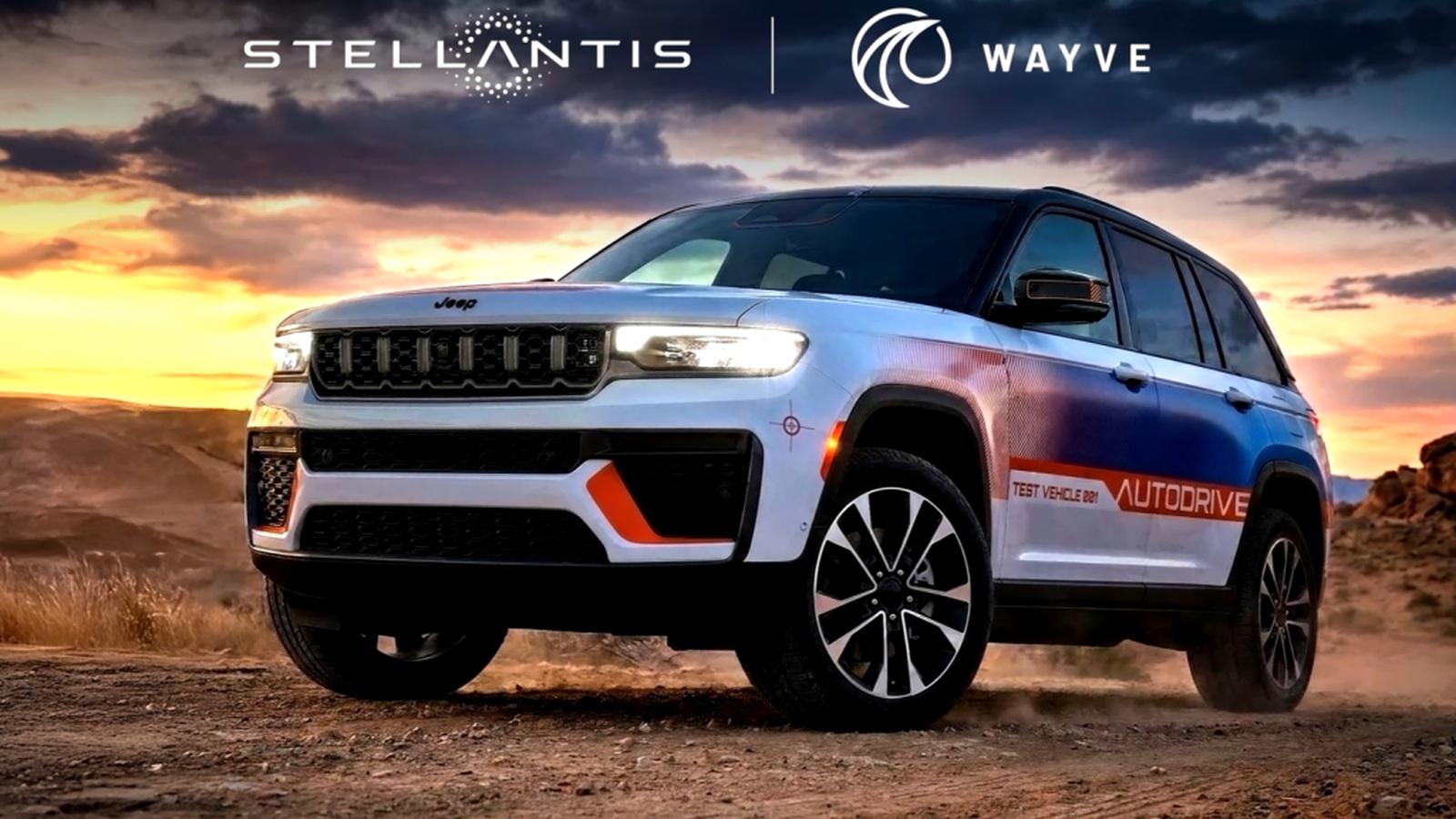
Stellantis and Wayve are moving from investment talk to a real product plan. The companies now say Wayve’s AI Driver will be integrated into Stellantis’ STLA AutoDrive platform for hands-free, supervised driving.
The first rollout is planned for North America in 2028. Stellantis describes the target as Level 2++ supervised automation that can work across highways and urban streets. That still means a human driver stays responsible, but the ambition is bigger than lane-centering on the freeway.
What Stellantis gets from Wayve
Wayve’s pitch is an AI-first driving system that can learn from large amounts of driving data instead of relying only on heavily mapped routes. Stellantis brings the manufacturing scale, vehicle platforms, and STLA AutoDrive software base.
The companies say the initial product will support door-to-door supervised driving. In plain English, the goal is a system that can help across more of a real trip, not just on one carefully controlled stretch of road.
The partnership could matter for Jeep, Ram, Dodge, Chrysler, and other Stellantis brands if the rollout stays on schedule. It also gives Stellantis a clearer answer as rivals keep pushing driver-assist and autonomous features. We have seen the same pressure around systems like Tesla FSD in China, where software is now a major part of the car story.
The 2028 timing is the key
Stellantis says the first vehicle integration is planned for 2028. That gives the companies time to test, tune, and deal with regulation before customers see it in showrooms.
The careful wording matters. This is supervised driving, not a promise that your Dodge or Jeep will become a robotaxi. Still, it is a serious step toward more natural assistance in everyday driving, especially if Wayve’s approach can scale across multiple brands and markets.