

Claude Mythos is already turning AI security research into a volume problem.
Anthropic says Claude Mythos Preview powers its Project Glasswing cybersecurity work. The unreleased model has helped Anthropic and roughly 50 partners find more than 10,000 high- or critical-severity vulnerabilities in the first weeks of the program.
The scale matters because software security has a bottleneck problem. Finding bugs used to slow teams down. Now, according to Anthropic, verification, disclosure, and patching create the pressure point.
The early numbers are big
Anthropic says several partners have increased bug discovery by more than 10 times. Cloudflare found 2,000 bugs, including 400 high- or critical-severity issues. Mozilla also reported a major jump in Firefox security findings after using the model.
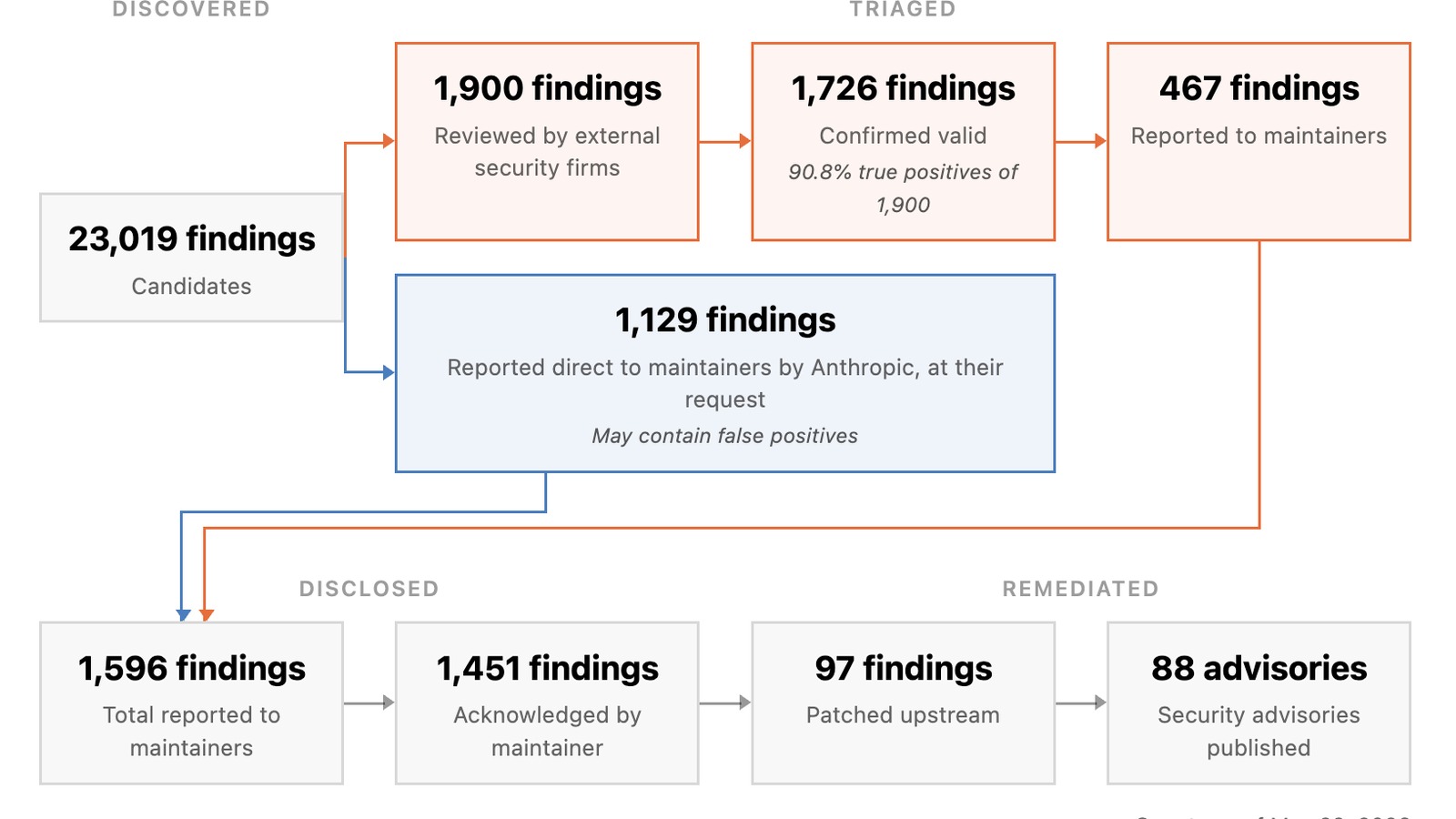
Anthropic used Mythos Preview on more than 1,000 open-source projects. The model flagged 23,019 vulnerabilities overall and estimated 6,202 as high or critical. Independent security teams have checked part of that work, and Anthropic says the true-positive rate looks strong so far.

Why it is not public yet
The company has not released Mythos Preview publicly. Instead, Anthropic says the safeguards for models with this kind of cyber capability still need more work. That stance lines up with its coordinated vulnerability disclosure policy, which tries to give vendors time to patch before details spread.
That caution is the story. A model that finds real flaws at scale can help defenders, vendors, and governments. However, the same skill set can also shorten the path for attackers if access arrives before guardrails.
Project Glasswing may therefore become a preview of how AI security work changes inside large organizations. The model finds more issues, but humans still need to confirm impact, contact maintainers, and ship fixes.
For Tech My Money readers, the update shows both sides of AI security. Defenders may get faster tools, but the same class of model could become dangerous in the wrong hands. That tension now shapes the future of AI coverage.


