
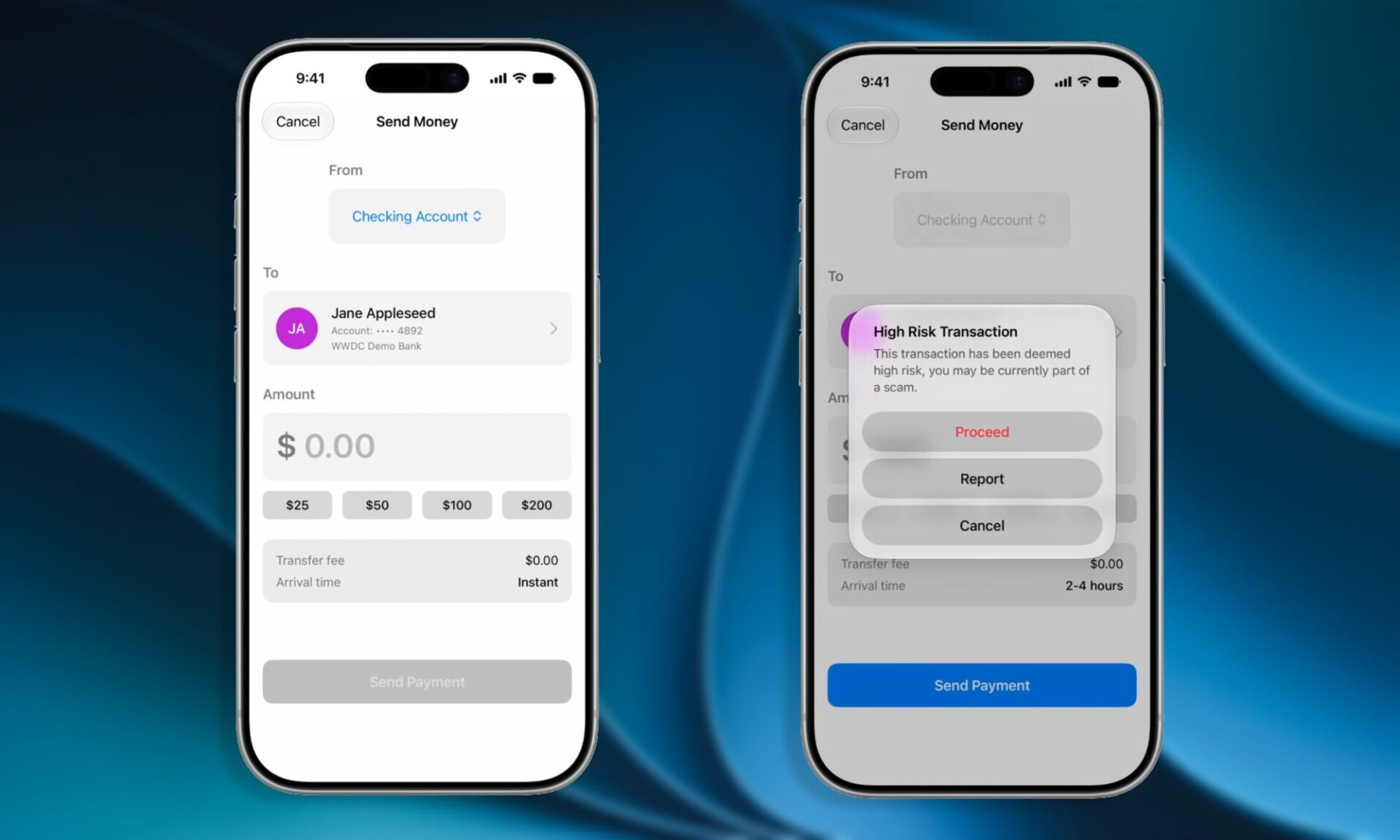
The iOS 27 Trust Insights feature wants to catch a scam while it is still happening. Apple detailed the system in a WWDC 2026 developer session, and the pitch is striking. Instead of filtering suspicious messages, the iPhone watches for signs that its owner is being manipulated, then steps in before money moves.
The mechanics stay deliberately private. According to the session, Trust Insights evaluates behavioral signals such as response timing and deviations from normal usage patterns. All of that analysis happens on-device, and Apple says the system never reads conversation content. Afterward, the phone deletes the underlying data and sends only a single risk value to Apple’s servers.
Warnings, Extra Checks, and Slower Payments
When the system judges fraud risk as medium or high, it acts in stages. It can surface a warning, add verification steps, or delay a payment outright. Apple’s demo shows the blunt end of that spectrum. During a transfer in a banking app, a dialog interrupts with the words: “This transaction has been deemed high risk, you may be currently part of a scam.” Notably, the arrival time on the delayed payment stretches from instant to a matter of hours.
Five Risk Categories and an Anti-Coercion Detail
Apple groups the threats into five buckets: payments, account changes, resource-intensive tasks, messages and forms and documents, plus a catch-all for edge cases. That spread matters, because modern scams rarely stop at one payment. Meanwhile, one design choice stands out. People can turn the feature off in Settings, but a cooldown period applies. As a result, a scammer on the phone cannot pressure a victim into disabling the protection mid-conversation.

Open Questions Before iOS 27 Ships
Plenty remains unanswered. The session gives no release date, so nobody outside Apple knows when Trust Insights reaches shipping iPhones. False positives pose a real tension too, since an over-eager warning on a legitimate transfer would erode trust fast. Furthermore, the demo runs inside a banking app, which raises the question of how much third-party adoption the system needs to matter.
Still, the direction fits Apple’s pattern. The company keeps moving sensitive intelligence on-device, much as it did across its Creator Studio apps with on-device AI. Rival platforms are hardening their own trust layers as well, as WhatsApp showed with usernames that keep phone numbers private. For scam victims, though, the promise is simpler: the phone itself finally notices when something feels wrong.