
Instacart’s Caper Carts sound like the kind of grocery upgrade that could make a weekly run less annoying. The cart can recognize items and show a running total. It can also surface coupons, connect to loyalty rewards, and help shoppers skip some checkout friction. That is the convenient part.
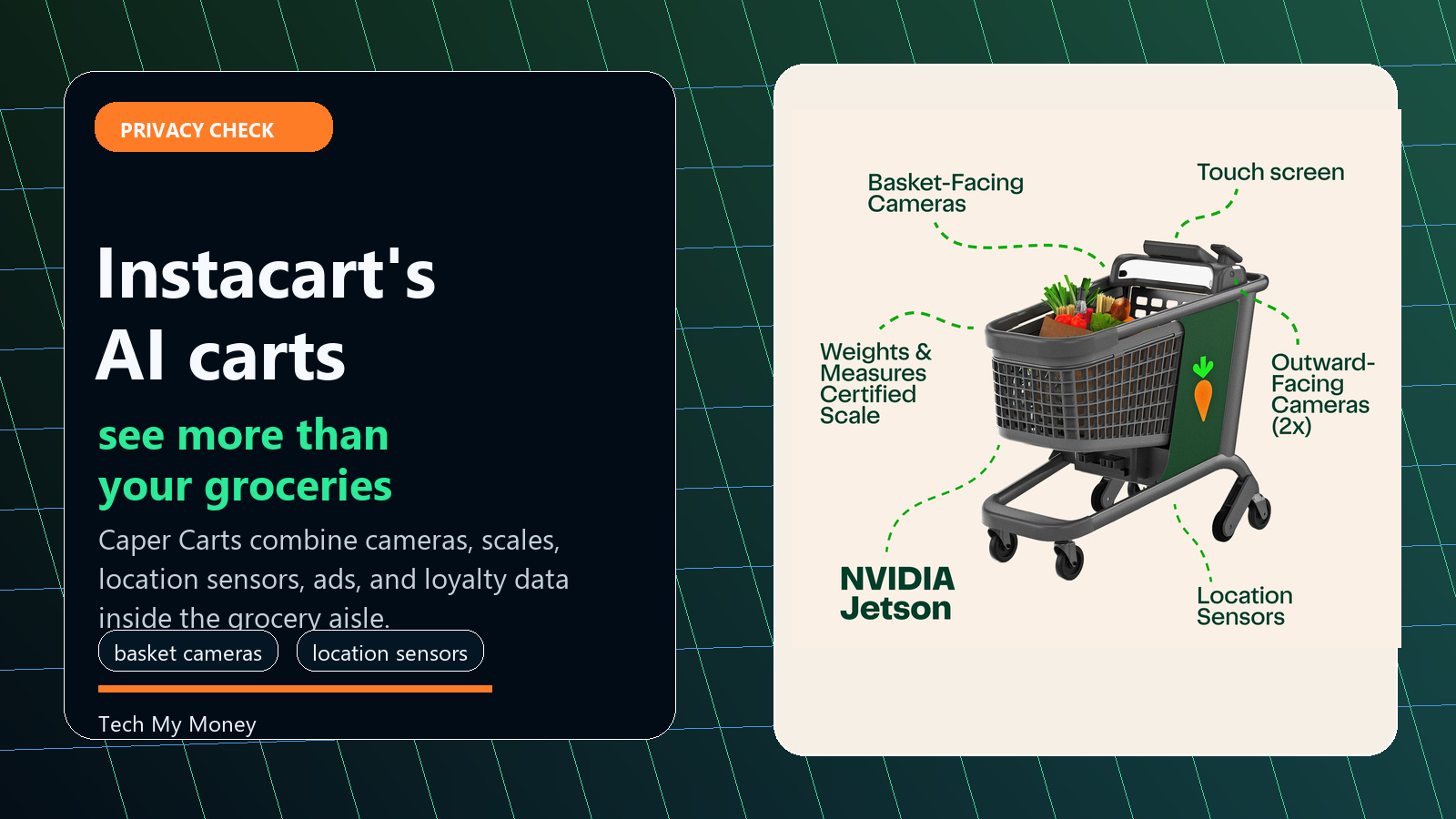
The weird part sits inside the same cart. In a new rollout with Weis Markets, Instacart says Caper Carts use basket-facing camera sensors and outward-facing cameras. They also use certified scales, location-tracking systems, and a touchscreen to understand the trip. The carts are coming to select Weis locations in Pennsylvania first, with more stores planned.

According to Instacart’s announcement, shoppers can track spending in real time and clip location-based digital deals. They can also sign up for Weis Rewards, redeem loyalty benefits, and use a Buy It Again feature from the cart. That is useful. It also means the cart does more than watch the basket. It connects the trip to offers, loyalty behavior, and the store aisle.
The Cart Is Also An Ad Surface
Instacart is not hiding the retail-media angle. The company says Weis will launch on-cart advertising. Its own example describes a location-aware prompt that asks, “Got everything you need?” when a shopper stops near taco ingredients. Instacart says that kind of prompt drove nearly a one percentage point lift in basket size.
That may sound small, but grocery nudges add up fast. The cart can help a shopper remember tortillas. It can also turn the handlebar screen into a real-time sales channel. That screen can know where the cart is, what sits inside it, and which loyalty profile may be attached to the trip.
Instacart’s Caper Carts page frames the system as part of its Connected Stores platform. The company says computer vision and hardware sensors scan items as shoppers place them in the cart. The system can also flag discrepancies. Instacart also describes location tracking, payment terminals, personalized ads, coupons, loyalty integration, and NVIDIA Jetson-powered edge computing.
That is why this story lands differently from a normal self-checkout upgrade. Grocery stores have tried to remove checkout friction for years. The push runs from Amazon Go-style checkout-free shopping to newer AI tools that manage inventory and operations. Caper Carts move more of that intelligence onto the cart itself.
The tradeoff is simple. The same system that saves time can also collect a more detailed picture of the shopping trip. If these carts become normal, stores will need clearer disclosures. Shoppers should know what the cameras see, how location data works, how loyalty information connects, and how long that data stays around.
For shoppers, the first test is not whether the cart is smart. It is whether the store explains the bargain clearly before the cart starts watching the aisle.