

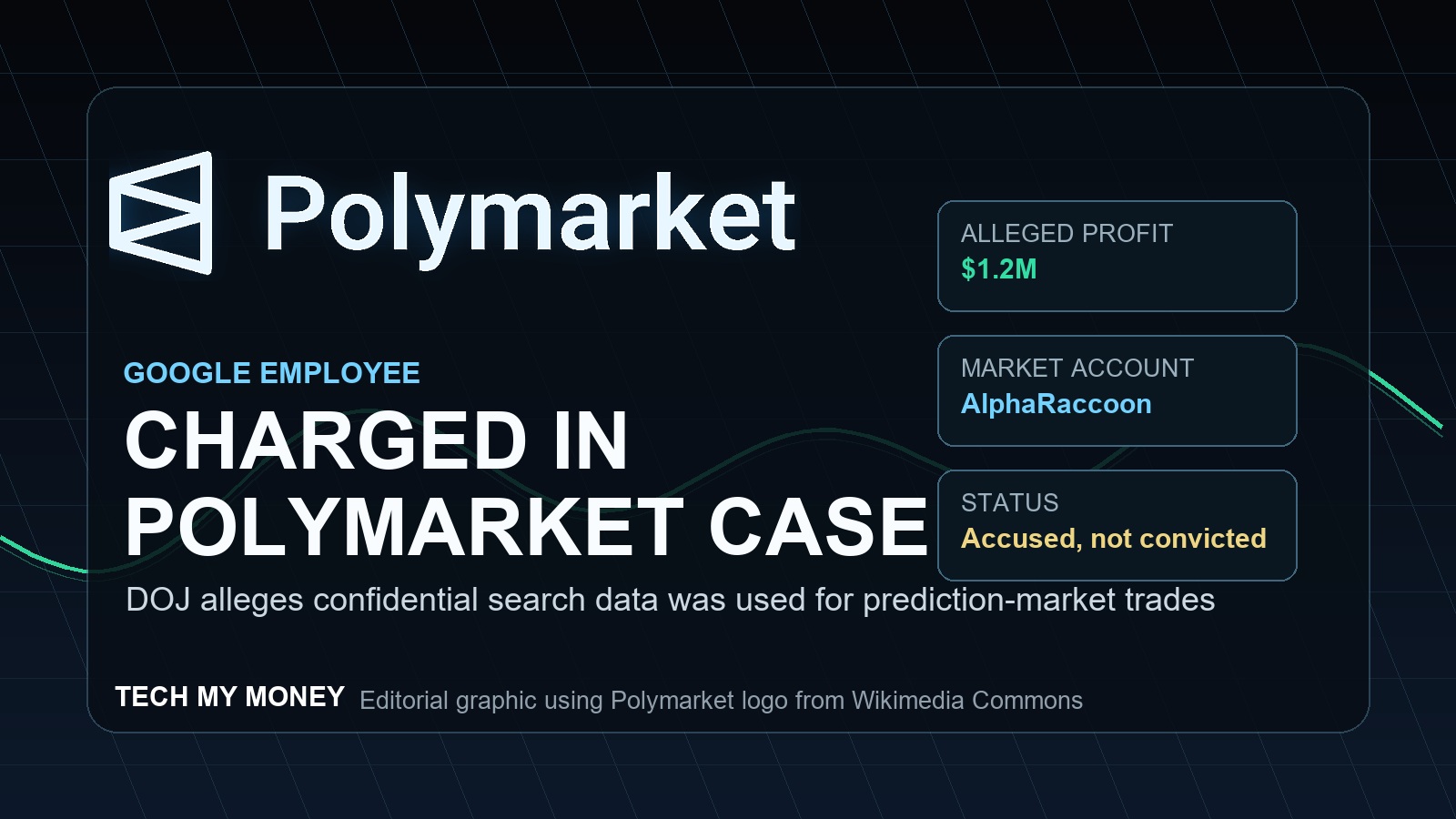
The Google Polymarket insider trading case is a warning for prediction markets. Federal prosecutors say workplace data can become market-moving information.
Prosecutors in the Southern District of New York charged Michele Spagnuolo this week. Spagnuolo is a Google software engineer. The charges include commodities fraud, wire fraud and money laundering.
The case centers on alleged Polymarket bets tied to Google search data. Prosecutors say Spagnuolo traded before Google released its 2025 Year in Search results.
The complaint also identifies Spagnuolo as the Polymarket user “AlphaRaccoon.” Prosecutors say the account risked about $2.75 million. They allege it made roughly $1.2 million after those markets resolved.
What prosecutors allege
The unsealed complaint says Spagnuolo accessed an internal Google tool. That tool allegedly contained confidential Year in Search data.
The nonpublic data included search trend information before Google made it public. Prosecutors say that gave the trader an edge other users did not have.
According to the complaint, Polymarket offered markets tied to top searched people for 2025. The alleged betting ran from October 2025 into early December 2025.
After the bets paid out, prosecutors say Spagnuolo tried to hide the source and ownership of the proceeds. The allegations have not been proven in court.
Why this matters for prediction markets
The case lands during a bigger legal fight over event contracts. Tech My Money recently covered how prediction-market disputes are already spilling into court.
Polymarket says its market-integrity rules prohibit trading on stolen confidential information. The rules also cover illegal tips and contracts where a trader can influence the result.
The platform says it can ban wallets, pursue legal action or refer activity to law enforcement. That policy is now part of the broader trust question around these markets.
The DOJ says any sentence would be decided by a judge if there is a conviction. Still, prosecutors are sending a direct message. Confidential workplace data does not become fair game because the trade happens on a prediction market.


